
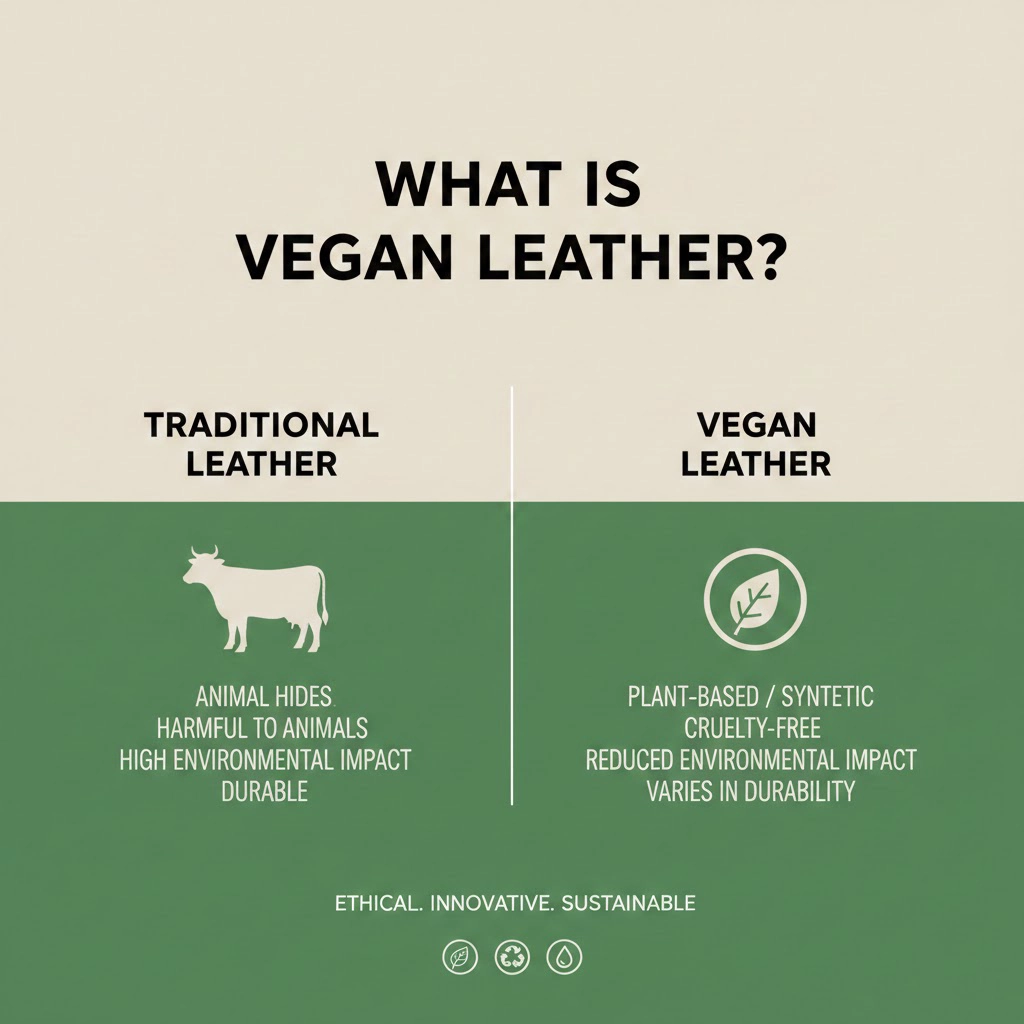
What is Vegan Leather?
In the shifting spotlight of contemporary fashion, “vegan leather” has evolved from a niche eco-friendly term into a global phenomenon spanning fast-fashion giants to top luxury brands. Yet as its popularity rises, so does the debate:
Is vegan leather a hero saving the planet—or merely plastic wrapped in a green narrative?
1. Redefining Vegan Leather — Is It Really Just “Plastic”?
For a long time, vegan leather has been dismissed as nothing more than cheap “synthetic leather.” In reality, materials science in this field is undergoing a revolution.
1.1 Core Definition — A Non-Animal Alternative to Leather
Vegan leather refers to any material that contains no animal-derived ingredients.
Although it mimics the look and feel of traditional leather, its essence lies in avoiding the exploitation of animals.
1.2 Material Spectrum — From Petrochemical to Bio-Based
Petroleum-Based Synthetic Materials
These still dominate the market and mainly include:
PU (Polyurethane)
PVC (Polyvinyl Chloride)
They are low-cost and easily molded—but fundamentally derived from fossil fuels.
Cutting-Edge Bio-Based Materials
This is the frontier of the industry. Scientists now use:
Pineapple leaf fiber (Piñatex)
Cactus leather (Desserto)
Mushroom mycelium (Mylo)
Apple peels & grape waste
to create materials with impressively leather-like textures and lower environmental impact.
Lab-Developed Circular Materials
From recycled ocean plastics to lab-grown collagen, innovators are attempting to close the loop of fashion production.
2. Why Choose Vegan Leather? (Ethical & Environmental Motivations)
Choosing vegan leather is not merely an aesthetic decision— it is a statement about compassion and ecological responsibility.
2.1 Animal Welfare — A Zero-Cruelty Fashion Statement
Over 1 billion animals are slaughtered every year for leather and fur. In many regions lacking regulation, animals live and die in harsh conditions. Vegan leather provides a “no-kill” alternative, allowing fashion to exist without being built on suffering.
2.1 Environmental Footprint — Emissions & Water Usage
The Burden of Livestock
Traditional leather is a by-product of livestock production, which contributes significantly to:
Methane emissions
Deforestation
Climate change
Toxic Chemical Avoidance
Conventional chrome tanning releases hazardous wastewater.
High-quality plant-based leather production can reduce risks to groundwater and worker health.
3. The Harsh Reality Behind the Ideal — Greenwashing in Vegan Leather
However, not every product labeled “vegan” is truly eco-friendly.
3.1 The Plastic Problem — Non-Degradable Hidden Risks
Most low-cost vegan leather is still plastic-based. Once discarded, these materials may take hundreds of years to degrade—releasing microplastics into oceans and food chains.
3.2 Durability Challenges — Short Lifespan in Fast Fashion
Cracking & Peeling
Traditional leather can last decades. But many synthetic leathers begin peeling within 2–3 years, driving higher consumption and waste.
Landfill Impact
Short-lived, non-biodegradable plastics ultimately add pressure to landfill systems.
4. Industry Snapshot — From Avant-Garde Design to Luxury Cars
Despite controversy, major brands are accelerating innovation.
Stella McCartney has long championed vegan materials, proving plant-based textiles can rival animal leather in luxury appeal.
Tesla has phased out animal leather seats.
Ferrari and BMW now offer high-performance vegan leather options.
This marks the entry of vegan leather into the realm of high-end performance and aesthetics.
For sourcing teams comparing animal-free materials with traditional leather options, use the PU leather and full-grain leather comparison, the leather types guide, and custom leather phone case development to connect sustainability claims with durability, handfeel, and production fit.
5. Consumer Guide — How to Make Truly Sustainable Choices
How can consumers see beyond marketing claims and make responsible decisions?
5.1 Label-Reading Skills — Distinguishing PU from Bio-Based
If a product label simply reads “Man-made materials,”
it is usually petrochemical plastic.
Look for terms such as:
Cactus leather
Cork
Mirum (plastic-free leather)
and other verified bio-based materials.
5.2 Category-Specific Recommendations
Classic Apparel
For abrasion-intensive items like moto jackets: Choose high-quality PU or recyclable PU.
Innovative Accessories
Cork belts and bamboo-fiber bags offer:
Eco-benefits
Beautiful natural textures
Performance Footwear
Materials like Bananatex (banana-fiber textile) balance:
Breathability
Durability
5.3 The Ultimate Sustainability Strategy
The most sustainable product is the one that already exists.
Buying second-hand leather or high-quality pre-owned vegan items extends product life and reduces environmental impact.
6. Conclusion — The Future Path of Leather Fashion
The evolution of vegan leather reflects humanity’s ongoing search for balance between:
aesthetic desire
ethical responsibility
Plastic-based substitutes remain imperfect—but biotechnology is pushing us closer to a future where we can avoid harming animals without harming the planet. The future of fashion lies not in what we take away—but in what we create. So the next time you reach for a “leather” product, check its label and understand its story. Because every purchase you make helps shape the future of our planet.