If you search for “phone case” on any shopping platform today, you’ll notice a trend: more and more sellers are using terms like “vegan leather,” “eco leather,” or “sustainable leather.”
Some claim their materials are plant-based. Others advertise bio-based content, carbon-neutral production, or biodegradability.
But once the product arrives in your hands, a question may creep in:
Is this really made from plants — or is it just plastic wearing a nicer outfit?
2025 feels like a year when materials marketing officially entered the battlefield.
So before we judge vegan-leather phone cases, we need to sort out the definitions.
1. The Definition Trap: How the Word “Vegan Leather” Misleads the Public
Strictly speaking, vegan leather has only one requirement:It must not come from animals — meaning no animal-derived content at all.
So as long as it’s not cowhide, sheepskin, crocodile leather, etc., it can be called vegan leather —even if it is 100% synthetic plastic.
That means all of the following may legally fall under the “vegan leather” label:
100% synthetic leather
recycled-plastic-based leather substitutes
bio-based + PU hybrid materials
plant fiber blended with synthetic polymers
So linguistically, vegan leather only means “animal-free.”
It does NOT automatically equal:
natural
biodegradable
low-carbon
environmentally friendly
Which brings us to the next key point.
1.2 Why “Eco-Friendly” ≠ “Natural”
Words like these often show up on product listings:
Bio-based
Carbon Neutral
Eco Leather
Sustainable
But none of them guarantee that the material is plant-only.
The real distinction is usually between the following:
| Category | Essence |
|---|---|
| Synthetic plastic-based materials | Primarily PU / PVC derived from petroleum |
| Bio-based materials | Plant ingredients blended with synthetic materials |
So a “vegan leather phone case” can be both sustainability-marketed and still mostly a high-polymer plastic material.
2. The Three Major Camps: Understanding the “Birth Certificate” of Your Phone Case
2.1 The Traditional Synthetics: Plastic in a Leather Jacket (PU & PVC)
2.1.1 PU (Polyurethane): The Market Dominator
PU is currently the main character in vegan leather products because it is:
soft and elastic
visually leather-like
pleasant to touch
easy to dye and process
reasonably priced
But don’t forget:Its foundation is still petroleum-derived synthetic polymer.
That premium “vegan leather feel” you love
is really a victory of plastic engineering — not botany.
2.1.2 PVC (Polyvinyl Chloride): Cheap — but Best Avoided
PVC is also widely used as “eco leather,” but it comes with drawbacks:
plasticizers and additives may be environmentally harmful
limited recycling support
loses flexibility faster over time
prone to yellowing and hardening
So if you see:
PU / PVC leather
It most likely means functional and affordable —
but not exactly an environmental pioneer.
2.2 The Recycling Innovators: Turning Waste into Materials
This category follows this logic:Used plastic bottles → turned into rPET → engineered to feel like leather
GRS (Global Recycled Standard) certification helps verify that the recycled content is real.
Pros:
reduces virgin petroleum extraction
gives plastic waste a second life
feels better than hard plastics
Cons:
it is still plastic — just with a greener past
2.3 The Bio-Based Pioneers: Can Plants Really Become Leather?
This is the category that truly feels “future-forward.”
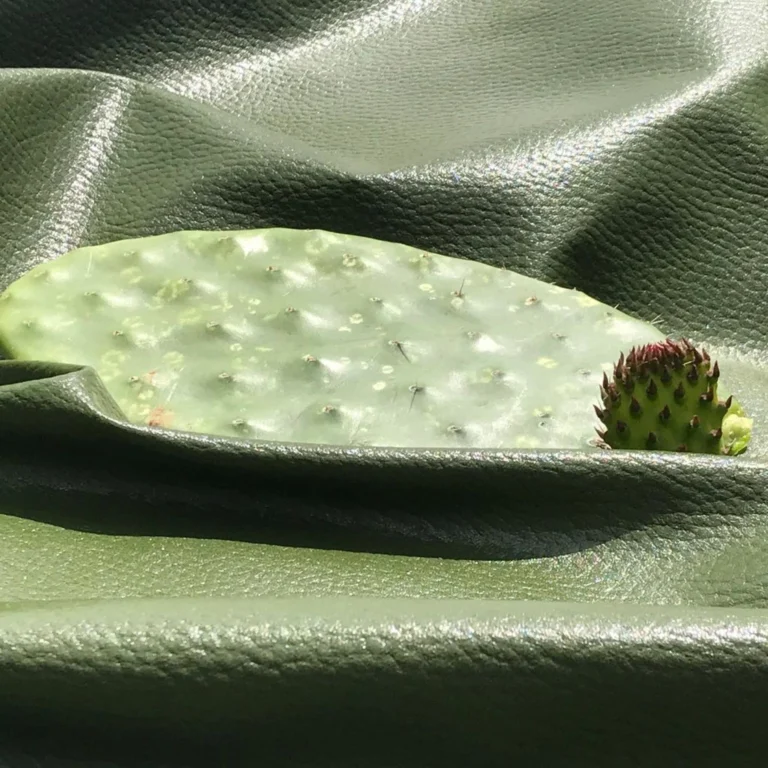
2.3.1 Cactus Leather (Desserto)
Made in Mexico, Desserto uses cactus leaf fibers to form leather-like material.
Highlights include:
cactus requires no irrigation
low-energy growing conditions
soft, comfortable touch
strong abrasion resistance
But truthfully: It still requires PU and resins for structure and durability.
So it is not 100% cactus.
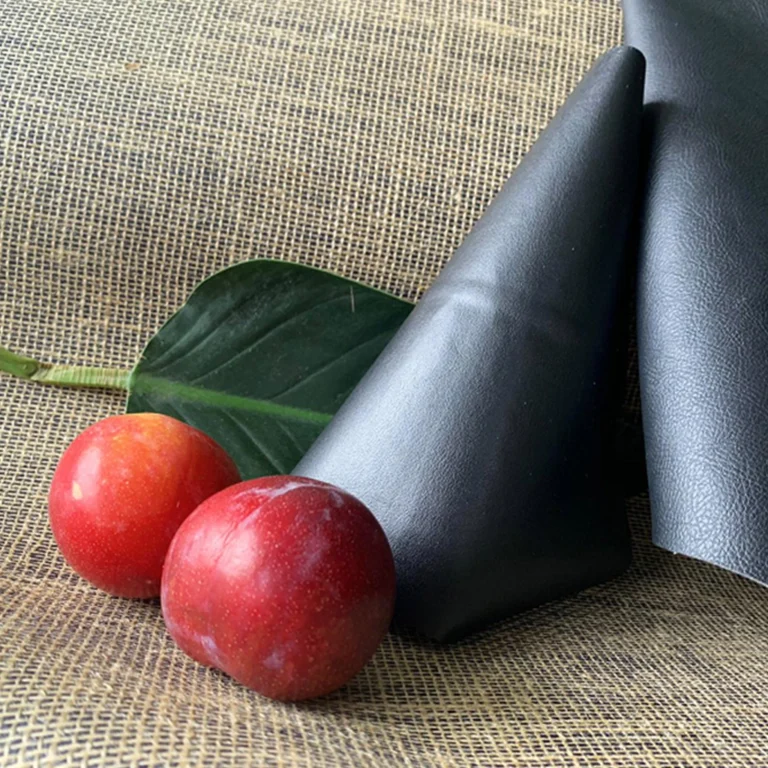
2.3.2 Apple Leather & Pineapple Leather
Made from fruit waste (peels & pulp fibers) blended with engineered polymers and pressed into sheets.
Strengths include:
upcycling agricultural waste
reducing landfill burden
leather-like texture and flexibility
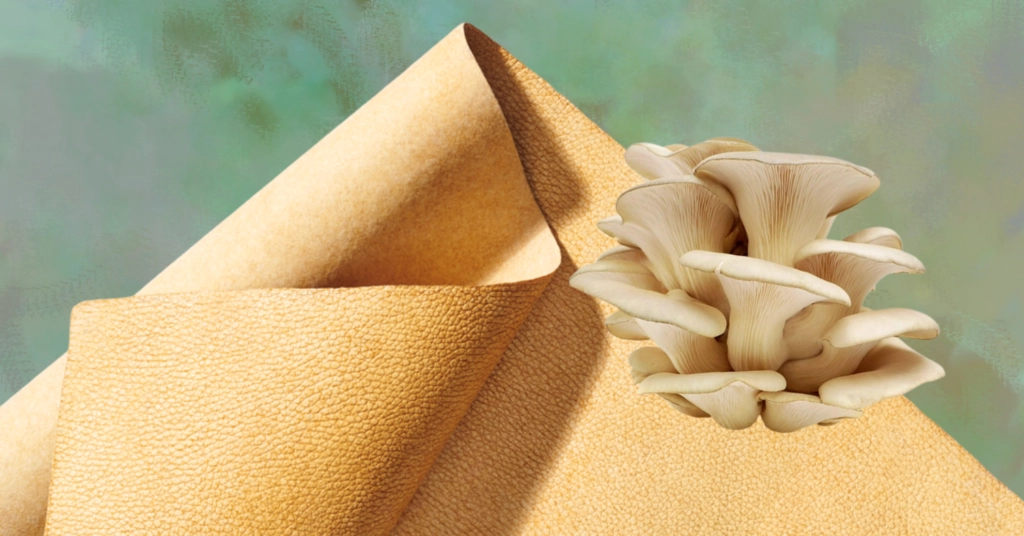
2.3.3 Mycelium (Mushroom) Leather
This is one of the hottest materials of 2025.
Mycelium grows into skin-like sheets that:
look like leather
feel like leather
flex like leather
It’s currently the closest natural alternative to animal skin.
However:
costs remain high
industrial scaling is ongoing
production is still limited
So for now, most mushroom-leather phone cases are niche or experimental.
Bio-Based Content Ranges (Typical for 2025)
| Material Type | Typical Bio-Based Content |
|---|---|
| Bio-based PU | 10%–40% |
| Apple / Pineapple composites | 20%–60% |
| Cactus leather | 30%–65% |
| Mycelium leather | 50%–80% |
3. The Technical Truth: Why There Are Almost No 100% Plant-Based Phone Cases
3.1 The Real Structure: Plant Fibers + Polymer Coatings
Pure plant fiber lacks:
strength
abrasion resistance
water resistance
So nearly all plant-based leathers today use: Plant fibers + PU / resin coatings and structural layers
PU coatings provide:
water resistance
structural stability
pleasant texture
improved durability
Without them, the material simply wouldn’t survive daily phone-case wear.
3.2 The Hidden Role of Adhesives
Most bonding layers also contain synthetic chemicals.
Meaning:
100% natural construction is nearly impossible
recycling is technically complex
This is the industrial reality of plant-based materials today.
4. The Balancing Act: Sustainability, Durability, and Hand Feel
4.1 Why Do Some Vegan Leather Cases Peel or Crack?
Typical lifespan ranges:
| Material | Typical Lifespan | Common Failure |
|---|---|---|
| Low-end PVC | 3–9 months | cracking, hardening, peeling |
| Standard PU | 12–18 months | coating wear |
| Premium PU / microfiber | 18–36 months | edge wear |
| rPET composites | 18–36 months | surface cracking |
| Plant-based hybrids | 12–30 months | coating aging |
| Genuine leather | 3–10+ years | oxidation & patina |
Causes include:
coating degradation
adhesive failure
UV exposure
reaction with sweat and oils
friction damage
So yes — some vegan-leather cases bubble, peel, or crack in 6 months, while others last 2–3 years. Durability matters as much as material source —
because waste is not sustainable.
Causes include:
coating degradation
adhesive failure
UV exposure
reaction with sweat and oils
friction damage
So yes — some vegan-leather cases bubble, peel, or crack in 6 months, while others last 2–3 years. Durability matters as much as material source —
because waste is not sustainable.
4.2 Carbon Footprint — Who’s Really Greener?
(Lifecycle emissions in kg CO₂e per kg of material)
| Material | Typical Range | Notes |
|---|---|---|
| PVC synthetic leather | 6–10 | chlorine-based chemistry |
| PU synthetic leather | 3–6 | varies by process |
| Recycled rPET composites | 2–4 | more recycled = lower impact |
| Bio-based plant composites | 1.5–4 | depends on PU ratio |
| Genuine leather (tanned) | 15–30+ | livestock emissions dominate |
In summary:
Genuine leather → high emissions, long lifespan
PU → petroleum-based but consistent
Bio-based → resource-efficient but still hybrid
Recycled → strongest circular benefit
The best choice is usually: Long lifespan + responsible sourcing + responsible production
—not just a green-sounding label.
5. Consumer Guide: How to Read Product Pages Without Being Misled
5.1 Keyword Decoder
When you see:
| Term | Real Meaning |
|---|---|
| Bio-based | Contains some plant-derived content |
| Carbon Neutral | Carbon offsets were used |
| Cruelty-free | No animal-derived materials |
So — don’t judge by one word alone.
5.2 Certifications to Recognize
More credible labels include:
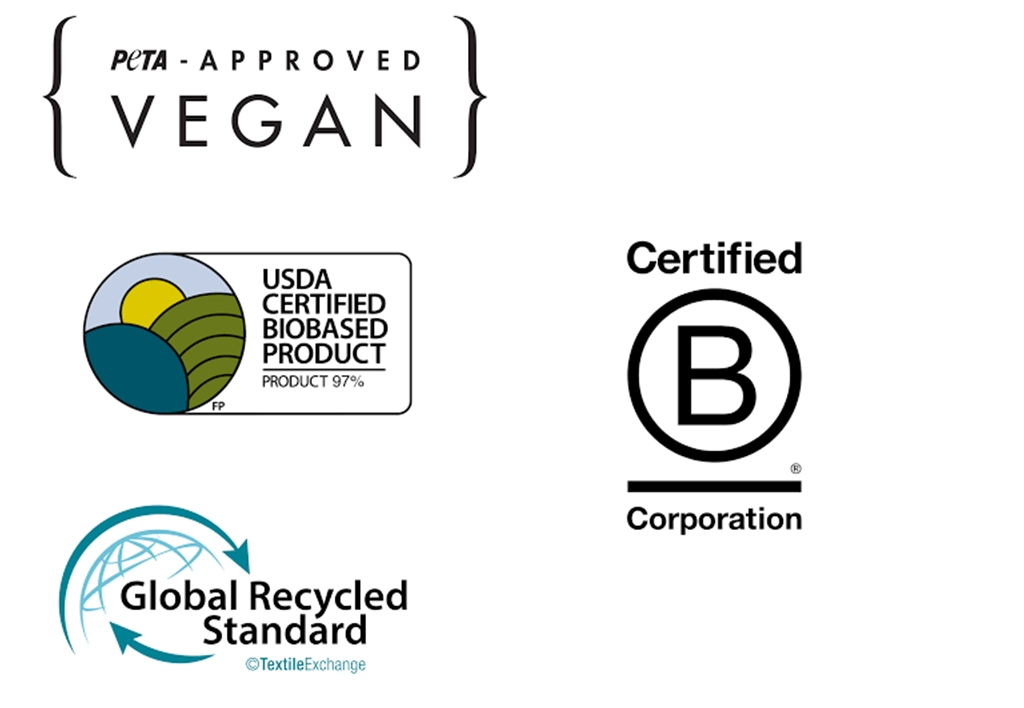
✔ PETA Vegan — confirms animal-free
✔ USDA Biobased — certifies % of plant-based content
✔ B-Corp — certifies company-level responsibility
✔ GRS — certifies recycled content source
| Certification | Confirms | Does NOT Confirm |
|---|---|---|
| PETA Vegan | No animal ingredients | Environmental impact |
| USDA Biobased | Bio-based content % | Biodegradability |
| GRS | Recycled sources are real | Fully recyclable product |
| B-Corp | Ethical business practices | Individual product footprint |
And remember: Bio-based content ≠ fully plant-based structure
Because coatings, adhesives, and base fabrics are often synthetic.
If a product page only says: “eco PU”, “vegan leather”, “sustainable material” with no breakdown —assume it is standard PU.
6. Conclusion: Are You Choosing Vegan Leather for Values — or for Longevity?
By now, the picture is much clearer: In 2025, over 90% of vegan leather phone cases are not fully plant-based. They are hybrids: plant components + synthetic materials. But that doesn’t make them bad.
It may actually mean:
smarter resource use
better animal ethics
rising consumer awareness
real progress in materials science
The key question is:
Are you buying for values — or for feel and durability?
Because rational choices are more sustainable than slogans.
If you’d like — tell me:
👉 What kind of vegan leather phone case are you using now? We can break down its material story together.