
A thin leather phone case can stay slim and protective, but slimness changes the leather experience.
It will not replace a rugged case for construction sites, outdoor work, or repeated hard drops. But for daily urban use, a well-made thin leather case can protect against scratches, hand slips, desk friction, pocket wear, camera contact, and minor bumps while keeping the phone close to its original shape.
That is why thin leather phone cases are popular. Most users do not want to turn a slim iPhone or Android phone into a thick block. They want protection, but they still want the phone to feel elegant in the hand.
But there is a tradeoff many buyers overlook.
When a leather phone case becomes thinner, the leather often needs to be skived thinner before wrapping or bonding. For some full-wrapped phone case structures, the leather thickness after skiving may be around 0.5mm, depending on the leather type, structure, and phone model.
That can keep the case slim. But it can also make the leather feel less thick, less soft, and less “leather-like” to customers who are used to heavier cases.
So the real question is not only:
Can a thin leather phone case protect the phone?
The better question is:
Can it protect the phone while still matching the customer’s expectation of leather feel?
Can a Thin Leather Phone Case Protect Your Phone?
Yes, a thin leather phone case can provide good daily protection if it uses quality leather, a stable inner shell, soft lining, raised screen and camera edges, and precise fit.
It is best for:
- Scratch protection
- Better grip
- Desk and pocket friction
- Camera and back-panel protection
- Minor daily bumps
- Business and minimalist users
- Premium appearance
- Lightweight daily carry
It is not ideal for:
- Heavy drops
- Outdoor work
- Extreme sports
- Industrial use
- Users who drop phones often
- Kids’ devices
- Maximum shock absorption
However, slimness has a tradeoff. When leather is skived very thin, such as around 0.5mm for some full-wrapped phone case structures, the case may feel less substantial than a thicker leather case.
A thin leather case is not a “no-protection” case. It is a daily protection case, not an extreme protection case.
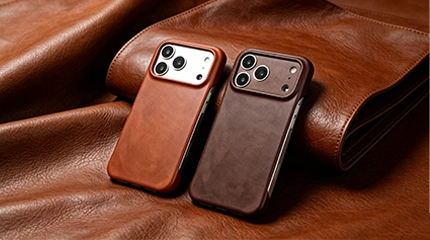
thin leather phone case
The Real Balance: Slimness, Protection and Leather Feel
A thin leather phone case is always a balance between three things:
- Slimness
- Protection
- Leather feel
Buyers cannot maximize all three at the same time.
If the case becomes extremely thin, the phone feels closer to bare-hand use, but the leather hand feel may become lighter. If the case becomes more protective, the structure usually becomes thicker. If the case uses thicker leather for a richer hand feel, it may lose the ultra-slim profile.
This is why thin leather case development is not just a material decision. It is a positioning decision.
A business user may prefer a slim case that slides easily into a pocket. A leather enthusiast may prefer a thicker case with stronger grain, more visible patina, and a richer grip. A user who drops phones often may need a rugged hybrid case instead.
The best product is the one that chooses the right balance for the target customer.
Why Thin Phone Cases Are Popular
Phone brands spend years making devices thinner, lighter, and more refined. Then many users cover them with a thick case on the first day.
That is the tension.
A rugged case feels safe, but it changes the phone. It adds weight. It makes the device harder to pocket. It hides the original design. It may also feel too casual for business users.
Thin cases solve a different problem. They protect the phone without changing its character too much.
This matters in a large and competitive market. Grand View Research estimated the global mobile phone protective cover market at USD 25.51 billion in 2024 and projected it to reach USD 53.33 billion by 2030, with a CAGR of 8.6% from 2025 to 2030. Source: Grand View Research
That growth shows that phone protection is not a small accessory category. But the market is not only about protection anymore. Users also care about style, material, grip, weight, MagSafe compatibility, sustainability, and how the case feels after months of use.
This is where thin leather cases have a clear position: they are not for users who want maximum impact resistance. They are for users who want everyday protection with a premium look and a slimmer hand feel.
What Protection Can a Thin Leather Case Provide?
A thin leather phone case protects differently from a rugged TPU or hybrid case.
It does not rely on large air cushions or thick shock-absorbing corners. Instead, it protects through surface coverage, grip, friction resistance, raised edges, lining, and stable fit.
1. Scratch Protection
One of the biggest advantages of leather is daily scratch protection.
A phone without a case can be scratched by keys, desk surfaces, bags, metal accessories, dust, and repeated pocket friction. A thin leather layer creates a protective surface between the phone and the outside world.
Full-grain leather, top-grain leather, vegetable-tanned leather, and oil wax leather can also develop character over time. Small marks may blend into the leather instead of making the case look instantly cheap.
For example, Pellove’s vegetable-tanned leather phone case is positioned around natural leather texture and patina, which is very different from a plastic case that simply looks worse as it scratches.
2. Better Grip
A thin leather case can reduce one of the most common reasons phones fall: slippery handling.
Glass phones look beautiful, but they can feel slippery. Smooth plastic cases can also slide easily on desks or in dry hands.
Leather has a warmer, more tactile surface. It gives the fingers more friction without feeling sticky like some silicone cases. This is especially useful for people who use their phone one-handed, take photos often, or move between meetings, cars, bags, and desks all day.
Better grip does not guarantee drop protection, but it can reduce the chance of dropping the phone in the first place.
3. Desk and Pocket Wear Protection
Most phone wear does not come from dramatic drops. It comes from boring daily contact.
A phone is placed on desks. It slides into pockets. It rubs against bags. It sits next to keys, cards, chargers, and metal zippers.
A thin leather case protects the back panel, corners, and camera area from this kind of repeated friction.
That is why thin leather cases are especially useful for business users and daily carry users. The goal is not to survive a high drop onto concrete. The goal is to keep the phone looking clean through ordinary use.
4. Camera and Screen Protection
A good thin leather phone case should not be completely flat.
Even slim designs need small raised edges around the screen and camera. A raised lip helps prevent direct contact when the phone is placed face-down or back-down.
For slim cases, the raised area is usually small. But even a small height difference can reduce daily scratches on the camera ring and screen edge.
For OEM buyers developing custom leather phone cases, this detail matters. A case can look slim in photos, but if the camera edge is too low, users may still complain about camera scratches.
5. Minor Bump Protection
Thin leather cases can help with minor bumps, especially when leather is combined with a stable PC or TPU inner shell and soft microfiber lining.
The leather provides surface protection and grip. The inner shell provides shape and fit. The lining protects the phone surface from internal rubbing.
This layered structure is the reason a good thin leather case feels more protective than a single thin plastic shell.
What Thin Leather Cases Cannot Do
A thin leather phone case has limits.
It cannot provide the same shock absorption as a rugged case with thick TPU corners, air cushions, or multi-layer impact structures. If a phone falls from a significant height onto concrete, a thin leather case may not protect the screen or internal components.
Thin leather cases are not designed for:
- Repeated hard drops
- Industrial environments
- Kids’ phones
- Outdoor work
- Heavy impact
- Extreme sports
- Users who prioritize maximum drop protection over slimness
This should be clear in product positioning.
A good thin leather case should not pretend to be a rugged case. That creates wrong expectations and later complaints.
Thin Leather Does Not Always Feel Like Thick Leather
One important tradeoff in thin leather phone case design is hand feel.
To keep a leather phone case slim, the leather often needs to be skived thinner before wrapping or bonding. For a full-wrapped leather phone case, the leather thickness after skiving may be around 0.5mm, depending on the leather type, structure, and phone model.
This helps the case stay slim. It also makes wrapping, corner fitting, camera opening, and edge finishing easier to control.
But there is a tradeoff.
When leather becomes very thin, some users may feel that it loses part of the thick, soft, leather-like hand feel they expect. A customer who is used to a heavier leather case may pick up a thin full-wrapped case and feel that it is too light, too smooth, or even slightly plastic-like.
This does not always mean the leather is fake. It may simply mean the leather has been thinned for a slim structure.
This is especially important for oil wax leather. Oil wax leather already has a treated surface, and when it is skived thin and laminated onto a phone case shell, the surface may feel smoother and less raw than customers expect from a traditional leather product.
If the product page only says “premium leather case” without explaining the slim construction, some users may complain that the leather does not feel thick enough.
For buyers, this is a positioning decision.
A thin leather phone case is usually better for users who want slimness, light weight, business style, and daily carry comfort. A thicker leather case is better for users who want stronger leather hand feel, richer texture, and a more substantial grip.
Neither direction is automatically better. They serve different customers.
How Premium Thin Leather Cases Stay Slim and Protective
The difference between a good thin leather case and a weak one is not just thickness. It is structure.
A low-quality slim case often removes material until the case becomes thin but weak. A better slim case keeps protection where it matters and removes bulk where it does not.
1. Layered Structure Instead of One Thin Sheet
A premium thin leather phone case usually has more than one layer.
A practical structure may include:
- Outer leather for texture, grip, and scratch resistance
- Thin adhesive or bonding layer
- Stable PC or TPU shell for shape
- Microfiber lining to protect the phone
- Built-in MagSafe ring if required
The goal is not to make every layer thick. The goal is to make each layer do a job.
If the leather is too thin, it may wrinkle or tear. If the shell is too soft, the case may loosen. If the lining is missing, the phone may get micro-scratches inside the case.
2. Raised Camera and Screen Edges
Premium slim cases protect by adding height only where needed.
Instead of making the whole case thick, manufacturers can slightly raise the camera ring and screen edge. This preserves the slim hand feel while improving daily surface protection.
A practical slim case may only need a small raised edge to prevent direct contact on flat surfaces. But the height must be tested with the actual phone model, especially when camera bumps change between iPhone generations.
3. Stable Inner Shell
Leather alone is not enough for most thin phone cases.
A stable inner shell helps the case hold its shape, grip the phone, and maintain button and camera alignment. Without a good shell, the case may feel soft, loose, or warped after use.
For slim leather phone cases, the shell must be precise. If it is too rigid, it may crack. If it is too soft, it may deform. If the tolerance is wrong, the corners may lift.
4. Soft Microfiber Lining
The inside of the case matters as much as the outside.
A soft lining helps prevent the phone from rubbing against the inner shell. It also gives the case a more premium feel when the phone is inserted or removed.
Pellove’s oil wax leather phone case includes microfiber or custom lining options, which is a useful reference for buyers comparing slim leather case structures.
5. MagSafe Without Excess Bulk
MagSafe is one of the hardest details in slim leather case design.
If the magnet is weak, the user complains. If the magnet stack is too thick, the case loses its slim feel. If the magnet position is off, charging and accessories may feel unstable.
A good thin leather MagSafe case needs:
- Correct magnet alignment
- Reliable magnetic strength
- Controlled leather thickness
- Stable bonding
- No interference with wireless charging
- Smooth back surface
Slim and MagSafe-compatible is possible, but it requires precision.
Thin Leather Case vs Other Slim Case Materials
| Case Type | Strength | Weakness | Best For |
|---|---|---|---|
| Ultra-thin plastic / PC | Very slim, low cost | Can crack, cheap hand feel, limited grip | Users who want bare-phone feel |
| Thin silicone | Soft grip, easy to produce | Dust attraction, stretching, less premium feel | Casual daily use |
| FineWoven-style fabric | Soft textile feel, non-leather option | Can stain or fray depending on material | Users avoiding leather |
| Thin full-wrapped leather | Slim, premium look, full leather coverage | Leather may feel less thick after skiving, especially around 0.5mm | Business, minimalist, premium users |
| Thick leather case | Stronger leather hand feel, more substantial grip | Bulkier and heavier | Leather enthusiasts, patina lovers |
| Rugged TPU hybrid | Stronger drop protection | Bulky and heavier | Outdoor, kids, heavy-use users |
The right choice depends on the user.
A thin leather case is not trying to beat a rugged case at drop protection. It is trying to beat plastic, silicone, and fabric in hand feel, appearance, aging, and daily protection.
A Simple Buyer Scenario
Imagine two users.
The first user drops their phone often, works outdoors, and wants the strongest corner protection possible. A thin leather case is probably not the right choice. A rugged hybrid case is safer.
The second user works in an office, carries the phone in a pocket or bag, takes calls, uses MagSafe at a desk, and wants the phone to feel slim and professional. For this user, a thin leather phone case makes much more sense.
Now imagine a third user.
This user loves the thick, soft feeling of leather and expects the phone case to feel like a small leather good, not just a phone accessory. If this user receives a full-wrapped thin leather case made with leather skived to around 0.5mm, they may feel disappointed even if the material is genuine leather.
That is not only a product quality issue. It is a customer expectation issue.
A thin leather case can be protective for the right user. It is just not protective or satisfying for every user.
B2B Sourcing Checklist for Thin Leather Phone Cases
For brands, wholesalers, and OEM buyers, a thin leather phone case should be evaluated by structure, not just appearance.
Use this checklist before bulk production.
1. Finished Thickness
Thin should not mean weak.
A practical slim leather phone case needs a controlled finished thickness that balances leather, shell, lining, and MagSafe structure.
Buyers should confirm:
- Original leather thickness
- Leather thickness after skiving
- Shell thickness
- Lining thickness
- MagSafe ring thickness
- Total finished thickness
- Camera lip height
- Screen lip height
For full-wrapped phone cases, confirm whether the leather after skiving is around 0.5mm or another target thickness. This number matters because it affects both wrapping quality and leather hand feel.
[Add Pellove verified thickness range here]
2. Leather Quality
Check whether the leather is suitable for thin construction.
Thin leather should not tear, wrinkle, or separate easily. It should have enough fiber density and surface strength for daily use.
Suitable options may include:
– Full-grain leather
– Top-grain leather
– Vegetable-tanned leather
– Oil wax leather
– Selected genuine leather
– High-grade microfiber leather for lower-cost lines
Oil wax leather can work well for phone cases, but buyers should be careful with thickness, surface finish, and customer expectations. Because oil wax leather has a treated surface, a very thin laminated structure may feel smoother and less thick than some customers expect from a traditional leather product.
For a more systematic evaluation approach, refer to a complete leather goods quality checklist to ensure consistent material standards across different product lines.
3. Shell Precision
The inner shell determines whether the case fits properly.
Check:
- Corner tightness
- Button alignment
- Camera opening
- Port opening
- Side wall stability
- Warping after assembly
- Fit after repeated removal
- Heat deformation risk
A thin leather case that becomes loose after two weeks will create more complaints than a slightly thicker case that fits well.
4. Raised Edge Protection
Slim cases still need raised protection.
Check:
- Screen lip height
- Camera lip height
- Whether the lip remains stable after leather wrapping
- Whether the camera ring scratches easily
- Whether the case rocks on a flat table
A slim case with no raised edge may look beautiful in photos but fail in daily use.
5. Lining Quality
The lining should be smooth, clean, and well bonded.
Check:
- Microfiber softness
- No glue residue
- No dust or particles
- No wrinkles
- No loose edges
- No color transfer
- No rough seams inside the case
This is especially important for premium phones, because users do not want a case that scratches the device it is supposed to protect.
6. MagSafe Performance
If the case supports MagSafe, test it carefully.
Check:
- Charging alignment
- Magnetic strength
- Wallet attachment
- Car mount stability
- Heat during charging
- Back surface smoothness
- Magnet ring position after production
A thin leather case should not sacrifice MagSafe reliability just to look slim.
7. Edge Finishing
Thin leather edges are easy to underestimate.
Check:
- Smooth edge paint
- No cracking
- No peeling
- No rough cut edge
- No glue opening
- No leather lifting
- No edge curling after bending
For high-flex areas, folded-edge or wrapped-edge construction may be more reliable than thick edge paint.
8. Daily Use Test
A sample should be tested like a real product, not only inspected on a table.
Test:
- Pocket friction
- Desk friction
- Repeated phone insertion
- Repeated button pressing
- MagSafe charging
- Wallet attachment
- Light bending
- Corner pressure
- Heat exposure
- Hand oil contact
- Hand feel after several days of use
A thin case can look excellent on day one and still fail after real use. Short daily-use testing helps reveal that early.
Common Buyer Mistakes
Mistake 1: Making the Case Too Thin
Some buyers push for the thinnest possible design, then lose fit, structure, and durability.
A case that is thin but loose is not a premium case. It is a weak case.
Mistake 2: Ignoring Leather Feel
Some buyers focus only on finished thickness and forget that leather feel is part of the user experience.
If the leather is skived very thin, the case may stay slim but lose part of the rich hand feel customers expect from a leather product.
Mistake 3: Expecting Thin Leather to Feel Like Thick Leather
Some buyers want the case to be extremely slim but still expect the same hand feel as a thick leather case.
That is difficult.
When leather is skived thin for a full-wrapped phone case, the finished surface may feel flatter, smoother, and lighter. This can be a good thing for minimalist users, but it may disappoint customers who expect a heavier leather grip.
This is not only a material issue. It is a positioning issue.
If the target customer wants a slim business case, thin leather is suitable. If the target customer wants a rich leather hand feel and strong patina story, the case may need thicker leather or a different structure.
Mistake 4: Ignoring Raised Edges
A completely flat slim case may look elegant, but it leaves the camera and screen more exposed.
Small raised edges can protect daily contact without making the case feel bulky.
Mistake 5: Using Leather That Is Too Soft
Soft leather feels nice, but if it is too soft for the structure, it may wrinkle, stretch, or deform after lamination.
Thin leather cases need leather that feels good and holds shape.
Mistake 6: Forgetting MagSafe Thickness
MagSafe adds structure inside the case. If it is not planned early, the case may become thicker than expected or perform poorly.
Mistake 7: Calling a Daily Case “Rugged”
This creates wrong expectations.
A thin leather phone case is best positioned as slim daily protection, not extreme drop protection.
Who Should Choose a Thin Leather Phone Case?
A thin leather phone case is best for:
- Business users
- Minimalist users
- iPhone and Android users who dislike bulky cases
- People who want better grip
- Users who care about premium appearance
- Customers who want light daily carry
- Gift buyers
- Private label leather accessory brands
It is not best for:
- Kids
- Outdoor workers
- Industrial users
- Heavy drop users
- Extreme sports users
- People who want maximum shock absorption
- Users who expect a thick leather grip
For brands, thin leather cases are especially suitable for premium daily carry, business gifting, Apple accessory sets, and minimalist product lines.
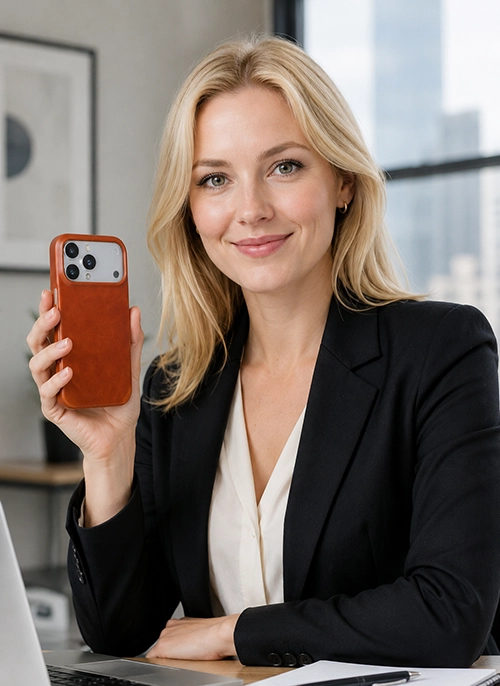
leather phone case for business women
What Pellove Recommends for Thin Leather Case Projects
For thin leather phone case development, Pellove usually recommends starting with the user scenario first.
If the target customer wants Apple-style slimness, the structure should stay clean and thin. If the target customer wants patina and rich leather feel, leather thickness and surface finish matter more. If the customer uses MagSafe wallets or car mounts, magnet alignment becomes a priority. If the case is for corporate gifts, packaging and logo method may matter as much as protection.
This is why a thin leather case project should not begin only with the question:
“How thin can we make it?”
A better question is:
“What kind of leather experience does this user expect?”
Pellove can support OEM and ODM thin leather phone case development with leather selection, leather skiving review, MagSafe structure, microfiber lining, logo method, packaging, sample review, and production planning.
Conclusion
A thin leather phone case can stay slim and protective, but slimness changes the leather experience.
It cannot replace a rugged case for extreme drops, outdoor work, or heavy-duty use. But it can provide excellent daily protection against scratches, grip slips, desk friction, pocket wear, camera contact, and minor bumps.
The best slim leather cases do not rely on leather alone. They use a balanced structure: quality leather, stable inner shell, soft lining, raised edges, precise fit, and well-aligned MagSafe components.
But buyers should also remember the hand-feel tradeoff. For full-wrapped phone cases, leather may be skived to around 0.5mm to stay slim and wrap cleanly. That can be ideal for minimalist users, but it may feel too light or too smooth for customers expecting a thick leather grip.
For users, a thin leather case offers a better everyday feel.
For brands, it offers a premium product direction between cheap ultra-thin plastic and bulky rugged cases.
For OEM buyers, it is a product where small structural details decide whether the case feels truly premium or simply thin.
The real question is not only whether a thin leather phone case can protect the phone.
It is whether the slim structure matches the customer’s expectation of leather feel.
FAQ
Are thin leather phone cases protective?
Yes, thin leather phone cases can protect against scratches, daily friction, better grip, minor bumps, and camera or back-panel wear. They are not designed for extreme drop protection.
Can a thin leather phone case replace a rugged case?
No. A thin leather phone case cannot replace a rugged case for heavy drops, outdoor work, kids’ use, or industrial environments. It is better for daily urban protection.
Why does a thin leather phone case sometimes feel less like leather?
To keep the case slim, leather may be skived thinner before wrapping or bonding. For some full-wrapped phone cases, the leather after skiving may be around 0.5mm. This helps slimness but can reduce the thick leather hand feel some customers expect.
Is 0.5mm leather too thin for a phone case?
Not necessarily. Around 0.5mm leather can work for some full-wrapped phone case structures if the inner shell, lining, bonding, and edge construction are stable. But it may feel lighter and less substantial than thicker leather cases.
Is oil wax leather good for thin phone cases?
Oil wax leather can work well, but buyers should manage expectations. Because oil wax leather has a treated surface, a very thin laminated structure may feel smoother and less thick than some customers expect from traditional leather goods.
What is the best thickness for a thin leather phone case?
It depends on the leather, inner shell, lining, MagSafe structure, and target customer. Buyers should evaluate total finished thickness and leather thickness after skiving, not only the original leather thickness.
Is leather better than plastic for a thin phone case?
Leather usually feels warmer, grips better, and develops patina over time. Ultra-thin plastic may be slimmer and cheaper, but it can crack more easily and usually feels less premium.
Is leather better than silicone for a slim case?
Leather feels more premium and does not attract dust the same way some silicone cases do. Silicone can be softer and easier to clean, but it may stretch or feel sticky over time.
Can a thin leather phone case support MagSafe?
Yes, if the magnet ring is properly aligned and the leather stack is not too thick. MagSafe performance should be tested with chargers, wallets, stands, and car mounts before production.
What should buyers check before ordering thin leather phone cases?
Buyers should check leather thickness after skiving, finished thickness, leather hand feel, shell precision, camera and screen raised edges, microfiber lining, MagSafe strength, edge finishing, and daily-use testing.
Do thin leather phone cases develop patina?
Yes, if they use genuine leather such as vegetable-tanned leather, full-grain leather, Crazy Horse leather, or oil wax leather. PU and heavily coated synthetic materials do not develop true leather patina.
Are thin leather cases good for business gifts?
Yes. Thin leather phone cases are suitable for business gifts because they feel premium, look professional, and can support custom logo and packaging options.
Why do some thin leather cases become loose?
Thin leather cases may become loose because of poor shell precision, soft TPU deformation, weak bonding, incorrect tolerances, heat exposure, or repeated removal and installation.