
Complete Private Label Leather iPad Cases Guide for Brands and OEM Buyers

July 10, 2026

Aurora Pan

July 10, 2026

Aurora is an experienced international sales professional specializing in premium leather accessories and smart device cases. She helps brands turn innovative concepts into high-quality products, bridging design and production with efficiency and precision. Passionate about global markets and client success, Aurora focuses on delivering practical solutions, timely communication, and long-term partnerships that drive growth and quality results.

Table of Contents

Quick Answer

Private label leather iPad cases allow brands to launch customized tablet accessories without developing an entirely new product. Instead of investing in new tooling and engineering, businesses customize an existing case design with their own logo, leather material, colors, packaging, and branding.

Compared with OEM or ODM development, private label projects generally require lower investment, shorter lead times, and less technical risk while still providing a professional branded product. For startups, retailers, distributors, and e-commerce sellers, private labeling is often the fastest and most cost-effective way to enter the tablet accessories market.

If you’re still evaluating suppliers, our Leather Tablet Case Manufacturer Guide explains how to choose a reliable manufacturer, compare production capabilities, and avoid common sourcing mistakes.

Why Choose Private Label Instead of Developing a New Product?

Many buyers assume that building a branded product requires creating a completely new design. In reality, most successful accessory brands begin with proven product platforms before investing in exclusive development.

Private labeling allows companies to focus their budget on branding and customer experience instead of engineering and tooling. Since the case structure has already been tested in production, buyers can significantly reduce development time while improving manufacturing reliability.

Compared with developing a new product from scratch, private label projects offer several advantages:

  • Faster product launch
  • Lower tooling and development costs
  • More flexible minimum order quantities (MOQ)
  • Reduced engineering and production risks
  • Proven manufacturing stability
  • Easier inventory management

This approach is especially valuable for businesses that want to validate market demand before investing in exclusive product designs.

Private labeling is widely adopted by:

  • Startup brands
  • Amazon and e-commerce sellers
  • Consumer electronics retailers
  • Corporate gifting companies
  • Promotional product suppliers
  • Regional distributors
  • Educational and enterprise procurement teams

For these businesses, launching quickly is often more important than developing a unique product. Once sales become stable and customer feedback is collected, brands can gradually expand into OEM or ODM projects.

Private Label vs OEM vs ODM

Although these three manufacturing models are frequently mentioned together, they serve different business objectives.

ModelBuyer ProvidesManufacturer ProvidesBest For
Private LabelLogo, colors, packaging, brandingExisting product structure, production, QCFast market entry
OEMProduct drawings and specificationsManufacturing and assemblyBrands with finished designs
ODMProduct concept and functional requirementsProduct design, engineering, manufacturingBrands seeking exclusive products

Private Label

Private label uses an existing case structure that has already been developed and tested by the manufacturer. Buyers customize visible elements such as logos, leather materials, colors, packaging, and marketing presentation while keeping the basic product structure unchanged.

Because there is little or no engineering work involved, development cycles are shorter and initial investment is significantly lower. This makes private label an excellent choice for companies launching new product categories or testing market demand.

OEM

OEM (Original Equipment Manufacturing) is suitable for brands that already have complete product specifications or engineering drawings.

In this model, the manufacturer focuses on production according to the buyer’s requirements. OEM offers greater design flexibility but usually requires longer development time, higher tooling costs, and more engineering resources.

ODM

ODM (Original Design Manufacturing) involves the highest level of product development. Buyers provide a product concept or market requirement, while the manufacturer designs, engineers, prototypes, tests, and manufactures the product.

ODM is often chosen by established brands seeking product differentiation, but it also requires greater investment and a longer development cycle.

Which Manufacturing Model Is Right for You?

For most brands entering the leather tablet accessories market, private labeling offers the best balance between customization, investment, and speed to market.

It enables businesses to launch professional products with relatively low risk while maintaining the flexibility to upgrade to OEM or ODM projects as sales grow.

Instead of committing significant resources to developing an entirely new case, brands can establish their market presence first and use customer feedback to guide future product development.

How Does the Private Label Process Work?

Although every project has its own requirements, most private label leather iPad case developments follow a similar workflow. Understanding each stage helps buyers communicate more efficiently with manufacturers and avoid unnecessary delays.

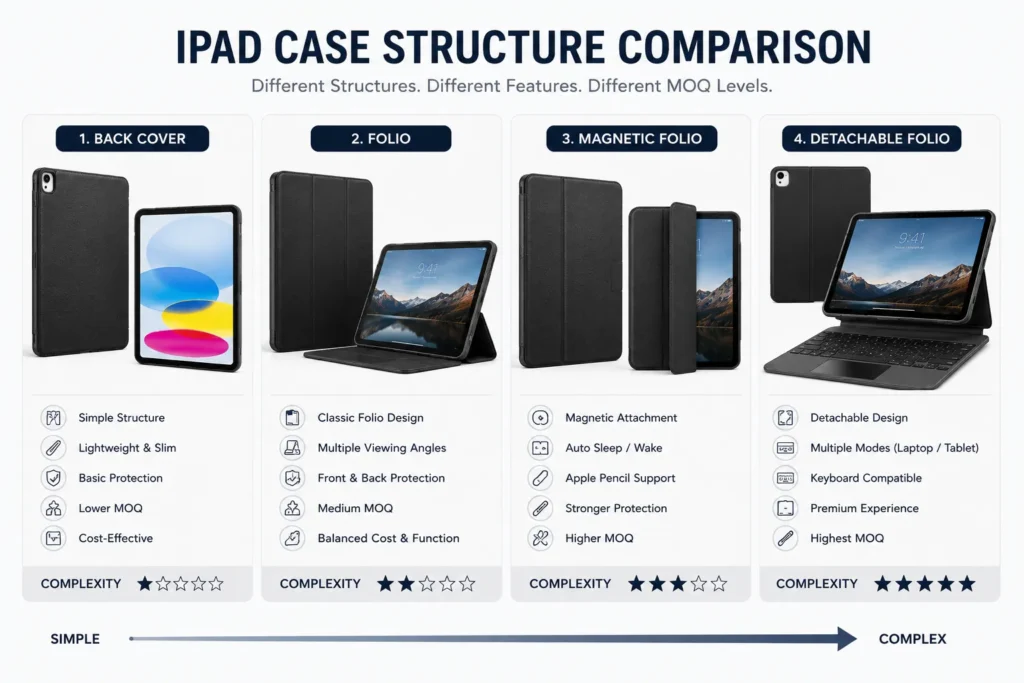
1. Select the Right Case Structure

The first step is choosing a case design that matches your target market and sales channel.

Popular options include:

  • Slim folio cases
  • Magnetic folio cases
  • Apple Pencil holder cases
  • Keyboard-compatible cases
  • Detachable magnetic designs
  • Multi-angle stand cases
iPad Case Structure Comparison

iPad Case Structure Comparison

For first-time projects, selecting an existing production-proven structure is usually the most practical choice. It minimizes engineering work, shortens sampling time, and reduces manufacturing risks.

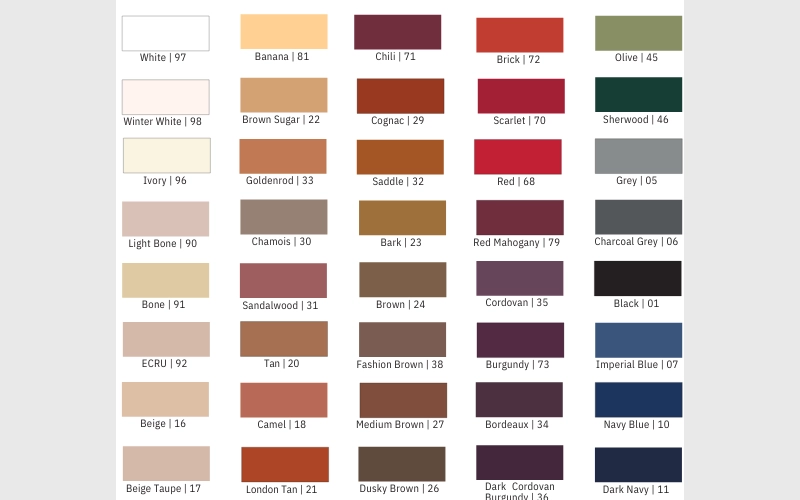
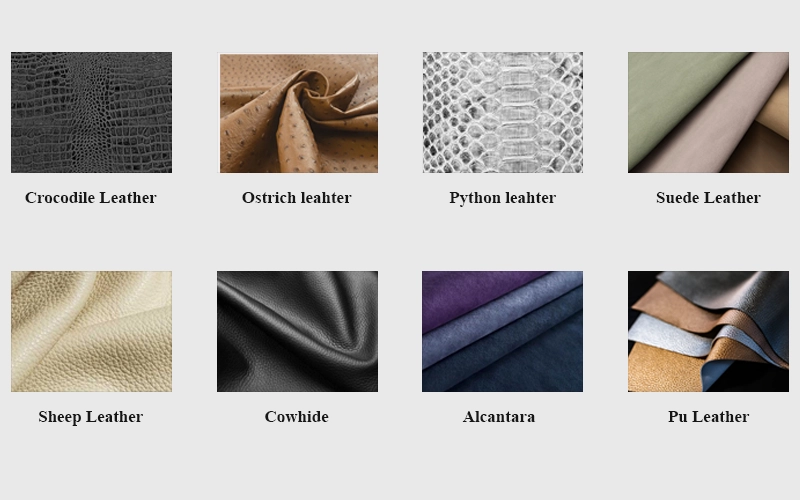
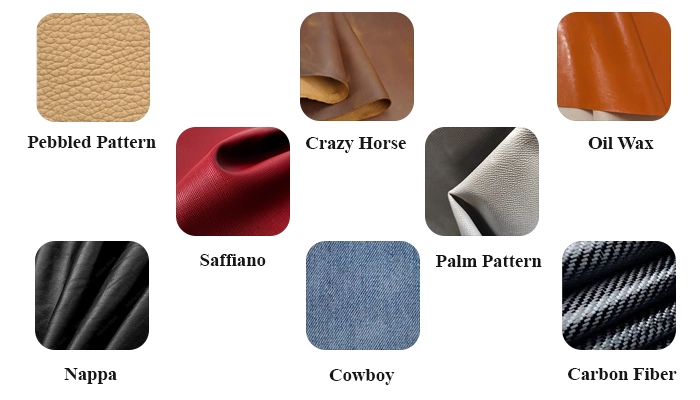
2. Choose Materials and Colors

After selecting the structure, buyers choose materials that match their brand positioning.

Common choices include PU leather, microfiber leather, genuine leather, and recycled materials. Stock materials are generally recommended for initial projects because they provide shorter lead times and more flexible MOQs, while custom colors are better suited to established brands seeking stronger visual identity.

Material selection also affects manufacturing cost. You can learn more in our Leather iPad Case Pricing Guide.

T
Material selection
Material selection

CustomTexture

CustomTexture

Color selection

Color selection

3. Customize Your Branding

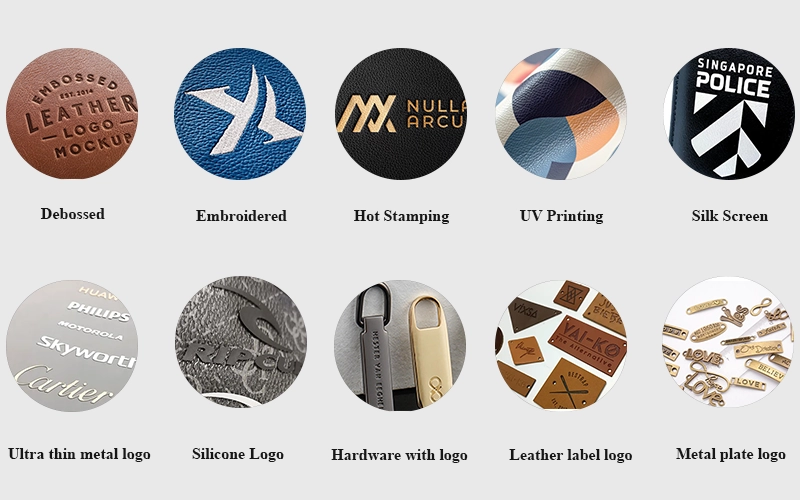
Brand customization transforms a standard product into your own private label collection.

Depending on the product and material, manufacturers may offer:

  • Debossed logos
  • Embossed logos
  • Printed logos
  • Laser engraving
  • Metal logo plates
  • Customized retail packaging

Choosing the right branding method depends on your product positioning, target price, and desired appearance. For a full understanding for logo customization, you can refer to our Leather iPad Case Logo Customization Guide.
Logo option

Logo option

4. Confirm Packaging Requirements

Packaging is more than just protection during shipping—it is also an important part of your brand identity. Well-designed packaging improves the customer experience, strengthens brand recognition, and supports retail presentation.

Depending on your sales channel, packaging options may include:

  • Standard white boxes with logo stickers
  • Custom printed retail boxes
  • Premium gift boxes
  • Paper sleeves
  • Insert cards
  • Barcode and SKU labels
  • Carton markings for warehouse management
Package options

Package options

For e-commerce businesses, compact and durable packaging helps reduce shipping costs and protects products during delivery. Retail brands, however, often invest in premium packaging to enhance shelf appeal and create a better unboxing experience.

It is best to finalize packaging requirements during the sampling stage so that both the product and packaging can be tested together before mass production.

5. Review and Approve Samples

Sample approval is one of the most critical stages in a private label project. A sample should be evaluated not only for appearance but also for functionality, durability, and production consistency.

Before approving production, buyers should check:

  • Device fit and alignment
  • Material texture and color consistency
  • Logo size and placement
  • Stitching and edge finishing
  • Magnetic closure strength
  • Apple Pencil charging compatibility
  • Folding stability at different viewing angles
  • Packaging dimensions and printing accuracy

At Pellove, we recommend testing samples under real daily use rather than relying only on photos or videos. Repeatedly opening and closing the cover, checking the magnetic attachment, and confirming Apple Pencil charging can identify potential issues before mass production begins.

Related Reading: Leather iPad Case Sampling Guide

6. Mass Production and Quality Control

Once the sample has been approved, production moves forward according to the confirmed specifications.

An experienced manufacturer should maintain consistency throughout production by controlling:

  • Raw material quality
  • Color consistency
  • Logo execution
  • Cutting accuracy
  • Stitching quality
  • Assembly
  • Packaging
  • Final inspection

Consistent quality is particularly important for repeat orders, where customers expect every batch to match previous shipments. A reliable quality control process also reduces returns and protects your brand reputation.

During sample evaluation, buyers should also inspect common manufacturing defects before approving production.

Typical Private Label Development Timeline

Although every project is different, the timeline below represents a typical private label leather iPad case project.

StageEstimated Time
RFQ & Quotation1–3 days
Material Confirmation2–5 days
Sample Development7–15 days
Sample Approval3–7 days
Mass Production25–40 days
Final Inspection & Shipment3–7 days

Lead time may vary depending on material availability, logo customization, packaging complexity, order quantity, and seasonal production schedules.

Providing complete project information early and responding promptly during sample approval can significantly shorten the overall development cycle.

Who Is Private Label Best For?

Private label leather iPad cases are suitable for businesses that want to build their own brand without the cost and complexity of developing a completely new product.

This manufacturing model is especially suitable for:

  • Startup brands launching their first tablet accessory collection.
  • Amazon and e-commerce sellers looking for faster product launches with manageable inventory risks.
  • Retail brands expanding their existing product portfolios.
  • Corporate gifting companies requiring customized products for promotional campaigns.
  • Regional distributors building exclusive product lines for local markets.
  • Educational and enterprise suppliers purchasing branded accessories for schools and business users.

Many successful brands begin with private label products to validate market demand before investing in exclusive OEM or ODM development.

Common Mistakes New Buyers Should Avoid

Planning mistakes can increase costs, delay product launches, and create unnecessary inventory pressure. Understanding these common issues helps buyers make better decisions during product development.

One of the biggest mistakes is launching too many iPad models in the first order. While offering a complete product range may seem attractive, it often leads to smaller production quantities for each model and more complicated inventory management. Starting with one or two popular models usually provides a more efficient path to market.

Another common mistake is choosing custom colors too early. Although custom colors strengthen brand identity, they generally require higher MOQs and longer material lead times. Many brands successfully launch with stock colors first and introduce exclusive color collections after sales have become more predictable.

Some buyers also focus only on the lowest quotation. While price is important, product quality, communication efficiency, manufacturing experience, and after-sales support often have a much greater impact on long-term business success.

Finally, avoid approving production based only on photographs. Physical samples remain the most reliable way to evaluate fit, craftsmanship, magnetic performance, logo quality, and overall product consistency.

What Should You Prepare Before Requesting a Quote?

A detailed RFQ helps manufacturers provide accurate pricing and practical recommendations.

Preparing the following information will speed up communication:

  • Target iPad model(s)
  • Preferred case style
  • Material preference
  • Color requirements
  • Logo artwork
  • Preferred logo method
  • Packaging requirements
  • Target MOQ
  • Estimated order quantity
  • Target launch date
  • Shipping destination

Even if some details have not been finalized, providing as much information as possible allows the manufacturer to recommend suitable materials and production solutions.

Why Choose Pellove for Private Label Projects?

At Pellove, we focus on helping brands launch leather iPad cases efficiently instead of encouraging unnecessary product complexity.

For many new projects, we recommend production-proven case structures that reduce tooling costs, shorten development time, and improve manufacturing stability. As our customers’ businesses grow, we can further support upgrades such as premium leather materials, exclusive packaging, and more customized product solutions.

Our support includes:

  • Product structure recommendations
  • Material and color selection
  • Logo customization
  • Packaging coordination
  • Sample development
  • Quality control
  • Production management
  • Export support

With years of experience manufacturing leather tech accessories for international customers, we understand the details that matter most, including Apple Pencil compatibility, magnetic alignment, folding stability, edge finishing, and consistent craftsmanship across production batches.

Our objective is not simply to manufacture products but to become a long-term manufacturing partner that helps brands reduce development risks while delivering products that meet customer expectations.

Frequently Asked Questions

Is private labeling less expensive than OEM?

Generally, yes. Because private label projects use existing product structures, they usually require lower development costs and shorter lead times than OEM projects.

What is the typical MOQ?

MOQ depends on the product structure, materials, logo method, and packaging. Existing designs with stock materials typically offer the most flexible minimum order quantities.

Can I customize the packaging?

Yes. Manufacturers commonly support retail boxes, gift boxes, paper sleeves, insert cards, barcode labels, and other branded packaging solutions.

Can I start with only one iPad model?

Absolutely. Many successful brands launch with one or two popular models before expanding their product range.

How long does production usually take?

Most private label projects take approximately 4–8 weeks from quotation to shipment, depending on customization requirements and order quantity.

Ready to Launch Your Private Label Leather iPad Cases?

Private labeling is one of the fastest and most practical ways to build a branded tablet accessory business. By combining proven product structures with customized branding, businesses can enter the market more quickly while minimizing development costs and production risks.

Whether you’re launching a new brand, expanding an existing product line, or sourcing products for retail, e-commerce, or corporate gifting, choosing an experienced OEM manufacturer can simplify the entire development process.

Contact Pellove today to discuss your project, request samples, and receive professional recommendations tailored to your brand, target market, and budget.

Send your inquiry today