
For most daily users, a slim leather phone case is the better everyday choice. It keeps the iPhone closer to its original hand feel, works better with MagSafe, feels lighter in the pocket, and develops a cleaner leather patina over time.
A leather wallet phone case is better for a smaller but very loyal group of users: people who want to carry their phone, cards, ID, and sometimes cash in one item. It offers stronger screen coverage and a more mature business look, but it also becomes thicker, heavier, and less convenient for wireless charging, photography, and one-handed use.
For phone case brands and OEM buyers, this is not just a style decision. Slim leather cases and wallet leather cases attract different customers, create different complaints, and require different manufacturing controls.
The real question is not “Which one is better?”
The better question is:
Which product matches your customer’s daily habits?
Market Overview: Slim Is Mainstream, Wallet Is Niche but Loyal
Slim leather phone cases are now the mainstream direction in premium leather iPhone accessories. Brands such as Nomad, Mujjo, Bullstrap, Andar, and BlackBrook Case all show strong demand for leather cases that combine slim profiles, MagSafe compatibility, premium leather texture, and patina aging.
Users buy slim leather cases because they want:
- The original iPhone hand feel
- Less bulk
- Stronger pocket comfort
- MagSafe compatibility
- A business-style appearance
- Full-grain or vegetable-tanned leather
- Natural patina over time
Wallet cases tell a different story.
The market has become narrower, but the remaining users are often very loyal. They tend to be older, more business-oriented, and more likely to value practicality over minimalism. Many wallet case users are people who do not want to carry a separate wallet.
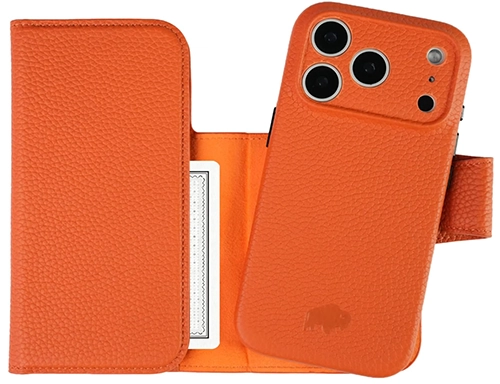
Blackbrookcase wallet case

wallet case good review
Payment behavior also helps explain this shift. Apple says Apple Pay is accepted at over 85% of retailers in the U.S., which reduces the need to carry many physical cards every day. At the same time, the Federal Reserve’s 2024 Diary of Consumer Payment Choice found that credit and debit cards together made up more than 60% of monthly payments, while cash use was lower among consumers under 55 than among older users.
This does not mean wallet cases are disappearing. It means the buyer profile has changed.
Younger users often prefer slim leather cases plus Apple Pay or a detachable MagSafe wallet. Older users, business users, and frequent travelers may still prefer a full leather wallet phone case because it gives them one item to carry.
Quick Comparison: Slim Leather Case vs Wallet Case
| Feature | Slim Leather Phone Case | Leather Wallet Phone Case |
|---|---|---|
| Daily hand feel | Best | Heavier |
| Pocket comfort | Best | Weaker after adding cards |
| MagSafe charging | Usually better | Often less convenient |
| Card storage | No built-in storage | Main advantage |
| Screen protection | Limited | Better with folio cover |
| Camera use | Easier | Flip cover may interfere |
| Patina aging | More even | More creases and pressure marks |
| Common complaint | Corner wear, drop protection, button feel | Thickness, loose card slots, weak magnets |
| Best user | Minimalist, younger, MagSafe user | Business user, 35+, wallet replacement user |
| Best B2B role | Mainstream daily SKU | Niche functional SKU |
A simple sourcing rule helps:
Slim leather cases sell wider. Wallet leather cases sell deeper to the right audience.
Slim Leather Phone Cases: Why Users Like Them
A slim leather phone case is designed to protect the phone without changing how the phone feels. It is not trying to become a wallet, stand, pouch, or rugged case. Its value is restraint.
For modern iPhone users, that restraint is often the main selling point.
1. The Hand Feel Is the Biggest Advantage
Many users describe a good slim case as “feels like no case.” That does not mean there is no protection. It means the case does not make the phone feel clumsy.
Users like slim leather cases because they are:
- Thin
- Easy to grip
- Comfortable for one-handed use
- Easy to slide into pockets
- Less tiring during long phone use
This matters because phones are already large. A case that adds too much size can quickly become annoying, especially on Pro Max models.
For brands developing custom leather phone cases, the target is not simply “thin.” The target is thin enough to feel natural, but structured enough to avoid looseness, warping, and poor edge protection.
2. Real Leather Texture Creates Premium Value
Slim leather cases also win because users can feel the leather every time they hold the phone.
Many buyers are willing to pay more for:
- Full-grain leather
- Top-grain leather
- Vegetable-tanned leather
- Horween leather
- Premium calfskin
- Natural patina
This is especially true among male users in the U.S. and Europe who prefer understated business-style accessories. A good slim leather case does not need heavy branding. The leather itself becomes the visual identity.
A vegetable-tanned leather phone case can become darker, glossier, and more personal over time. That aging process is part of the emotional value of leather.
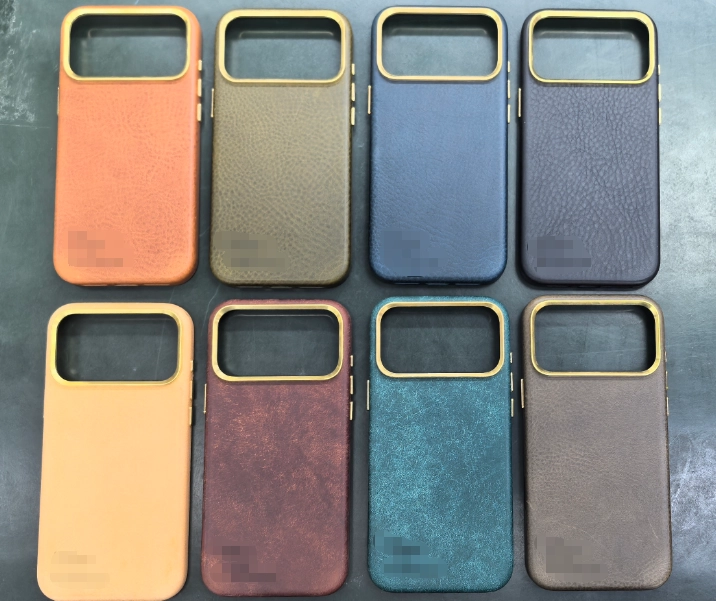
vegetable-tanned leather phone case
3. MagSafe Experience Is Usually Better
Slim cases usually work better with MagSafe because there is less material between the phone and the accessory.
That matters for users who rely on:
- MagSafe chargers
- Car mounts
- Magnetic stands
- MagSafe wallets
- Battery packs
A thick wallet case or folio structure may interrupt the magnetic experience. Some wallet cases require users to remove cards before wireless charging. Reviews of wallet-style cases, including older Mujjo wallet case reviews from  AppleInsider and MacSources, point out that cards and wallet layers can complicate MagSafe charging.
For daily users, small friction becomes a big issue.
If the user charges wirelessly every day, a slim leather case usually creates fewer interruptions.
Slim Leather Phone Cases: Common Complaints
Slim leather cases are popular, but they are not perfect. Their biggest complaints are predictable.
1. Corner Wear Is the Number One Complaint
The most common long-term complaint is corner wear.
Users often complain about:
- Worn corners
- Leather peeling at edges
- Color layer rubbing off
- Exposed shell material
- Edge paint cracking
This usually appears after three to six months of daily use, depending on the leather, edge construction, user habits, and pocket friction.
The reason is simple: corners take the most abuse.
They rub against pockets, desks, bags, car holders, and hands. They also absorb impact during small drops. On slim cases, the material stack is thinner, so the corner has less buffer.
For OEM buyers, this means corner construction matters more than product photos. A beautiful slim leather case can still fail if the corner wrapping is weak.
2. Protection Is Limited
Slim leather cases look beautiful, but they are not rugged cases.
A common consumer feeling is:
Looks beautiful, but it does not survive serious drops.
This is not always a defect. Often, it is a positioning mismatch.
Slim leather cases are good for:
- Scratch protection
- Light bumps
- Better grip
- Camera ring protection
- Daily pocket wear
They are not ideal for:
- High drops
- Outdoor work
- Heavy impact
- Frequent phone accidents
If a brand markets a slim leather case as rugged protection, complaints will follow. The better approach is honest positioning: slim leather cases are premium daily protection, not extreme drop protection.
3. Button Experience Can Be a Problem
Since iPhone 16 introduced Camera Control, side-button design has become more complicated. Apple’s Camera Control guide explains that the button supports pressing, light pressing, double-light-pressing, and swiping.
That creates new complaints for leather cases:
- Button too hard
- Accidental touch
- Swipe not smooth
- Camera Control cutout uncomfortable
- Covered button not sensitive enough
For slim leather cases, this area must be tested carefully. A thin case does not automatically mean good button feel. The Camera Control area needs its own structure, tolerance, and hand-feel testing.
4. USB-C Cutout Can Be Too Small
This is a smaller but very real complaint.
Some cases look fine with Apple’s original cable, but users discover that third-party USB-C cables do not fit well. The connector may hit the case edge or fail to insert fully.
This issue is easy to miss during sample approval.
For OEM production, USB-C testing should include:
- Apple original cable
- Larger third-party USB-C cables
- Car charger cable
- Braided cable
- Dock or stand connector
A slim leather case should not force the user to change charging cables.
Leather Wallet Phone Cases: Why Users Like Them
Leather wallet cases are no longer the broad mainstream choice, but they still have loyal users.
Their value is not minimalism. Their value is consolidation.
A wallet case says: one item, fewer things to carry.
1. Users Like Carrying Less
The biggest reason people buy wallet cases is simple: they do not want to carry a separate wallet.
They want to carry:
- Phone
- Credit card
- ID
- Driver’s license
- Maybe a little cash
For many users, this is enough.
A common wallet case buyer says something like:
I do not carry a wallet anymore.
This explains why wallet cases still sell even when digital payments are growing. Some people still need a physical ID, backup card, hotel card, office card, transit card, or cash. For them, a leather wallet phone case is practical.
2. Protection Feels Stronger
Wallet cases often protect more surfaces than slim cases.
When the folio cover is closed, it can protect:
- Front screen
- Back panel
- Camera area
- Frame edges
- Phone surface inside a bag
This creates a stronger sense of safety, especially for business users, older users, and people who put phones into bags with keys or other items.
Even when the actual drop protection depends on structure, the perceived protection is higher.
That perception matters. Consumers do not only buy protection tests. They buy confidence.
3. The Business Look Still Works
Folio wallet cases have a mature style that still appeals to certain markets.
They work especially well for:
- Business users
- European customers
- Corporate gifts
- Travel accessories
- People over 35
- Users who prefer formal leather goods
A wallet phone case is less “tech accessory” and more “leather goods accessory.”
That makes it useful for brands that want a more traditional premium positioning.
Leather Wallet Phone Cases: Common Complaints
Wallet cases have loyal users, but the complaint pattern is also very clear.
1. They Become Too Thick
The biggest complaint is thickness.
A wallet case may look acceptable when empty. But after adding three credit cards, a driver’s license, and cash, it can quickly feel bulky.
The user expected:
Phone plus wallet in one.
But after daily use, it feels like:
A brick.
This is especially obvious with Pro Max phones. Large phones are already heavy. A leather wallet case with cards can make one-handed use uncomfortable.
This is why wallet cases are less attractive to younger users who frequently take photos, scroll, drive, or use MagSafe accessories.
2. Card Slots Can Loosen Over Time
Card slot looseness is one of the most serious wallet case complaints.
After months of use, leather can stretch. If the slot is too loose, users may worry that cards will slide out. Some Reddit discussions about wallet cases mention stretched card slots and cards falling out as reasons users abandon the format.
For manufacturers, this is a structure problem, not just a leather problem.
Card slot durability depends on:
- Leather thickness
- Slot opening size
- Stitching position
- Inner reinforcement
- Elastic recovery
- Number of cards used daily
- Whether users overload the slot
A wallet case designed for two cards should not be marketed as a four-card wallet.
3. Magnetic Closure Can Fail
Magnetic closure is another common complaint.
Users may say:
- It does not close tightly.
- It opens in the bag.
- It cannot close after adding cards.
- The flap does not align.
- The magnet feels weak.
Sometimes the magnet is not the real problem. The real issue is thickness.
If users add too many cards, the case body bulges. The magnetic closure has to work across a larger gap. The result feels like magnet failure even if the magnet itself is acceptable.
That is why wallet case design must control card capacity honestly.
4. Wireless Charging Becomes Less Convenient
Wallet cases have a structural problem with wireless charging.
Depending on the design, users may need to:
- Remove cards
- Open the folio
- Detach the wallet section
- Remove the case completely
This is a major weakness compared with slim MagSafe cases.
Modern users are used to quick magnetic charging. Any extra step feels old-fashioned.
This is one reason detachable MagSafe wallets have become popular. They let users keep a slim case most of the time and attach a wallet only when needed.
5. Photography Can Be Awkward
Wallet cases can also make photography less convenient.
A folio cover may interfere with:
- One-handed photos
- Horizontal video recording
- Quick camera launch
- Selfie grip
- Tripod or stand use
Younger users notice this quickly because they use the camera more casually and frequently.
For wallet cases, the cover design must fold cleanly and stay out of the camera path. Otherwise, users may love the idea of the wallet case but dislike using it every day.
Manufacturing Risks for OEM Buyers
From a factory and sourcing perspective, slim leather cases and wallet leather cases require different quality control priorities.
| Risk Area | Slim Leather Case | Wallet Leather Case |
|---|---|---|
| Main wear point | Corners and edge paint | Fold line and card slots |
| Main function risk | MagSafe, buttons, USB-C cutout | Card retention, magnetic closure, wireless charging |
| Main material issue | Thin leather may feel less premium | Leather may stretch or crease |
| Main complaint timing | 3–6 months corner wear | 6 months card slot loosening |
| Best QC focus | Corner rubbing, button feel, cable fit | Card pull test, flap closure, folding durability |
| Best product promise | Slim daily protection | Wallet replacement and screen coverage |
Slim cases need better corner engineering.
Wallet cases need better slot engineering.
If a factory treats them as the same product with different shapes, quality problems are almost guaranteed.
How Brands Should Choose
The right choice depends on the customer.
Choose Slim Leather Cases If Your Users:
- Want a bare-phone feel
- Use MagSafe every day
- Carry phones in pockets
- Prefer one-handed use
- Care about patina
- Do not want extra bulk
- Use Apple Pay often
- Take photos frequently
Slim leather cases should be the main SKU for most modern premium leather phone case brands.
Choose Wallet Leather Cases If Your Users:
- Want to carry fewer items
- Still need physical cards or ID
- Prefer business-style leather goods
- Want screen coverage
- Do not mind extra thickness
- Are older or more traditional users
- Use the phone less frequently for quick camera work
Wallet cases should be treated as a focused functional SKU, not a universal daily-use case.
Use Both If Your Brand Has Multiple Customer Groups
A strong B2B product strategy can include both:
- Slim leather case as the mainstream daily product
- Wallet leather case as the business and gift product
- Detachable MagSafe wallet as a bridge between both
This gives customers more choice without forcing one product to solve every use case.
A Typical Product Line Strategy
For a leather phone case brand, the most practical product structure may look like this:
| Product Line | Target User | Main Selling Point |
|---|---|---|
| Slim leather case | Mainstream users | Light, premium, MagSafe-compatible |
| Reinforced slim leather case | Users wanting more protection | Better corners, stronger camera ring |
| Leather wallet phone case | Business and mature users | Cards, ID, screen cover |
| Detachable MagSafe leather wallet | Hybrid users | Slim case most days, wallet when needed |
| Gift set | Corporate buyers | Case + wallet + packaging |
This strategy also helps reduce complaints.
Instead of pushing one wallet case to everyone, brands can guide users toward the right product.
Pellove Sourcing Recommendation
For most B2B buyers, Pellove would usually recommend starting with slim leather phone cases as the main product line because they match current user behavior: lightweight carry, MagSafe use, premium leather feel, and cleaner daily interaction.
Wallet cases should still be developed, but with more precise positioning. They are better for business users, gift markets, and customers who genuinely want to replace a wallet.
For OEM sampling, buyers should compare:
- Slim case thickness
- Corner wear resistance
- MagSafe strength
- USB-C cable compatibility
- Camera Control button feel
- Wallet card slot tightness
- Magnetic closure strength
- Wireless charging behavior
- Leather aging and patina
- Packaging cost and retail price point
[Add Pellove internal test result here: corner abrasion test, card slot pull test, MagSafe strength comparison, or USB-C cable compatibility checklist.]
This kind of factory evidence can make the article stronger and help buyers understand why two leather cases that look similar may perform very differently after six months of use.
Conclusion
Slim leather phone cases and leather wallet phone cases are both valuable, but they serve different daily habits.
Slim leather cases are the mainstream choice for modern users who want a premium leather feel without losing the original iPhone experience. They are lighter, easier to carry, better for MagSafe, and more natural for photography and one-handed use. Their main risks are corner wear, limited drop protection, button feel, and USB-C cutout fit.
Leather wallet phone cases are more niche, but their users are loyal. They work best for business users, older customers, travelers, and people who want to carry cards and phone together. Their main risks are thickness, card slot loosening, magnetic closure failure, wireless charging inconvenience, and awkward photography.
For brands, the smartest answer is not choosing one forever.
Use slim leather cases as the mainstream daily SKU.
Use wallet leather cases as a focused business and gift SKU.
Use detachable MagSafe wallets to connect both markets.
That is the most practical way to match real user behavior, reduce complaints, and build a stronger premium leather phone case line.
FAQ
Is a slim leather phone case better than a wallet case?
For most daily users, yes. A slim leather phone case is lighter, easier to hold, more pocket-friendly, and usually better for MagSafe. A wallet case is better if the user wants card storage and screen coverage.
Why do people like slim leather phone cases?
Users like slim leather cases because they feel close to the original phone, reduce bulk, support MagSafe accessories, and develop natural leather patina over time.
What is the biggest problem with slim leather cases?
The biggest problem is corner wear. After months of use, corners may show rubbing, edge paint loss, leather peeling, or exposed shell material.
Are leather wallet phone cases still popular?
They are less mainstream than before, but they still have loyal users. Business users, older customers, European buyers, and people who dislike carrying separate wallets still buy wallet phone cases.
What is the biggest problem with leather wallet phone cases?
Thickness is the biggest complaint. Once users add several cards and cash, the case can become bulky and uncomfortable for daily use.
Do wallet phone cases work with wireless charging?
Some do, but the experience is often less convenient than slim MagSafe cases. Cards, leather layers, and folio structures may interfere with wireless charging, so users may need to remove cards or open the case.
Why do wallet case card slots become loose?
Leather stretches with repeated card insertion. If the slot structure, stitching, reinforcement, or leather thickness is not controlled well, cards may become loose after months of use.
Which leather case is better for OEM brands?
Slim leather cases are better as mainstream SKUs. Wallet leather cases are better as niche premium SKUs for business users, gift buyers, and customers who want card storage.