
A good leather phone case looks simple when it is finished. It feels slim in the hand, the camera opening lines up, the buttons press cleanly, the MagSafe works, and the leather starts to age naturally after daily use.
But inside the factory, it is not a simple product.
A premium leather phone case is not just a plastic case with leather glued on top. It is a layered accessory where leather thickness, shell structure, adhesive, lining, magnets, edge finishing, camera ring, logo position, and packaging all have to work together.
That is why two leather cases can look almost the same in photos but perform very differently after three months of use.
One may still fit tightly and develop a good patina.
The other may have lifted corners, cracked edge paint, weak MagSafe, or a camera ring that starts to loosen.
For buyers sourcing custom leather phone cases, the real question is not only “What leather do you use?” A better question is:
How is the case actually made, and where can the process fail?
The phone case market is large enough that these details matter. Grand View Research reports that the mobile phone protective covers market was valued at USD 25.51 billion in 2024 and is projected to reach USD 53.33 billion by 2033. The same report notes growing demand for ecosystem-integrated cases, including MagSafe-compatible and modular accessory designs.
At the same time, leather remains a premium material category. Grand View Research reports that the global leather goods market was valued at USD 282.1 billion in 2025 and is projected to reach USD 538.2 billion by 2033. Genuine leather still held the largest revenue share, while vegan leather is growing faster.
For phone case brands, this creates a good opportunity: leather cases can sit between electronics protection and premium lifestyle accessories. But that only works when the manufacturing process is controlled.
How Is a Leather Phone Case Made?
A leather phone case is usually made through these main stages:
| Stage | What Happens | Why It Matters |
|---|---|---|
| Leather selection | Choose full-grain, top-grain, vegan leather, PU, oil-wax, or vegetable-tanned leather | Determines texture, durability, price, and customer expectations |
| Cutting | Cut leather pieces based on product pattern and phone structure | Affects camera, button, port, and corner accuracy |
| Skiving | Thin specific leather areas | Controls bulk, wrapping, corner fit, and button feel |
| Laminating | Bond leather, shell, lining, and sometimes magnets | Prevents bubbling, lifting, and delamination |
| Wrapping and shaping | Wrap leather around the shell and set the shape | Determines corner quality and hand feel |
| Edge finishing | Seal or finish exposed edges | Prevents roughness, cracking, and peeling |
| Functional assembly | Add MagSafe, camera ring, buttons, lining, or hardware | Ensures the case actually works well |
| Logo customization | Add debossing, embossing, hot stamping, laser logo, or metal badge | Builds private-label identity |
| Final QC | Check fit, appearance, MagSafe, buttons, packaging, and batch consistency | Prevents defective goods from shipping |
The finished product may look simple. The process is not.
1. Leather Selection: The First Quality Decision
Leather selection is where many projects quietly succeed or fail.
Buyers often start by asking for “genuine leather,” but that is too broad. A leather phone case needs the right balance of thickness, stretch, surface finish, color stability, smell, texture, and bonding behavior.
A beautiful leather that works well for wallets may not work well for a phone case corner. A leather that looks premium on a flat sample may become too bulky when wrapped around a tight shell. An oil-rich leather may feel excellent in the hand but create problems for glue, hot stamping, or edge finishing.
That is why factories should match leather to the product structure, not just to the buyer’s price target.
Full-Grain Leather
Full-grain leather is often used for premium lines because it keeps the natural grain and develops a richer patina over time.
It is suitable for:
- Premium iPhone leather cases
- Business gift lines
- Private-label leather accessories
- Patina-focused products
The risk is expectation management. Full-grain leather may show natural marks, color variation, scratches, and aging. For some users, that is the beauty of real leather. For others, it may look like a defect if the brand does not explain it clearly.

Full-grain leather
Top-Grain Leather
Top-grain leather is often more stable for OEM production. It has a more uniform surface and is easier to control across a batch.
It is suitable for:
- Mid-premium leather cases
- Large private-label orders
- Minimalist business styles
- Products requiring consistent appearance
If a brand wants fewer complaints about natural marks and color variation, top-grain leather may be a safer choice than more expressive full-grain leather.

top grain leather
Vegetable-Tanned Leather
A vegetable-tanned leather phone case is good for brands that want visible aging and a stronger leather story. It can darken, polish, and develop a more personal patina over time.
The tradeoff is that the product page must educate users. If customers expect the leather to remain exactly the same color, vegetable-tanned leather may create misunderstanding.
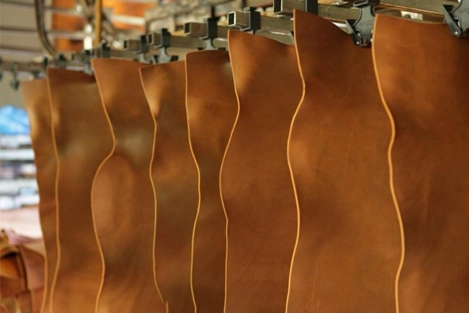
Oil-Wax Leather
An oil wax leather phone case has a richer, more vintage surface. It can show scratches and rubbing marks more easily, but those marks are often part of the material character.
The manufacturing risk is bonding and surface finishing. Because oil-wax leather contains more oils and waxes, logo adhesion, hot stamping, and glue performance should be tested before bulk production.

Oil Waxed leather
PU and Vegan Leather
PU leather is lower cost and easier to color, but low-grade PU may peel, crack, or harden after use.
Vegan leather can be useful for eco-focused brands, but the quality range is wide. Some premium vegan materials perform well, while cheaper coated materials may fail quickly.
Before choosing PU or vegan leather, buyers should test:
- Abrasion resistance
- Color fastness
- Hydrolysis resistance
- Surface peeling
- Heat resistance
- Smell after packaging
For buyers comparing materials, Pellove’s leather types guide can help clarify the difference before sampling.
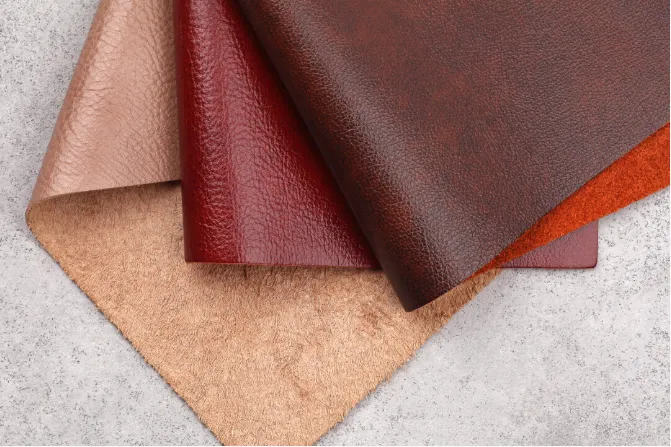
Synthetic Leather
2. Cutting: Where Fit Accuracy Begins
Once the leather is approved, the factory cuts it into the required shapes.
This step looks basic, but it affects the entire case.
A leather phone case has many small alignment points:
- Camera opening
- Button area
- USB-C port
- Speaker holes
- Microphone holes
- MagSafe ring position
- Logo area
- Corner wrapping allowance
- Leather grain direction
If the cutting is slightly wrong, the mistake may not appear immediately. It may show later during wrapping, camera ring assembly, or final fitting.
For premium cases, the leather should not be cut randomly. The factory needs to consider grain direction and surface consistency. This matters especially for full-grain, oil-wax, and vegetable-tanned leather because every piece may look slightly different.
A good cutting process should remove obvious defects, control the direction of the grain, and keep the visual appearance consistent across the batch.

Pellove Factory Leather cutting
3. Skiving: The Hidden Step That Decides Hand Feel
Skiving means thinning the leather in specific areas.
This is one of the most important steps in leather phone case production because phone cases have tight corners and small openings. Leather cannot simply be wrapped at full thickness everywhere.
Skiving is usually needed around:
- Corners
- Side walls
- Camera opening
- USB-C opening
- Button areas
- Folded edges
- Wallet card slots
- Covered Camera Control areas
- Foldable phone hinge zones
If the leather is too thick, the case becomes bulky and the corners may look heavy. Buttons may feel stiff. The camera opening may look rough. The phone may fit too tightly.
If the leather is skived too thin, the case may lose its leather feel. Some users may even say the surface feels like plastic. The leather may also wear faster at corners.
This is where slim leather cases are difficult. The buyer wants a thin, elegant case, but the leather still needs enough body to feel premium.
A good factory does not use one thickness everywhere. It adjusts thickness by area.

factory skiving leather
4. Laminating and Bonding: The Part Customers Never See
Most leather phone cases are composite products. The leather is bonded to a shell, lining, magnet layer, or structural layer.
A typical structure may include:
- Outer leather
- Adhesive
- PC or TPU shell
- MagSafe magnet ring
- Microfiber lining
If the bonding is poor, the case may look good when it leaves the factory but fail after daily use.
Common bonding failures include:
- Bubbling
- Edge lifting
- Delamination
- Warping
- Hollow areas
- Glue marks
- Leather separating from the shell
The causes are usually practical:
- Wrong adhesive
- Dust before bonding
- Oil or wax on the leather surface
- Poor surface treatment
- Not enough pressure
- Insufficient curing time
- Material mismatch between leather and shell
This is especially important for oil-wax leather, coated leather, vegan leather, and full-wrap cases. Each material may need a different bonding approach.
A buyer should ask one simple question:
Has the adhesive been tested with the actual production leather?
If the answer is vague, that is a warning sign.

bonding leather to the phone case
5. Wrapping and Shape Setting: Where the Case Starts to Look Premium
After bonding, the leather is wrapped around the shell and shaped.
This step decides whether the case feels refined or cheap.
A good leather phone case should have:
- Clean corners
- Smooth side walls
- No wrinkles around camera openings
- No visible glue marks
- Tight wrapping
- Comfortable edges
- Stable shape after installation
The corner area is the hardest part. A phone case corner has a small radius, but leather does not stretch like silicone. If the leather is pulled too hard, it can wrinkle or crack. If it is not tight enough, it may lift later.
Hot pressing helps the case hold its final shape. It also improves the bond between leather and shell when done correctly.
However, too much heat or pressure can damage the leather surface, darken the color, or create unwanted marks. This is why factories need process control rather than just “press harder.”

Leather wrapping process for phone cases
6. Edge Finishing: The Detail That Shows Quality Fast
Edge finishing is one of the first things experienced buyers notice.
A leather case edge should feel smooth, sealed, and comfortable. If the edge is rough, sticky, cracked, or uneven, the product immediately feels lower grade.
Common edge treatments include:
- Edge painting
- Folded edge
- Wrapped edge
- Burnished edge
- Coated synthetic edge
For phone cases, edge painting and wrapped edges are common. The challenge is durability. Phone cases rub against pockets, desks, bags, car holders, and hands every day.
Common edge problems include:
- Cracking
- Peeling
- Sticky finish
- Rough edge
- White exposed fibers
- Uneven color
- Thick buildup
One common mistake is applying edge paint too thick. It may look smooth at first, but thick edge paint can crack after bending or rubbing. A better process uses multiple thin coats with enough drying time.
For OEM orders, edge finishing should be tested with bending and rubbing, not just visual inspection.
7. Precision Openings: Camera, USB-C, Speaker, and Buttons
After the case is shaped, every opening must be checked carefully.
This includes:
- Camera opening
- Camera ring fit
- USB-C port
- Speaker holes
- Microphone holes
- Volume buttons
- Power button
- Action button
- Camera Control area
Even a small deviation can create user complaints.
For example, the USB-C opening may work with Apple’s original cable but fail with a larger third-party cable. The camera ring may look slightly off-center. The button may press, but feel hard or delayed.
These are small defects, but customers notice them every day.
For premium leather cases, the Camera Control area is especially important on newer iPhones. The case may need a precise cutout or covered button structure. A beautiful leather case can still fail if the side control does not feel right.

button cutout punching process for phone cases
8. MagSafe, Camera Ring, and Button Assembly
Modern leather phone cases need more than leather texture. They also need functional hardware.
MagSafe Assembly
For a MagSafe leather case, the magnet ring must be positioned accurately. Strong magnets alone are not enough.
MagSafe performance depends on:
- Magnet strength
- Magnet position
- Leather thickness
- Shell thickness
- Adhesive layer
- Wireless charging alignment
- Heat during charging
- Accessory compatibility
If the magnet is slightly offset, users may feel weak attachment with wallets, car mounts, or chargers.
A factory should test MagSafe with real accessories, not only with one charger.
Camera Ring Assembly
The camera ring protects the lens area and improves the visual finish of the case.
Buyers should check:
- Ring height
- Ring material
- Lens clearance
- Fit with leather opening
- Adhesion or locking method
- Color matching
- Scratch resistance
If the camera ring is too low, protection is weak. If it is too high, the case may look bulky.
Button Assembly
Covered buttons need careful tuning. The button should not feel hard, loose, or delayed.
For leather cases, button feel is affected by leather thickness, shell structure, internal button height, and assembly tolerance.
The sample should be tested with a real phone before bulk production.
9. Logo Customization: Private Label Identity
Logo customization turns a factory-made product into a private-label product.
Common logo methods include:
| Logo Method | Best For | Main Risk |
|---|---|---|
| Debossing | Minimalist leather cases | Logo may be too shallow |
| Raised embossing | Premium gift products | Higher cost, harder details |
| Hot stamping | Gift and fashion lines | Foil may fade with friction |
| Laser engraving | Personalization, small batches | Burn effect varies by leather |
| Metal logo badge | Business-style cases | Badge may loosen or add weight |
| Silk screen printing | Budget customization | Lower premium feel |
For most leather phone cases, debossing is usually the safest option. It is subtle, durable, and does not disturb hand feel.
Hot stamping is more visible, but it should be kept away from high-friction areas. Raised embossing can look premium, but it is harder and usually more expensive. Laser engraving is useful for names, serial numbers, or small-batch customization.
The best logo method depends on the leather surface, product style, and where the logo is placed.
10. Final QC: Where the Factory Proves Its Process
Final QC should not be a quick visual check. It should confirm whether the case is ready for real use.
A proper QC process should include:
| QC Area | What to Check |
|---|---|
| Fit | Installation, removal, tightness, looseness |
| Camera | Opening alignment, ring height, lens clearance |
| Buttons | Pressing feedback, Camera Control response |
| MagSafe | Magnetic pull, charging stability, accessory fit |
| Leather | Scratches, stains, color difference, grain consistency |
| Edge | Cracking, peeling, roughness, missing edge paint |
| Bonding | Bubbling, lifting, delamination, warping |
| Lining | Softness, cleanliness, glue marks |
| Logo | Position, depth, clarity, foil adhesion |
| Packaging | Box, label, barcode, insert card, dust bag |
For private-label brands, QC is not optional. Once your logo is on the product, customers blame your brand for any defect.
Depending on the product, buyers can also request:
- Corner rubbing test
- Edge bending test
- Button press test
- MagSafe pull test
- Wireless charging test
- Dry/wet rubbing test
- Alcohol wipe test
- Packaging compression test

Common Manufacturing Failures and Why They Happen
1. Leather Lifts at Corners
This usually happens because the leather was not skived properly, the adhesive was weak, the corner radius was too tight, or hot pressing was not enough.
How to reduce it:
- Improve corner skiving
- Use compatible adhesive
- Increase bonding pressure where needed
- Test corner rubbing
- Avoid thick leather at tight curves
2. Edge Paint Cracks
This often comes from thick edge paint, poor drying, hard coating, or poor edge preparation.
How to reduce it:
- Use multiple thin coats
- Allow enough drying time
- Prepare the leather edge properly
- Test bending before mass production
3. MagSafe Feels Weak
Weak MagSafe may come from magnet misalignment, thick leather, weak magnet grade, or too many layers between phone and accessory.
How to reduce it:
- Test magnet position
- Control back thickness
- Test with chargers, wallets, and car mounts
- Re-check after bulk assembly
4. Button Feedback Feels Wrong
This can happen when leather, shell, or internal button parts are too thick or misaligned.
How to reduce it:
- Test with real phones
- Adjust button insert height
- Skive local leather areas
- Check Camera Control separately
5. Batch Color Looks Inconsistent
Natural leather varies by hide and batch. If cutting and material sorting are not controlled, the final products may look uneven.
How to reduce it:
- Approve acceptable color range
- Use golden samples
- Sort leather before cutting
- Inspect materials before production
How Buyers Should Evaluate a Leather Phone Case Factory
Before placing an OEM order, buyers should ask more than “What is your price?”
Better questions include:
- What leather types do you recommend for my price tier?
- How do you control skiving thickness?
- Do you test adhesive with the actual production leather?
- Can you produce MagSafe-compatible leather cases?
- Do you test buttons with real phones?
- How do you inspect edge finishing?
- Can you show logo process samples?
- Do you keep golden samples for batch comparison?
- What QC tests are done before shipment?
- Can I approve a final commercial sample before mass production?
For OEM / ODM leather accessories, the factory should be able to explain where quality problems happen and how they are prevented.
If a supplier cannot explain the process, it probably cannot control the process.
Buyer Checklist Before Mass Production
Before approving bulk production, confirm:
- Final leather material
- Leather color range
- Grain and surface standard
- Case structure
- Camera opening
- USB-C opening
- Button feel
- MagSafe performance
- Logo method and position
- Edge finishing standard
- Packaging sample
- QC checklist
- Golden sample
- Rework and rejection rules
This is especially important for private-label projects. The factory makes the product, but your brand owns the customer experience.
Pellove Manufacturing Support
Pellove supports leather phone case OEM and private-label production from material selection to final QC.
A typical project can include:
- Leather material recommendation
- Structure sample development
- Slim or full-wrap leather case production
- MagSafe leather case development
- Camera ring and button structure adjustment
- Debossing, embossing, hot stamping, and laser logo options
- Packaging customization
- Sample approval workflow
- Batch QC inspection
- Shipping preparation
For buyers, the best starting point is to send the phone model, product style, leather preference, logo file, packaging requirement, and expected order quantity.
Pellove can help evaluate whether the project is better suited for a slim leather case, full-wrapped leather case, wallet case, MagSafe case, or leather + TPU hybrid structure.
You can also review the Pellove FAQ before starting a custom project if you need to clarify MOQ, sampling, logo customization, or delivery questions.
Conclusion
Leather phone case manufacturing is a precision process. The final product may look simple, but the quality depends on many small decisions: leather selection, cutting accuracy, skiving thickness, adhesive compatibility, wrapping tension, edge finishing, MagSafe placement, logo process, and final QC.
For buyers, the most important lesson is this:
Most defects are created before final inspection.
A case that peels after three months may have started with poor skiving. A weak MagSafe complaint may come from magnet placement. A stiff button may come from local leather thickness. A cheap-looking edge may come from rushed finishing.
A reliable leather phone case manufacturer should be able to explain these details clearly.
The best leather phone case is not only beautiful on day one. It should still fit well, feel good, charge properly, and age naturally after real daily use.
Start Your Leather Phone Case Project
If you are developing a private-label leather phone case line, Pellove can help evaluate your material, structure, logo, packaging, MOQ, and QC requirements before mass production.
You can request:
- Leather swatches
- Logo samples
- MagSafe sample testing
- Full-wrap leather case samples
- Packaging mockups
- QC checklist discussion
- OEM / ODM quotation
Send your phone model, logo file, preferred leather type, and target market to start sample planning.