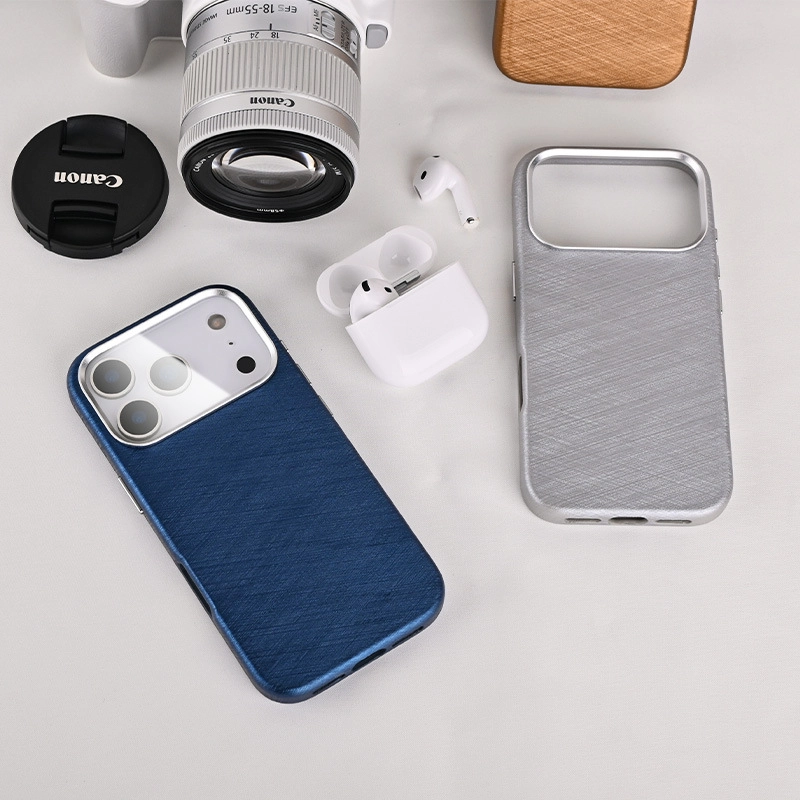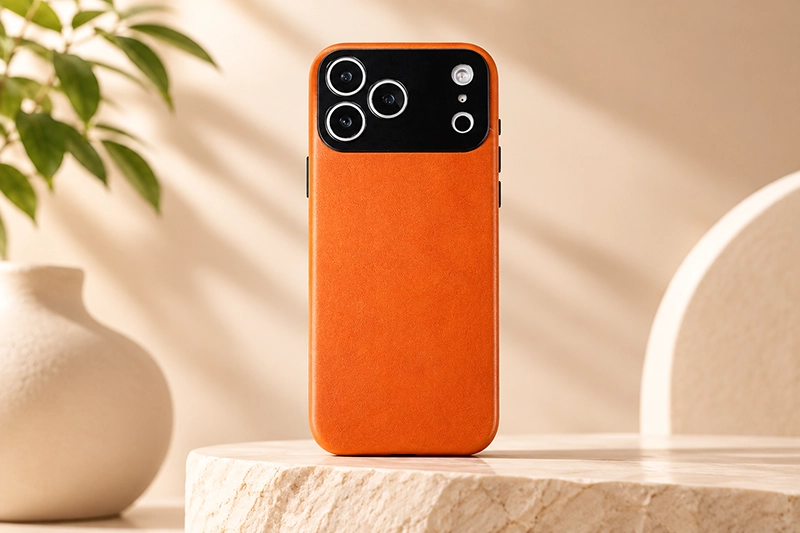

A phone case with camera cover protection can protect the lenses from grit, coins and desk contact, but the cover is only useful if it still allows clean photos. A poorly positioned rim can trap dust, a sliding cover can reflect flash, and a thick metal plate can add more bulk than the camera module needs.
Buyers often use camera cover phone case, camera lens phone case and phone cases with camera protection to describe similar ideas. The best choice depends on the type of protection the buyer wants. A raised lip gives basic clearance. A metal camera plate shields the whole camera island. A sliding shutter adds direct lens coverage but creates rails and moving parts. Each option changes the leather pattern, shell tolerance and sample approval process.
Phone Case With Camera Cover: Protection and Fit Guide
Why Buyers Ask for Camera Protection
The camera island is one of the highest-contact areas on a phone. When a phone is placed face-up, grit can collect between the case and the camera surround. A loose opening or a pocket full of keys can make the problem worse. Users also notice when the phone rocks on a table because one lens sits lower than the rest.
A camera cover addresses several concerns at once: lens contact, dust around the module, visual protection and a stronger product story. The tradeoff is camera performance. Every layer near the lens changes the optical path, and every moving part creates another place for dust or moisture to collect.
Compare the Main Camera Cover Designs
| Design | Protection | Main risk | Best for |
|---|---|---|---|
| Raised camera lip | Keeps the lenses clear of a flat surface | Grit can still enter an oversized opening | Daily leather cases and buyers who want a slim profile |
| Metal camera plate | Covers the camera island and creates a rigid frame | Flash reflection or bulk if the plate is too deep | Premium designs that need a strong visual camera treatment |
| Sliding lens shutter | Physical coverage when the camera is not in use | Rails collect grit, and the shutter can interfere with flash or video | Buyers who prioritize direct lens coverage and accept a moving part |
| Glass or sapphire lens protector | Protects the lens surface itself | Reflection, haze or adhesion problems if quality is inconsistent | Phones used in dusty or abrasive environments |
The Camera Opening Must Match the Actual Phone
Recent iPhone and Samsung models place multiple lenses, a flash, a microphone and sometimes additional sensors inside a complex camera island. The opening cannot be copied from a similar-looking model. The leather layer also changes the visible edge and internal clearance.
For models with a wide camera plateau, the case designer has to decide whether the leather wraps the entire plateau, stops at a metal frame, or follows the individual lens shapes. A wrap that is too tight can lift after assembly. One that is too loose leaves a visible dust channel and makes the case feel less precise.
The existing iPhone 18 Pro case design guide covers the broader fit and MagSafe issues. This article focuses on the camera cover itself because it creates separate optical and mechanical risks.
Five Camera Tests for a Leather Sample
1. Check flash reflection
Take flash photos in a dark room with the case on. Use a plain wall and a close subject. A glossy metal edge, clear protector or loose shutter can bounce light into the image.
2. Test normal and night video
Record video while moving the phone and try the microphone from several directions. The camera plate must not cover a microphone opening or create a tunnel that changes audio.
3. Inspect every lens edge
Look for uneven clearance around each lens. Small differences can be caused by leather thickness, adhesive, edge paint or a misaligned metal insert.
4. Repeat the shutter movement
Open and close a sliding cover repeatedly, then inspect the rails. If debris collects, the movement will feel rough and may scratch the finish.
5. Place the phone face-up and face-down
A case should not rock on a table because one part of the camera plate is lower. It should also keep the lenses from touching the surface when the phone is placed camera-down.
Leather Construction Details That Matter
Leather is flexible; camera covers are usually rigid. The join between them needs a stable plan. An insert can be placed under the leather, set on top with an exposed rim, or built into the shell before wrapping. Each method changes the edge, the amount of visible material and the risk of lifting.
- Keep adhesive and edge paint away from the optical openings.
- Use enough leather allowance for wrapping without creating wrinkles around the camera island.
- Confirm that the metal plate is thick enough to sit flat, but not so thick that it blocks the camera’s field of view.
- Match hardware color and finish to the strap, logo and other accessories in the range.
- Check camera clearance with the final lining and inner shell in place.
What to Put in the Sample Brief
Send the exact phone model, camera-cover type, metal finish, leather finish and expected camera use. If the product will be sold for night photography, request flash tests. If it will be used by travelers or tradespeople, include dust and repeated movement in the approval list. The product should be tested as a complete case, not as a camera plate on a workbench.
Frequently Asked Questions
Does a camera cover reduce photo quality?
It can if the cover reflects light, covers part of a lens or introduces a low-quality optical layer. A clean opening with correct clearance is less risky than a decorative cover that sits too close to the lens.
Is a sliding camera cover good for pocket use?
It can protect the lenses, but the rails need regular cleaning. Grit trapped in the rails may make the shutter rough or mark the surrounding finish.
Should the camera cover be metal or leather?
Metal is more rigid and creates a stronger protective frame. Leather creates a softer look but usually needs an internal structure to maintain a precise opening.
Can a camera cover affect wireless charging?
The main concern is added thickness and metal placement. Keep metal away from the charging coil area and test the complete case on a compatible charger.
Share the target model, cover type and camera-use requirements with Pellove. We can review the shell, leather wrap and insert construction through our leather phone case range and project contact page.