
An iPhone 18 Pro leather case is not just a case. It is a precision accessory wrapped in leather.
That is where the design challenge begins.
A good leather case has to feel slim, look premium, protect the camera, support MagSafe, respond well to every button press, and still keep the warm hand feel that makes leather different from plastic or silicone.
Once one detail fails, the whole product feels cheaper.
A camera opening that is slightly too large makes the case look generic. A button that feels stiff makes daily use annoying. A weak MagSafe ring makes wallets and chargers feel unreliable. Leather that is skived too thin may lose the rich feel customers expect. Leather that is too thick may make the case bulky.
For brands, OEM buyers, and private label sellers, the iPhone 18 Pro case cycle should be handled carefully. Apple has not officially confirmed the final iPhone 18 Pro dimensions yet, so the goal is not to guess perfectly. For brands preparing future iPhone accessories, this means product development should follow a broader planning process rather than relying only on early specifications. Our iPhone 18 case planning guide covers key considerations around materials, design direction, and OEM preparation before launch.
The goal is simpler:
Prepare early, but design for adjustment.
iPhone 18 Pro Leather Case Manufacturer Sourcing Path
For brands preparing iPhone 18 Pro leather case samples, the design discussion should connect to a manufacturer sourcing path. Use the leather phone case manufacturer guide to align OEM structure, leather selection, MagSafe position, logo method, packaging, MOQ, sample approval, and bulk quality-control expectations.
| Design risk | Manufacturing page to review |
|---|---|
| Camera opening, buttons, MagSafe, and leather wrapping need OEM control. | custom leather phone case manufacturer guide |
| Logo and retail packaging need faster private label planning. | private label leather phone cases |
| Leather thickness and surface finish affect fit and premium feel. | best leather for phone cases |
Quick Answer: What Matters Most in iPhone 18 Pro Case Design?
The four most important design areas for an iPhone 18 Pro leather case are camera fit, button feel, MagSafe performance, and leather structure.
| Design Area | Why It Matters | Main Risk |
|---|---|---|
| Camera cutout | Highly visible and often changes between models | Wrong opening, weak camera lip, dust gap |
| Buttons | Users feel button quality every day | Stiff press, loose feel, poor alignment |
| MagSafe | Premium users expect chargers, wallets, and mounts to work | Weak magnets, charging instability, wallet slipping |
| Leather structure | Affects thickness, fit, hand feel, and aging | Wrinkling, peeling, bulky feel, loose fit |
For OEM buyers, the safest path is not to copy an old mold too quickly. A better approach is to test the highest-risk areas first, then confirm tooling and production after better fit data is available.
What Is Still Rumor?
As of May 29, 2026, Apple has not officially announced the iPhone 18 Pro.
Several reports suggest possible changes, but they should still be treated as rumors until Apple confirms the final product.
| Topic | Current Reporting | Case Design Impact |
|---|---|---|
| Launch timing | iPhone 18 Pro models are expected around fall 2026 | Brands can start planning samples, materials, and packaging |
| Camera | Variable aperture main camera is rumored | Camera bump and cutout should be treated as high-risk areas |
| Dynamic Island | Smaller Dynamic Island has been reported | More relevant to screen protectors and front-lip planning |
| MagSafe | MagSafe remains central to iPhone accessories | Magnet position and leather thickness need testing |
| Fit | Final dimensions are not confirmed | Do not assume iPhone 17 Pro cases will fit |
MacRumors reported that a variable aperture camera is expected for iPhone 18 Pro models. Source: MacRumors
MacRumors has also reported a smaller Dynamic Island rumor for iPhone 18 Pro models. Source: MacRumors
This uncertainty matters. Early preparation is useful. Early overproduction is dangerous.
Why iPhone 18 Pro Leather Case Design Is Different
The iPhone Pro series is usually the most important market for premium leather cases.
Pro users often spend more on accessories because the device itself is expensive and frequently used for work, travel, photography, content creation, and daily productivity. These users notice small problems quickly.
They notice if the camera lip is too low. They notice if the buttons feel dull. They notice if MagSafe feels weak. They notice if the leather looks nice in photos but feels thin in hand.
The phone case market is also crowded. Grand View Research estimated the global mobile phone protective cover market at USD 25.51 billion in 2024 and projected it to reach USD 53.33 billion by 2030, with a CAGR of 8.6% from 2025 to 2030. Source: Grand View Research
That growth creates opportunity, but it also increases competition. A generic case can disappear quickly. A premium leather case needs a reason to exist.
For iPhone 18 Pro, that reason will come from details.
Camera Cutout: The First Detail Users Notice
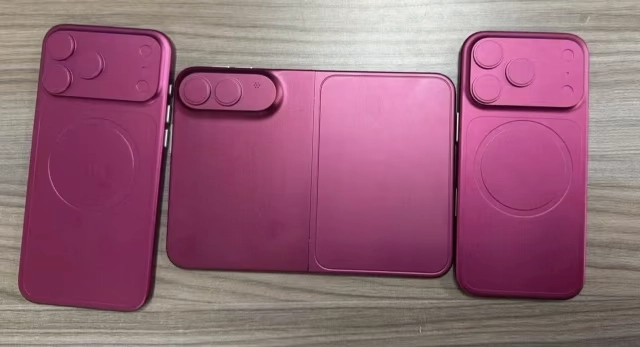
The camera area is usually the first place where a new iPhone case looks either premium or poorly made.
Even if the case fits the phone body, the camera cutout can ruin the impression. If the opening is too large, the case looks like it was made from uncertain data. If the opening is too tight, the leather may press against the camera module or lift after installation. If the camera lip is too low, users may worry about lens scratches when placing the phone on a desk.
For iPhone 18 Pro, camera design should stay flexible until final dimensions are confirmed.
Buyers should check:
- Camera opening shape
- Lens clearance
- Flash and sensor clearance
- Camera lip height
- Table contact
- Dust gap
- Leather edge stability
- Glue marks around the camera area
A good camera opening should look intentional. It should not look like the factory made it bigger “just to be safe.”
This is harder with leather than with plain plastic. Leather wrapping adds thickness and tension. A plastic ring can be adjusted more easily, while a leather-wrapped camera area needs cleaner cutting, stronger bonding, and better edge finishing.
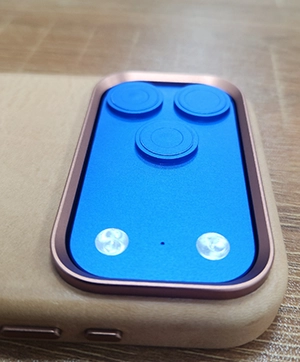
Buttons: The Detail Users Feel Every Day
Buttons are not the most visible part of a phone case, but they are one of the most felt.
A customer may forgive a small visual difference. They are less likely to forgive a button that feels bad every time they press it.
For leather cases, button design is tricky because leather, shell structure, sidewall thickness, and button inserts all affect feedback.
Brands usually choose between two button directions:
| Button Style | Advantage | Risk |
|---|---|---|
| Open cutout | Direct button feel, easier tolerance control | Less protection, less premium appearance |
| Covered button | Cleaner look, better protection | Can feel stiff or hollow if poorly designed |
A good iPhone 18 Pro leather case should have clear and responsive button feedback. It should not feel hard, delayed, loose, or hollow.
During sample review, buyers should press the buttons repeatedly and ask simple questions:
- Does the button press easily?
- Does it return cleanly?
- Does the sidewall deform?
- Does the leather wrinkle around the button?
- Does the button still feel good after repeated pressing?
- Is the button aligned after the case is installed and removed several times?
This is one of those small details that separates a premium leather case from a case that only looks premium online.
MagSafe: Not Just a Logo on the Product Page
MagSafe is now expected on premium iPhone cases.
Apple explains that MagSafe chargers and battery packs attach magnetically to iPhone or a MagSafe case or sleeve, and that magnetic alignment helps charging work more efficiently. Source: Apple Support
For users, this means the case must work smoothly with chargers, wallets, mounts, stands, grips, and battery packs.
For brands, it means “MagSafe compatible” should not be treated as a simple product claim. It has to be tested.
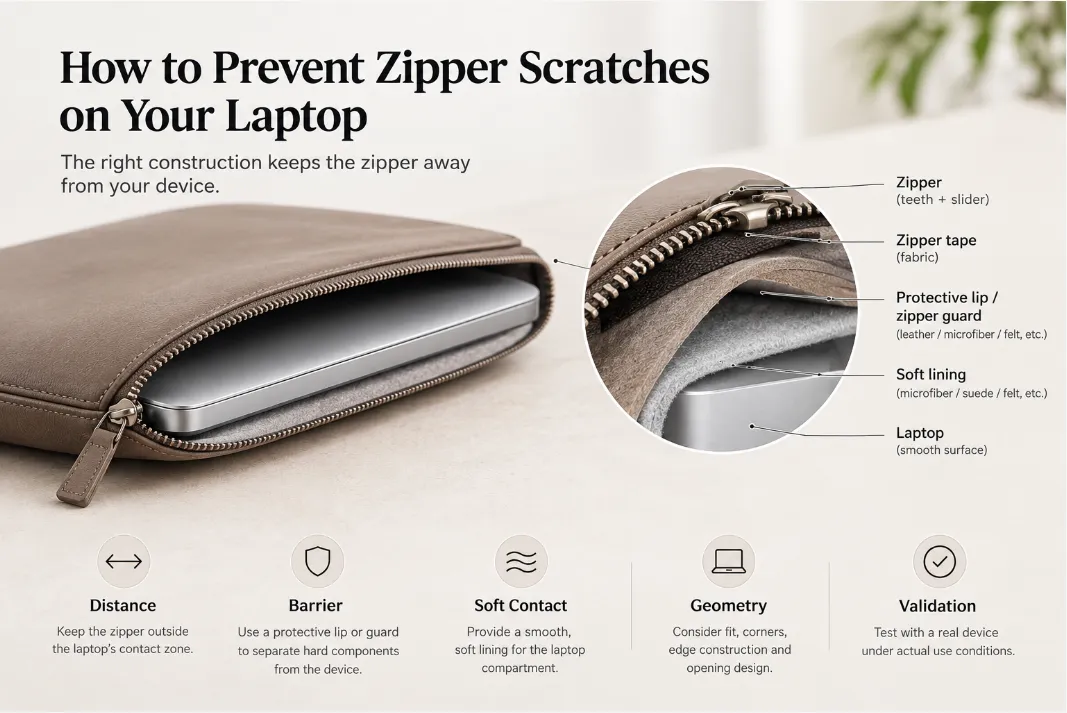
A leather case makes MagSafe more complicated because the magnet ring sits inside a layered structure: outer leather, adhesive, PC or TPU shell, magnet ring, microfiber lining, and surface finish. Every layer changes the distance between the phone and accessory.
If the stack is too thick or the magnet is misaligned, MagSafe performance drops.
Buyers should test:
- Charging alignment
- Magnetic strength
- Wallet attachment
- Car mount stability
- Heat during charging
- Surface flatness
- Magnet movement after bending
- Magnet position after mass production
A case can contain magnets and still perform poorly. That is why MagSafe should be tested as a function, not checked as a component.
Leather Structure: Where Premium Feel Is Won or Lost
The leather structure is what makes a leather case different from a plastic shell with leather attached.
A good iPhone 18 Pro leather case needs to balance slimness, protection, fit, MagSafe, and hand feel. That balance is not easy.
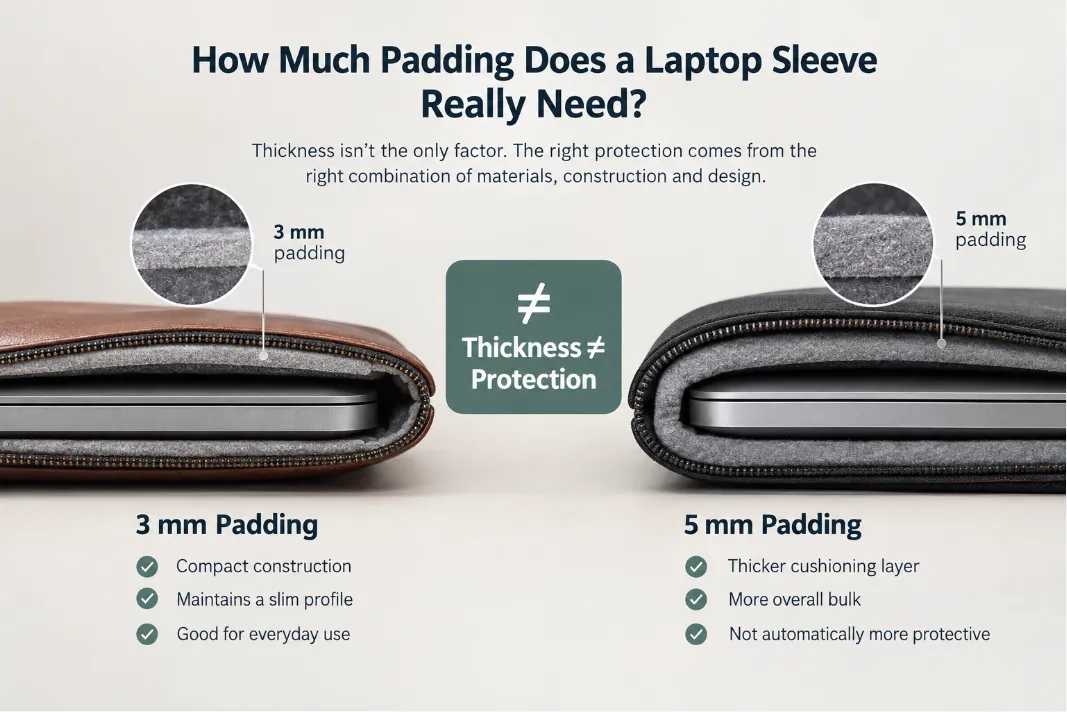
Leather often needs to be skived thinner before wrapping, especially around corners, camera openings, buttons, and sidewalls. If the leather is too thick, the case can become bulky and difficult to fit. If the leather is too thin, the case may lose the rich hand feel customers expect from leather.
This is especially important for full-wrapped leather cases.
A buyer may ask for an ultra-slim full-wrap case. Then, after seeing the sample, they may say, “It does not feel enough like leather.” That does not always mean the material is fake or poor. It may mean the leather was thinned to meet the slim structure.
In other words, this is a positioning decision.
A slim business case should not feel the same as a thick leather case for patina lovers. A MagSafe wallet case should not use the same structure as a lightweight back-panel case.
For brands developing custom leather phone cases, leather thickness after skiving should be discussed early. Waiting until the first sample is finished often leads to wasted time.
A premium leather case may include outer leather for hand feel, a PC or TPU shell for fit, a magnet layer for MagSafe, microfiber lining for protection, and folded or wrapped edges for durability.
For example, Pellove’s cowhide genuine leather phone case is a useful reference for buyers considering natural leather, microfiber lining, full-wrap construction, and OEM/ODM customization.
Edge Finishing and Lining Still Matter
Leather case complaints often come from small finishing problems.
The lining touches the phone directly. If it is rough, dusty, loose, or poorly bonded, the case may feel cheap and may even create micro-scratches.
At the same time, the edge finishing decides whether the case still looks premium after weeks of real use. Poor edge finishing can create cracking, peeling, roughness, glue opening, white marks, and lifting.
For some leather types, folded-edge or wrapped-edge construction may be more stable than thick edge paint, especially in high-bend areas.
Buyers should pay attention to:
- Lining softness
- No glue residue
- No dust or loose fibers
- No color transfer
- No edge cracking
- No leather lifting
- Clean finishing around corners and camera openings
Pellove’s leather care guide can also support customer education after purchase, especially for genuine leather cases that develop patina, scratches, and color changes over time.
Common Buyer Scenario: The Old Mold Problem
One of the most common mistakes before a new iPhone launch is trying to reuse an old mold too aggressively.
Imagine a buyer preparing iPhone 18 Pro leather cases before launch. The iPhone 17 Pro mold looks close. The dummy unit seems similar. To save time and tooling cost, the factory modifies the camera opening but keeps the rest of the shell almost unchanged.
At first, the sample looks acceptable.
Then the details begin to fail.
The camera lip is not high enough. The side button feels slightly stiff. The MagSafe wallet attaches, but not as strongly as expected. The leather around the camera opening starts lifting after repeated handling.
The case technically fits.
But it does not feel premium.
That is the danger of “almost fit.”
For a low-cost case, the market may tolerate some compromise. For a premium leather case, users notice. The old mold may save a few weeks, but if it creates returns, bad reviews, or wholesale disputes, it becomes expensive.
OEM Buyer Checklist Before Mass Production
Before approving iPhone 18 Pro leather case samples, buyers should check the case as a complete product, not just a fitted shell.
| Area | What to Check |
|---|---|
| Camera | Opening shape, lip height, lens clearance, dust gap, edge stability, glue marks |
| Buttons | Position, press feel, return feel, no looseness, no sidewall deformation |
| MagSafe | Magnet alignment, charging stability, wallet attachment, heat, surface flatness |
| Leather | Original thickness, skiving thickness, full-wrap feasibility, hand feel |
| Shell | PC/TPU quality, corner fit, sidewall stability, shape retention |
| Lining | Softness, bonding, no dust, no glue residue, no color transfer |
| Edges | No cracking, no peeling, no roughness, no glue opening |
| Packaging | Model label flexibility, logo method, gift-box fit, SKU accuracy |
A premium iPhone 18 Pro case should be judged by how it feels after real use, not only how it looks in a sample photo.
How Pellove Helps Brands Develop iPhone 18 Pro Leather Cases
For iPhone 18 Pro leather case projects, Pellove usually starts with the buyer’s target customer and product positioning.
A slim business leather case, a full-wrap natural leather case, a MagSafe leather wallet case, and a rugged leather hybrid case should not use the same structure.
Pellove can help buyers evaluate leather material direction, skiving thickness, MagSafe structure, microfiber lining, camera lip construction, button area design, edge finishing, logo method, packaging direction, sample revision plan, MOQ, and production timeline.
For buyers still comparing material direction, Pellove’s guide to real, bonded, and faux leather can help clarify how leather grades affect durability, appearance, and aging.
For brands planning a full accessory line beyond iPhone 18 Pro cases, Pellove’s custom leather goods solutions can connect phone cases with AirPods cases, watch bands, iPad cases, MagSafe wallets, passport holders, and custom packaging.
The goal is not to make a leather case that only looks good in a launch photo.
The goal is to make a case that still feels premium after weeks of real use.
FAQ
Will iPhone 17 Pro cases fit iPhone 18 Pro?
Brands should not assume iPhone 17 Pro cases will fit iPhone 18 Pro. Even small changes to camera bump, button position, thickness, side frame, or MagSafe alignment can make old cases unsuitable.
What is the most important part of iPhone 18 Pro case design?
The most important areas are camera fit, button feedback, MagSafe alignment, and leather structure. These areas affect both function and premium user experience.
Is the iPhone 18 Pro camera design confirmed?
No. Apple has not officially confirmed the iPhone 18 Pro camera design. Current reports suggest camera upgrades such as variable aperture, but final dimensions and layout should be confirmed after Apple’s launch.
Should brands prepare iPhone 18 Pro cases before launch?
Yes, but carefully. Brands can prepare materials, packaging, MagSafe components, sample structures, and supplier capacity before launch, but should avoid large mass production until final dimensions are confirmed.
Why is MagSafe harder in leather cases?
MagSafe is harder in leather cases because leather thickness, adhesive, shell structure, magnet placement, and lining all affect magnetic distance, flatness, and charging stability.
What leather is best for iPhone 18 Pro cases?
Full-grain leather is best for premium patina-focused cases, top-grain leather is good for clean mid-premium lines, PU leather fits budget cases, and vegan leather works for animal-free or sustainability-focused brands.
What should OEM buyers test before mass production?
OEM buyers should test camera fit, button feedback, MagSafe strength, wireless charging, leather wrapping, lining softness, edge durability, repeated installation, and packaging before mass production.
Before freezing camera cutouts, button geometry, or new tooling, brands should compare the latest iPhone 18 launch timing expectations with the iPhone 17 to iPhone 18 fit guide to judge how much previous-generation structure can realistically be reused.
Conclusion
iPhone 18 Pro leather case design is not just about covering the phone.
It is about protecting precision without losing leather feel.
Camera openings must look clean and protect the lens area. Buttons must feel responsive. MagSafe must work with chargers, wallets, and mounts. Leather must be skived, wrapped, bonded, lined, and finished in a way that supports both slimness and durability.
The brands that win the iPhone 18 Pro case cycle will not be the ones that simply reuse old molds or rush inventory based on one leak.
They will be the brands that understand where the real risk is:
Camera, buttons, MagSafe, and leather structure.
For OEM buyers, the best strategy is staged development. Prepare materials early. Test samples carefully. Keep mold decisions flexible. Confirm fit before mass production. And choose a leather structure that matches the customer, not only the device.
A premium iPhone 18 Pro leather case should feel precise on day one and still feel premium after daily use.
That is the design standard worth aiming for.