
Custom Leather Phone Case Manufacturer: Quick Answer for Buyers
A custom leather phone case is the right route when a brand needs specific materials, colors, logo placement, packaging, device compatibility, or functional details that standard wholesale cases cannot provide. The strongest projects usually begin with a clear target model list, preferred structure, quantity range, logo method, packaging direction, and retail positioning.
For brands, the key question is not only how the case looks. It is whether the manufacturer can control fit, leather thickness, MagSafe alignment, camera opening, logo consistency, edge finishing, packaging, and repeat quality across bulk production.
For the broader sourcing overview, use the leather phone case manufacturer guide to compare OEM, ODM, private label, material, packaging, MOQ, and quality-control decisions before preparing a supplier brief.
Leather Phone Case Buying Path for OEM/ODM Buyers
Use this page as the main commercial guide for custom leather phone case projects. If the project involves private label branding, iPhone launch planning, or material selection, the related guides below help buyers prepare a clearer RFQ.
| Buyer need | Recommended guide |
|---|---|
| Private label leather phone cases with logo and packaging | private label leather phone cases |
| iPhone 17 leather case color and launch planning | iPhone 18 color planning for leather case brands |
| Material choice for premium phone case projects | best leather for phone cases |
| MOQ, sampling, and production cost planning | MOQ for custom leather goods |
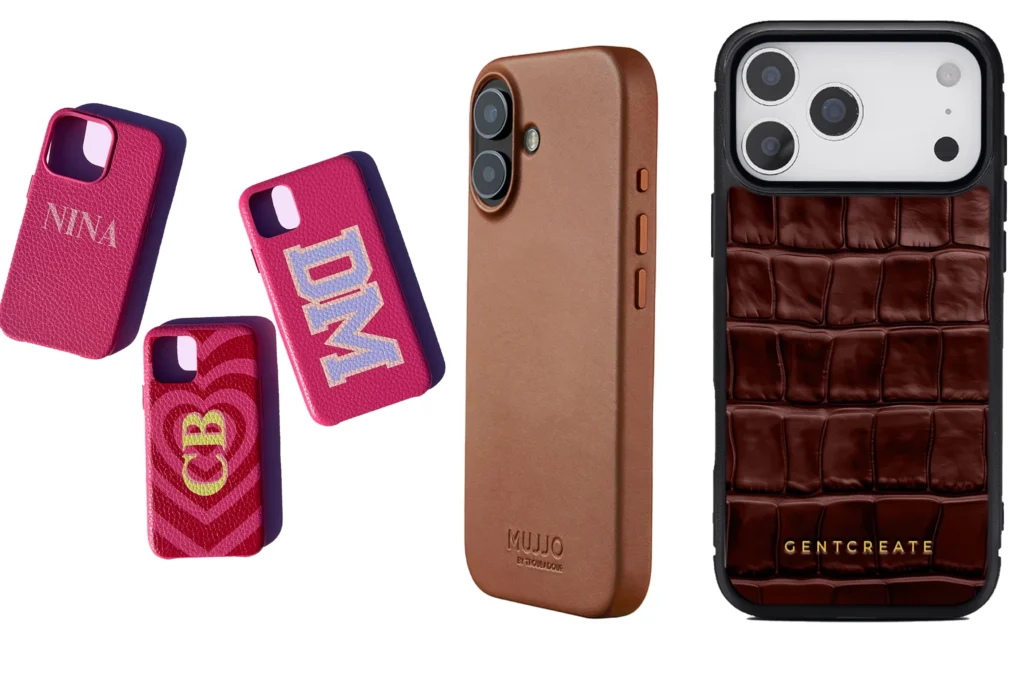
custom leather phone case manufacturer sample
What Brands Can Customize in a Leather Phone Case Project
A custom leather phone case project can start from an existing structure or from a more specific OEM brief. The right route depends on the target device, selling channel, price point, logo requirements, and whether the buyer needs fast private label production or deeper structural development.
| Customization area | Common options | Buyer check before sampling |
|---|---|---|
| Case structure | Slim back case, wallet case, card holder case, folio case, crossbody strap case, MagSafe case | Confirm model list, camera opening, button feel, corner protection, and charging compatibility. |
| Material | Full-grain leather, top-grain leather, split leather, PU, vegan leather, Saffiano texture, microfiber lining | Check thickness, backing, color consistency, bending zones, scratch resistance, and aging behavior. |
| Logo method | Debossing, embossing, foil stamping, UV printing, silk screen printing, laser engraving, metal logo plate | Ask for logo position tolerance, color matching, adhesion, leather rebound, and sample approval photos. |
| Packaging | Retail box, gift box, paper sleeve, insert card, barcode label, private label packaging | Confirm box size, insert fit, shipment protection, label requirements, and carton packing method. |
| Production terms | Sample development, MOQ, bulk lead time, inspection plan, repeat order control | Align sample approval, payment terms, QC criteria, and shipping schedule before mass production. |
OEM vs ODM vs Private Label Leather Phone Cases
Buyers often use OEM, ODM, and private label as if they mean the same thing. In practice, each path creates a different level of design work, sample time, cost, and production risk.
| Project type | Best fit | Typical buyer goal |
|---|---|---|
| Private label | Existing case structure with custom logo, material choice, color, and packaging | Launch faster with lower development risk and clearer MOQ planning. |
| ODM | Supplier-developed design adjusted for brand, market, or channel requirements | Use an existing development base while still creating a differentiated product. |
| OEM | Buyer-specified structure, model fit, material combination, logo method, and packaging system | Create a more controlled product line for retail, wholesale, gifting, or accessory distribution. |
For a broader comparison of production routes, review the OEM vs ODM leather goods manufacturing guide.
Material Selection for Custom Leather Phone Cases
Leather selection affects touch, durability, logo clarity, edge finishing, and retail positioning. It also affects production consistency. A leather that looks good on a flat swatch may behave differently when wrapped around a phone case shell, folded around a card pocket, or bonded to microfiber lining.
- Full-grain leather: Best for premium positioning when natural grain, aging, and touch matter. Buyers should accept natural variation and confirm surface protection requirements.
- Top-grain leather: Useful when a brand wants a cleaner appearance and more consistent bulk production.
- Saffiano leather: Good for a structured, scratch-resistant, patterned surface. Confirm embossing depth, coating, and edge finish before sampling.
- Vegan or bio-based leather alternatives: Useful for sustainability-positioned lines, but buyers should test bending behavior, abrasion, logo adhesion, and backing strength.
- Microfiber lining: Important for protecting the device surface and improving the perceived quality of wallet or folio cases.
For more detail, compare materials in the best leather for phone cases guide and the PU leather vs full-grain leather comparison.
If visible natural aging is part of the collection, compare vegetable-tanned leather phone cases and the leather phone case patina guide before approving the sample standard.
Logo and Branding Methods Buyers Should Compare
Logo method is not only a design decision. It changes tooling, sample approval, production control, and long-term wear risk. The best method depends on the leather surface, logo size, color contrast, and target price point.
| Logo method | Best for | Risk to confirm |
|---|---|---|
| Debossing or embossing | Minimal premium branding on genuine leather or structured leather | Depth, leather rebound, heat mark, and position consistency. |
| Foil stamping | Luxury contrast, metallic brand mark, retail gift programs | Foil adhesion, scratch resistance, color match, and edge sharpness. |
| UV printing or silk screen | Color logos, artwork, pattern branding, promotional projects | Ink adhesion, cracking risk, color accuracy, and coating compatibility. |
| Laser engraving | Fine-line logos, darker marks, permanent branding on suitable surfaces | Burn color, smell control, surface change, and readability on textured leather. |
| Metal plate or hardware logo | High-end branding and collections with hardware details | Attachment strength, plating, edge feel, corrosion resistance, and packaging protection. |
MagSafe, Camera Opening, and Device-Fit Checks
Phone cases are tolerance-sensitive products. A leather layer, lining, adhesive, shell thickness, and magnetic ring can all affect the final fit. Buyers should confirm device compatibility before bulk production, especially for iPhone launch projects and Samsung Galaxy models with larger camera areas.
- Prepare an exact model list, not only a general device family.
- Confirm camera opening clearance and raised protection height.
- Check button feel after leather wrapping and lining assembly.
- Confirm MagSafe ring location, magnetic strength expectations, and charging compatibility.
- Test card pocket thickness, hinge behavior, strap attachment, and long-term edge stress if the case has wallet or crossbody functions.
For launch-related planning, the iPhone 17 leather case color planning guide shows how device trends can connect to material and packaging decisions.
MOQ, Sampling, and Production Timeline
MOQ depends on the case structure, leather choice, logo method, packaging, color count, and whether the project uses an existing design or new development. A buyer should ask for MOQ by model, color, and logo method instead of asking for one general number.
| Stage | What to prepare | What to confirm with the manufacturer |
|---|---|---|
| RFQ | Model list, structure, target material, logo file, packaging idea, quantity range | Feasibility, MOQ, sample cost, tooling needs, and estimated lead time. |
| Sample | Approved material color, logo size, packaging direction, fit requirements | Fit, leather thickness, logo effect, MagSafe alignment, edge finish, and packing method. |
| Pre-production approval | Final sample, inspection criteria, color standard, carton mark, barcode or label details | Bulk tolerance, acceptable defects, packaging protection, and shipment schedule. |
| Bulk production | Purchase order, payment terms, final artwork, approved sample reference | In-process QC, final inspection, photo report, and repeat order consistency. |
For a deeper production planning reference, use the MOQ for custom leather goods guide.
Quality Checklist for Custom Leather Phone Case Buyers
A good sample should be checked like a production reference, not only like a display item. Before approving bulk production, buyers should review these points with the manufacturer.
- Leather surface: color consistency, scars, coating marks, grain direction, and texture match.
- Fit: camera opening, buttons, charging port, speaker holes, corner coverage, and device insertion.
- MagSafe: ring position, attraction feel, charging behavior, and compatibility with common accessories.
- Logo: placement, depth, color, adhesion, readability, and repeat consistency.
- Edge finish: edge paint, folding, stitching, glue line, and corner durability.
- Lining: microfiber smoothness, bonding, pocket tension, and scratch protection.
- Packaging: case fit inside box, surface protection, barcode label, instruction insert, and shipping carton.
The leather goods quality checklist can be used as a broader inspection reference before approving bulk production.
How to Send a Clear RFQ for a Custom Leather Phone Case
A clear RFQ helps the supplier judge feasibility, sample cost, MOQ, and lead time faster. It also reduces back-and-forth before sampling.
| RFQ item | Example detail to include |
|---|---|
| Device models | iPhone 17 Pro, iPhone 17 Pro Max, Samsung Galaxy S series, or exact model list. |
| Case structure | Slim back case, MagSafe case, wallet case, card holder, folio, detachable strap, or crossbody design. |
| Material direction | Full-grain leather, top-grain leather, Saffiano leather, vegan leather, microfiber lining, or target color swatches. |
| Branding | Logo file, logo size, logo position, debossing, foil stamping, printing, or metal logo plate. |
| Packaging | Plain packaging, private label box, retail packaging, insert card, barcode label, or Amazon-ready packing. |
| Quantity | Estimated quantity by model, color, and logo version. |
| Market requirement | Retail, wholesale, corporate gift, brand launch, marketplace, or distributor program. |
When a Custom Leather Phone Case Project Is a Good Fit
A custom project is a good fit when the buyer needs brand control, repeat production, private label packaging, model-specific development, or a product line that cannot be solved by generic wholesale stock. It may not be the best fit for very small test quantities, unclear model lists, or projects without a confirmed logo and packaging direction.
For a factory-level evaluation of sample approval, MOQ, logo, packaging, and QC capability, use the leather phone case factory buyer checklist.
For buyers still comparing materials and production risk,For buyers still comparing materials and production risk, it helps to review the best leather for phone cases, the leather goods quality checklist, and the MOQ for custom leather goods before confirming a sample brief.
Related Buyer Guides
For the next stage of planning, see the leather phone case manufacturing guide, factory evaluation checklist, and leather phone case patina guide.
FAQ
What is a custom leather phone case?
A custom leather phone case is a phone case made with buyer-specific structure, material, logo, color, packaging, or device-fit requirements. For brands, customization usually includes OEM or ODM development, private label branding, sample approval, and bulk production control.
What information should I send before asking for a quote?
Send the device model list, case structure, target material, logo method, packaging direction, quantity range, and any selling-channel requirements. These details help the manufacturer confirm MOQ, sample cost, lead time, and feasibility.
Can leather phone cases support MagSafe?
Yes, a leather phone case can support MagSafe when the structure includes the correct magnetic ring position, suitable shell thickness, and controlled assembly. Buyers should confirm charging behavior and accessory compatibility during sample approval.
What logo method works best for leather phone cases?
Debossing and foil stamping are common for premium leather branding, while UV printing or silk screen printing works better for color artwork. The best method depends on leather texture, logo size, color contrast, and durability expectations.
What affects MOQ for custom leather phone cases?
MOQ is affected by model count, color count, leather type, logo method, packaging, tooling, and whether the project uses an existing structure or new OEM development. Buyers should request MOQ by model, color, and logo version.
Can private label brands use existing designs?
Yes. Private label projects often use an existing case structure, then customize logo, material, color, and packaging. This route is usually faster than full OEM development and works well for brands testing a product line.
How should buyers approve a leather phone case sample?
Check model fit, camera opening, button feel, MagSafe alignment, logo position, leather surface, edge finishing, lining, packaging, and final carton protection. The approved sample should become the reference for bulk inspection.