
A vegetable-tanned leather phone case is best for brands that want natural aging, warmer hand feel, visible patina, and a premium material story. It is not the safest choice for every phone case program because color variation, scratches, water marks, and faster surface change can create customer questions if the product page and care guidance are unclear.
For brands, the decision should not be based only on whether patina looks beautiful. It should be based on target customer, leather grade, surface finish, color control, sample approval, complaint tolerance, MOQ, and how clearly the brand explains natural leather aging.
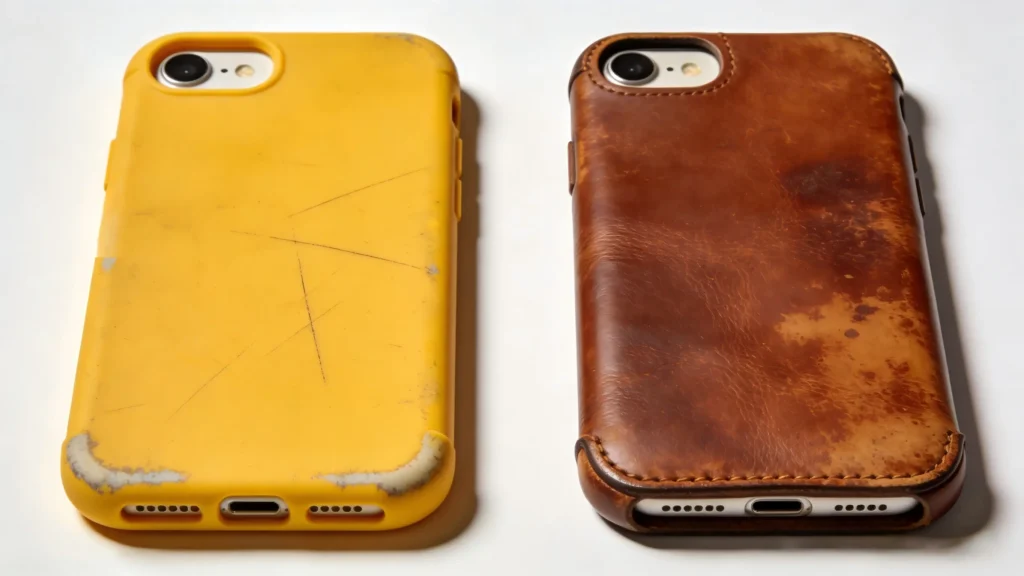
Vegetable-tanned leather can develop character, while many synthetic cases simply show wear.
Quick Decision Table for Brands
| Question | Vegetable-tanned leather is a good fit when… | It may not be ideal when… |
|---|---|---|
| Brand positioning | The product line sells craftsmanship, natural materials, and a personal aging story. | The product line promises a perfectly clean, uniform, low-maintenance appearance. |
| Customer expectation | Customers understand that real leather can darken, soften, and develop patina. | Customers may treat every scratch, mark, or darker corner as a defect. |
| Color control | Slight tone variation between batches is acceptable and explained in advance. | The brand needs extremely tight color matching across every production batch. |
| After-sales risk | The brand can provide care notes and explain natural aging clearly. | The brand wants the lowest possible complaint risk from stains, scratches, or water marks. |
| Manufacturing priority | The buyer values material character and premium storytelling. | The buyer values surface stability, stain resistance, and repeatable mass-market output first. |
What Is a Vegetable-Tanned Leather Phone Case?
A vegetable-tanned leather phone case uses leather tanned with plant-based tannins rather than chrome-based tanning chemistry. The material usually has a more natural surface, a firmer starting feel, and stronger visible aging behavior than many coated or corrected leathers.
That natural surface is the reason many buyers like it. It can also be the reason a project needs more careful explanation. A vegetable-tanned case may show darker hand-contact areas, small surface marks, and warmer tone changes much faster than a heavily coated leather case.
If you need a broader tanning comparison, use the separate guide to vegetable-tanned leather vs chrome-tanned leather for phone cases.
How Vegetable-Tanned Leather Develops Patina
Vegetable-tanned leather develops patina because the surface reacts to hand oils, sunlight, friction, air exposure, moisture, and daily touch. On a phone case, this change can appear faster than on a wallet or bag because the product is handled many times every day.
Normal patina can include deeper color, smoother corners, a warmer surface, small scratches blending into the leather, and a more personal look. Peeling, sticky coating, strong color transfer, deep cracking, or edge separation should not be described as patina. Those are quality or material-performance problems.
For the full explanation of natural aging versus defects, read the main leather phone case patina guide.

Vegetable-tanned leather phone case: day 1 vs one year patina comparison.
Benefits for Leather Phone Case Brands
1. Stronger Material Story
Vegetable-tanned leather gives a phone case a clearer story than a generic coated surface. Brands can explain the tanning method, natural aging, hand feel, and long-term character in a way that supports premium positioning.
2. Visible Patina and Personalization
No two vegetable-tanned leather cases age in exactly the same way. This makes the product feel more personal over time, especially for customers who already understand leather wallets, watch straps, notebooks, or bags.
3. Premium Touch and Firmer Structure
Vegetable-tanned leather often starts with a firmer feel and gradually becomes smoother through use. For phone cases, this can create a structured premium hand feel, especially when the leather is bonded, wrapped, and edge-finished correctly.
4. Better Fit for Heritage or Craft-Led Collections
The material fits brands that want a slower, more crafted, less synthetic product message. It works especially well for limited collections, gift programs, natural leather colors, and products where surface character is a selling point.
Limitations Buyers Should Plan For
Vegetable-tanned leather is not automatically better for every project. A brand should check the following risks before approving bulk production:
- Color variation: Natural leather can vary between hides and production lots.
- Water sensitivity: Some finishes mark more easily when exposed to water or sweat.
- Visible scratches: A more open surface can show marks sooner than coated leather.
- Faster aging: Customers may see darkening quickly in high-touch areas.
- Higher education need: Product pages, packaging inserts, and care cards should explain patina before complaints happen.
For buyers comparing it with full-grain, top-grain, PU, Saffiano, and other options, the best leather for phone cases material guide is a better broad comparison page.
Vegetable-Tanned Leather vs Coated Performance Leather
| Factor | Vegetable-tanned leather | Coated performance leather |
|---|---|---|
| Visual aging | Develops stronger patina and tone change. | Usually stays more uniform for longer. |
| Scratch visibility | Marks may appear sooner but can blend into patina. | Surface may resist light marks better, depending on finish. |
| Color stability | More natural variation is common. | Often easier to control across larger batches. |
| After-sales risk | Needs clear customer education. | Usually lower if the customer expects a stable surface. |
| Best for | Premium, craft-led, natural-aging collections. | Mass-market, uniform-color, low-maintenance collections. |
The choice is not simply natural versus artificial. It is a positioning decision. Buyers who care more about stability should also review coated vs uncoated leather for phone cases.
OEM and ODM Production Notes
In bulk phone case production, vegetable-tanned leather needs clear sample standards. A buyer should approve not only the color on day one, but also the surface feel, acceptable natural marks, edge paint tone, logo effect, lining, MagSafe structure, and care-card wording.
For OEM/ODM projects, ask the supplier to confirm:
- Leather type, thickness, and surface finish
- Acceptable color range for bulk material
- Dry rub, wet rub, and basic sweat-resistance expectations
- Logo method, especially debossing, embossing, hot stamping, or laser engraving
- Edge structure, glue performance, and corner wrapping
- Packaging method to reduce moisture, pressure marks, and surface abrasion during shipping
For broader sourcing decisions, the leather phone case manufacturer guide covers material selection, sampling, MOQ, logo options, packaging, and QC checks.
For projects that need buyer-specific structure, logo, packaging, or device-fit decisions, the custom leather phone case manufacturer guide is the natural next step after material selection.
How to Explain Patina on a Product Page
A short product note can reduce unnecessary complaints. Brands can adapt wording like this:
This phone case uses vegetable-tanned leather. With daily use, the leather will naturally darken, soften, and develop a unique patina from hand oils, sunlight, and friction. Light scratches, tone variation, and polished corners are normal characteristics of this material. Peeling, edge separation, sticky coating, or strong color transfer are not normal and should be reviewed as quality issues.
This note separates natural leather aging from defects. It also sets the right expectation before the customer buys.
Best For and Not Ideal For
Best for: premium leather phone case collections, gift programs, heritage-style brands, natural tan or brown colorways, buyers who want visible material character, and customers who understand leather patina.
Not ideal for: brands that need perfectly consistent color, high stain resistance, very low care requirements, or a product that looks almost unchanged after months of use.
Related Buyer Guides
For the next stage of planning, see the custom leather phone case development guide, factory evaluation checklist, and leather phone case patina guide.
FAQ
Does vegetable-tanned leather always develop patina?
Most vegetable-tanned leather develops visible patina, but the result depends on the leather, finish, color, hand oils, sunlight, friction, and care habits.
Is patina a quality problem?
No. Natural darkening, softening, and polished corners can be normal. Peeling, cracking, sticky coating, strong color transfer, or edge separation are not normal patina.
Is vegetable-tanned leather better than chrome-tanned leather for phone cases?
It depends on the brand. Vegetable-tanned leather is stronger for natural aging and premium storytelling. Chrome-tanned or coated leathers may be better for color stability, softness, water resistance, and lower after-sales risk.
Can a vegetable-tanned leather phone case support custom logos?
Yes. Debossing, embossing, hot stamping, and laser engraving can work, but the result depends on leather firmness, finish, color, and logo size. Always approve logo samples before bulk production.
Should brands include a care card?
Yes. A simple care card should explain water marks, hand oils, scratches, storage, and patina. This helps customers understand natural leather behavior before they assume the product is defective.
Final Recommendation
Choose a vegetable-tanned leather phone case when natural aging is part of the product value. Avoid it when the collection needs a highly uniform, stain-resistant, low-maintenance surface. For OEM and ODM projects, approve leather samples, patina expectations, logo tests, edge finishing, packaging, and care wording before bulk production.
For custom material selection, logo testing, packaging, and bulk production planning, send Pellove the project details so the team can review the most suitable leather direction.