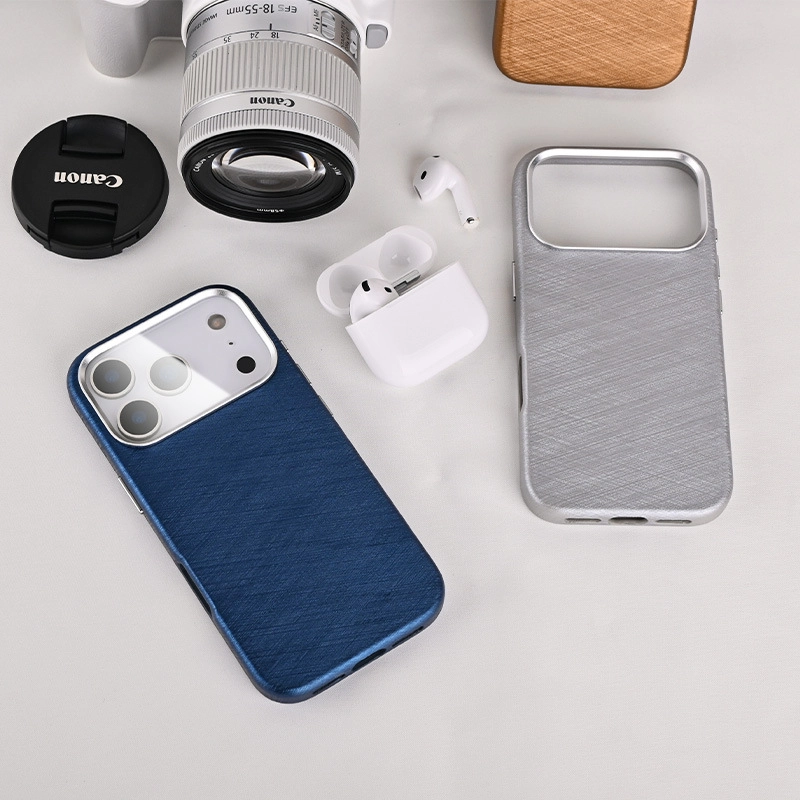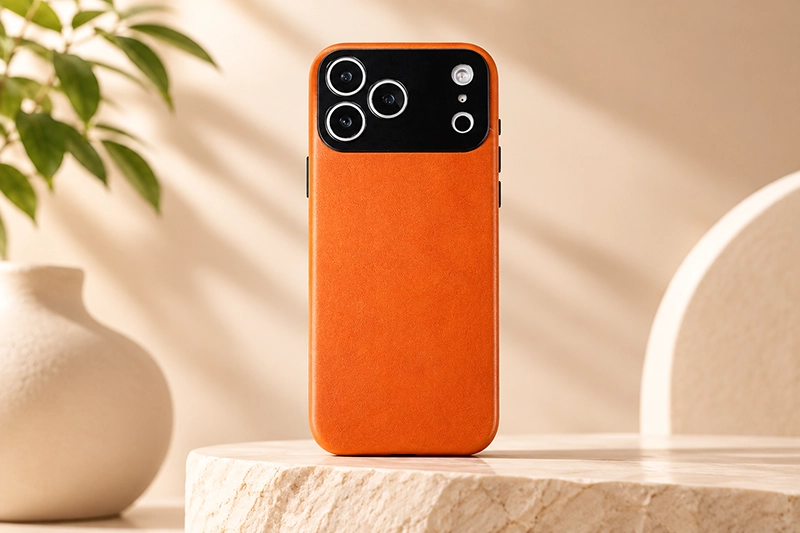

Leather phone case patina is beautiful aging when the surface darkens, softens and becomes smoother at high-contact areas while the case remains structurally sound. It becomes a quality problem when the surface peels, flakes, transfers color or separates from the case, regardless of how the material is described.
The question is not whether leather changes. It should change. The real question is whether that change stays within the expected surface response and whether the construction remains intact.
What Beautiful Patina Looks Like
On a phone case, change usually starts around the edges, corners, camera surround and areas touched by the hand. Those points collect oil, friction and moisture many times a day. The leather may darken first there while the center panel changes more slowly.
Good patina is a surface change rather than a structural failure. The finish may develop a warmer tone, the leather may become more supple and small surface marks may soften into the surrounding color. Uneven change is normal because the case is not handled in an even pattern.
Carl Friedrik’s explanation of how leather patina develops focuses on use, light, oils and friction. On a phone case, that process is often more visible because the product is handled so frequently.
Why a Phone Case Ages Faster Than a Wallet
A wallet spends most of its day in a pocket or bag. A phone case is picked up, put down, held against the face, slipped into a pocket and rubbed against other objects. The repeated contact is why visible changes can appear within weeks on an open leather surface.
Leather type, color, finish and customer routine all affect the result. Natural-tan vegetable-tanned leather may show change sooner than a pigmented, heavily finished leather. Crazy Horse and oil-wax leathers may reveal pull-up effects and light marks that blend into the surface over time.
The case structure matters too. Wrapping tension, corner reinforcement, lining and edge construction determine whether the product remains intact while the surface changes. Leather can age beautifully at the same time that a weak edge or adhesive begins to fail; one does not excuse the other.
What Pellove Observed in 15 Days
Pellove used a vegetable-tanned leather phone case for 15 days of ordinary handling, including hand contact, pocket and desk use and normal indoor light exposure. This was a wear observation, not a controlled laboratory aging test.
The high-touch edges darkened first and the corners became smoother. The surface developed more visible character in those areas, while the case remained structurally sound. There was no peeling, loose edge or sticky coating after the observation period.

The result supports a practical point: short wear testing can show where a material changes before bulk production. It cannot promise one exact final color or the same rate of change for every customer, because body chemistry, environment, color and finish vary.

Why Surface Finish Changes the Result
Patina is not a universal property of “real leather.” An open, unfinished or lightly finished hide responds more visibly to oil and friction. A thick pigment, film or protective coating may keep the surface more uniform for longer and make the patina story less obvious.
That does not make either finish better. A highly protected leather may suit a mass-market or corporate-gift program where color consistency and easy maintenance matter more. A more natural finish may suit a craft-led collection where visible aging is part of the value.
Wet-rub and alcohol resistance should therefore be agreed against the intended product position. Treating every patina leather as if it must perform like a coated performance leather creates a misleading standard. At the same time, unacceptable color transfer, flaking or adhesive failure should not be excused as patina.
Beautiful Aging or a Quality Problem?
The line becomes easier to hold when both sides define it in advance. A darker high-touch area can be approved as normal, while a coating that peels away from the backing remains a failure regardless of the claimed finish.
| Change | Normal patina | Quality concern |
|---|---|---|
| Color | Darker tone in touched areas; gradual unevenness. | Strong dye transfer to hands or clothing. |
| Corners | Smoother, slightly polished high points. | Coating worn through, lifting or exposing a different layer. |
| Surface marks | Fine scratches soften into the leather with handling. | Deep cuts, widespread cracking or sticky flaking. |
| Structure | Leather becomes more supple without the case falling apart. | Edge separation, failed adhesive or a loose lining. |
How Brands Should Approve a Patina Standard
Start with the exact material and finish, not only a color swatch. Record the leather type, tannage, thickness, surface treatment and lining. Photograph the day-one sample in daylight and keep it as a reference.
The wear sample should include the areas customers touch most: corners, sides, camera surround, buttons and the area around MagSafe if the case has a magnet. Review color shift, hand feel, edge stability, adhesion and surface rub after a defined handling period.
Write down what is acceptable and what must be rejected. “Natural variation” is too broad to settle a customer complaint. The standard should state that darkening and light marks are expected while peeling, strong transfer, deep cracking, sticky coating and edge failure are outside the approved result.
Customer wording should be just as specific. A short care card can explain that color may deepen, corners may become smoother and scratches may blend into the leather through use. It should also tell the customer to keep the case away from prolonged water and strong solvents.
Sample care note: This case uses genuine leather. With use, the color may deepen, the surface may soften and high-contact areas may become smoother. Uneven darkening and light scratches are natural. Peeling, sticky coating, deep cracking or edge separation are not normal and should be reviewed as quality issues.
For a closer material comparison, see the vegetable-tanned leather phone case guide and the dedicated Crazy Horse leather phone case. For production planning, use the leather phone case manufacturer guide or review the leather phone case collection.
Is Patina Right for Every Leather Case Brand?
Patina is a strong fit for brands whose customers understand natural materials, enjoy visible aging and expect the product to become personal over time. It also suits small collections, gift products and heritage-inspired ranges where the leather surface is part of the design.
It is a weaker fit for a collection that promises identical color and minimal change across every unit. Those products can still use leather, but they may need a more heavily finished or performance-oriented surface. The brand should choose the material and customer education together.
Pellove can review custom leather phone case development, sample standards and wear observations against the intended market. For supplier qualification, the leather phone case factory checklist covers the broader production review. Contact Pellove with the preferred leather, finish, case models and target quantity to discuss the next sample.
Questions Buyers Ask
What is leather phone case patina?
It is the natural darkening, softening and surface character that develops through hand oils, friction, moisture and light. It should not include peeling or structural failure.
How long does patina take to appear?
There is no fixed timetable. Leather type, finish, color, handling frequency, sunlight and care all affect when the change becomes visible. A short wear test is more useful than a single promised number.
Are scratches normal on a leather phone case?
Fine surface marks can be normal, especially on open or oil-rich leather. Deep cuts, widespread cracks and scratches that expose a coating or lining should be reviewed as damage.
Does every leather phone case develop patina?
No. An open natural leather may change visibly, while a heavily coated or pigmented leather may show little color development. Both can be valid products for different customers.
Is peeling leather patina?
No. Peeling, flaking, a sticky surface and edge separation are material or construction problems, not natural aging.
How can brands reduce patina-related complaints?
Approve the leather and finish, define acceptable color change, run a short wear test and explain the normal changes on the product page and care card before the customer buys.
Why do leather phone case corners become shiny?
Corners rub against hands, pockets, bags and desks more often than the center panel. Light polishing at those high-contact points is normal. Coating wear that exposes a different layer underneath is not.
Does PU leather develop patina?
No. PU leather is a synthetic surface and does not develop the same leather patina. It usually ages through abrasion, cracking, peeling or color wear, which should not be presented as natural aging.