
Best Leather for Phone Cases: Short Answer
The best leather for phone cases depends on the buyer’s price point, brand positioning, surface feel, durability target, and production structure. Full-grain and top-grain leather suit premium positioning, Saffiano and pebbled finishes work well for scratch resistance and consistent appearance, crazy horse leather suits vintage styling, and PU or vegan leather may fit price-sensitive or non-animal material programs.
For OEM buyers, the practical question is not simply which leather is most premium. The better question is which material can pass sampling, logo application, device-fit assembly, packaging, and bulk consistency at your target quantity and price.
| Material direction | Best for | Not ideal for | Production note |
|---|---|---|---|
| Full-grain leather | Premium collections and natural aging | Very tight color uniformity requirements | Check thickness, grain variation, and edge finish |
| Top-grain leather | Balanced premium feel and cleaner surface | Brands that want strong natural patina | Works well for many private label programs |
| Saffiano or pebbled leather | Scratch resistance and consistent retail appearance | Soft natural leather storytelling | Good for repeatable production and color programs |
| Crazy horse leather | Vintage texture and visible patina | Buyers needing a perfectly clean surface | Sample approval should include scratch and rub review |
| PU or vegan leather | Lower cost or non-animal material requests | Premium natural leather positioning | Confirm backing, coating durability, and heat behavior |
For more background, compare the leather types guide, the Saffiano leather explanation, and Pellove’s leather phone case category. Buyers preparing a custom line can also review the private label leather phone case guide.
Factory evidence to add before the next editorial pass: material swatch photos, rub test notes, logo test comparisons, and examples of leather choices by target retail price.
When sourcing materials for leather phone cases, one of the most common questions brands ask is:
What is the best leather for phone cases?
The answer depends on your brand positioning, target price range, durability expectations, and production structure. Full-grain leather, top-grain leather, vegetable-tanned leather, and PU all perform differently in terms of cost, feel, longevity, and craftsmanship compatibility.
If you’re planning to launch or expand a leather phone case line, this guide will help you make informed material decisions — especially if you are comparing suppliers with significant price differences. If you’re new to leather grading and material classification, you may first want to read our complete guide to different leather types, where we explain how leather is categorized by structure, tanning method, and finish.
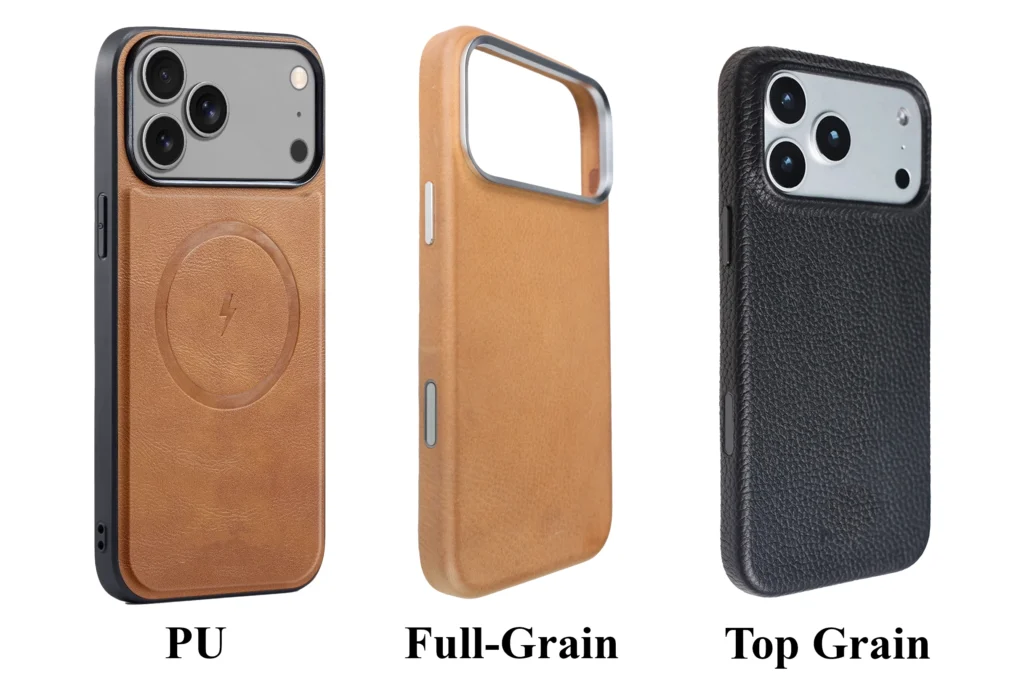
Different leather phone case Comparison
1. Full Grain vs PU Leather for Phone Cases
This is the most common comparison in manufacturing.
Full Grain Leather
Full-grain leather is the highest structural grade of cowhide. It retains the natural grain layer and offers:
Strong fiber structure
Natural aging and patina
Premium tactile feel
Long-term durability
For structured protective cases, full-grain leather performs exceptionally well, especially in full-wrap constructions.
However, the cost is significantly higher due to:
Higher raw hide price
Lower yield rate
Skilled labor requirements
Slower production process
Best suited for:
Premium brands
Luxury positioning
Long-term durability focus
PU (Synthetic Leather)
PU leather is a synthetic material made with a polyurethane coating over a fabric backing.
Advantages:
Lower material cost
Consistent appearance
Easy mass production
Disadvantages:
No natural aging
Risk of peeling over time
Less breathable
Lower long-term durability
PU may be acceptable for:
Entry-level brands
Short product cycles
Price-sensitive markets
However, for high-end full-wrap phone cases, PU is generally not recommended due to bending stress at corners and edges.
2. Leather Thickness Recommendation for Phone Cases
Leather thickness plays a major role in:
Grip feel
Edge wrapping ability
Structural protection
Long-term wear resistance
Recommended Thickness by Construction Type
Back Panel (贴皮款)
0.5mm – 0.8mm
Flexible and easier to laminate
Lower material consumption
Full-Wrap Cases (全包工艺)
0.5mm
Requires better stretch control
Needs stronger fiber density
If the leather is too thick:
Corners may not fold cleanly
Increased production rejection rate
If too thin:
Feels cheap
Reduced durability
Material thickness must align with the mold structure and adhesive system.
3. Full-Wrap vs Back-Laminated Construction
The manufacturing process greatly affects the final cost.
Back-Laminated Leather Case
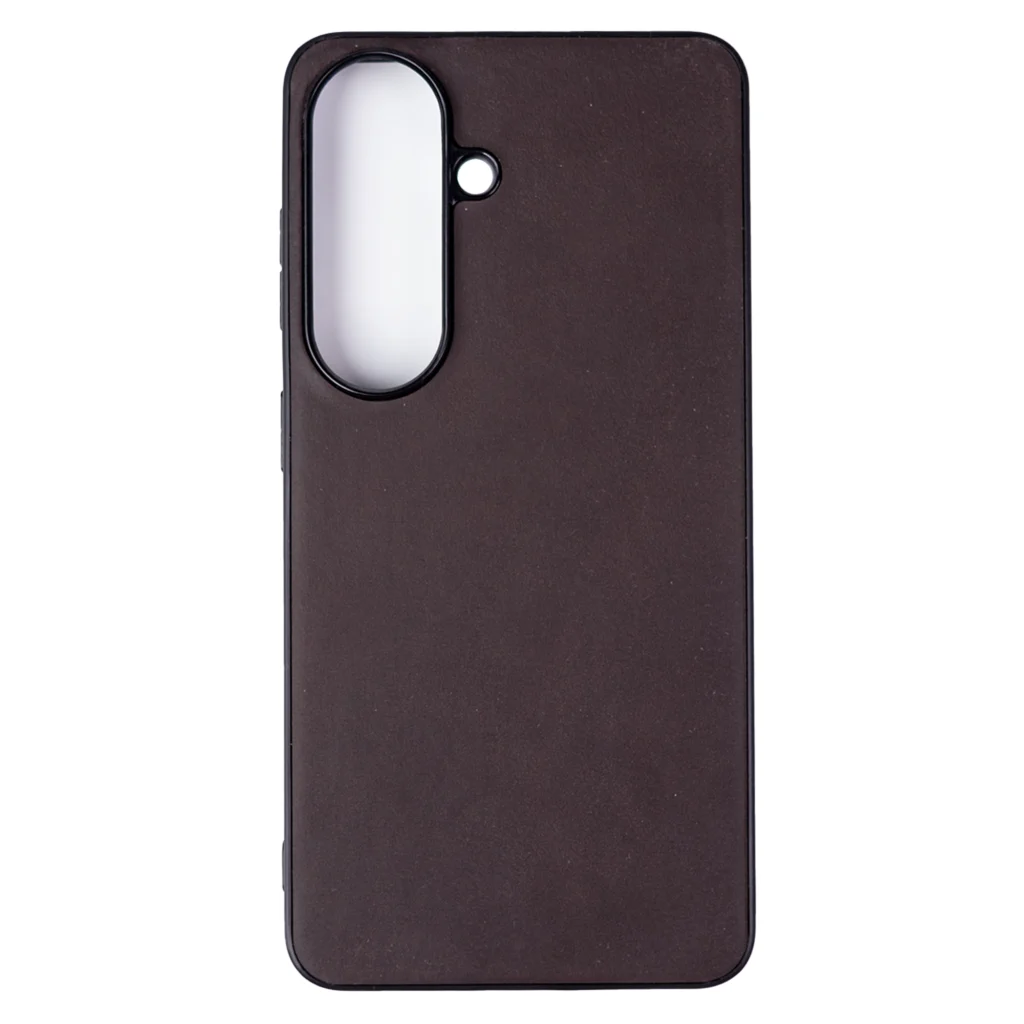
Leather is applied only to the flat rear panel.
Advantages:
Lower leather usage
Faster production
Lower rejection rate
More budget-friendly
Common in mid-range markets.
Full-Wrap Leather Case
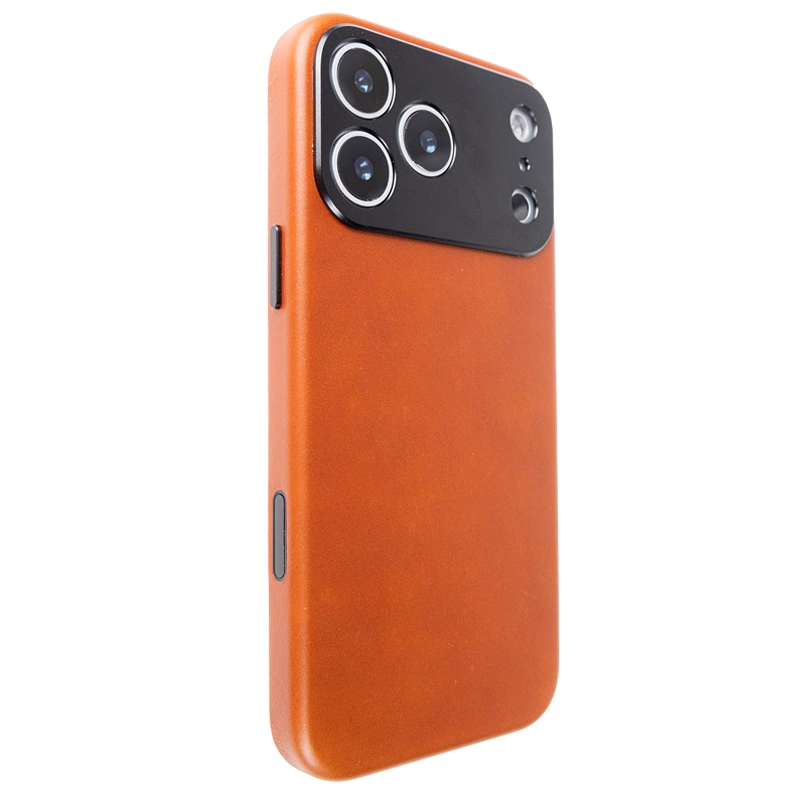
Full Cover Leather Phone Case
Leather wraps around edges and corners.
Advantages:
Premium look
Seamless design
Better tactile continuity
Challenges:
Higher leather consumption
Skilled edge folding required
More material waste
Higher labor cost
Because of bending tension at corners, full-grain or strong top-grain leather performs much better than PU in this structure.
This is why full-wrap leather cases are usually positioned at a higher retail price point.
4. Why Do Leather Prices Vary So Much Between Suppliers?
If you’re comparing quotations, you may notice significant price differences between suppliers offering “leather phone cases.”
The variation usually comes from four major factors:
1. Leather Grade
Full grain > Top grain > Genuine leather (corrected grain) > Split > PU
Higher grades mean:
Stronger fiber density
Fewer surface corrections
Higher raw material cost
Better long-term durability
⚠ Important clarification:
Many buyers request “genuine leather” without realizing that this term simply means real leather, not necessarily high-quality leather.
In most cases, genuine leather refers to corrected grain leather that has been sanded and embossed to remove imperfections. While it is real leather, it is positioned below full grain and top grain in terms of strength, aging performance, and prestige.
If you’re unsure whether genuine leather meets your brand standards, we explain the differences in detail in our guide:
👉 Is Genuine Leather Good Quality?
2. Tanning Method
Vegetable-tanned Italian leather can cost significantly more due to:
Longer tanning process (30–60 days)
Natural plant-based tannins
Lower production volume
Heritage craftsmanship
Chrome-tanned leather is more affordable, softer, and more consistent in color, but may not develop the same rich patina over time.
3. Origin of Leather
Leather origin can influence cost, consistency, and brand positioning — but it should be evaluated strategically rather than emotionally.
For example:
Italian leather is often associated with heritage craftsmanship and premium positioning. (Conceria Walpier, Badalassi Carlo)
North American hides are valued for consistent grading and strong fiber structure. (Horween)
Asian production offers supply chain efficiency and competitive pricing.
In some cases, leather may also carry environmental certifications such as those issued by the Leather Working Group, which can affect pricing and brand perception.
However, origin alone does not determine quality.
The right choice depends on:
Your brand positioning
Target retail price
Required durability level
Compliance requirements in your market
4. Craftsmanship Complexity
Full-wrap construction requires:
Skilled hand finishing
Controlled edge folding
Precision glue application
Higher rejection control
Material choice must align with brand positioning — not just lowest cost.
5. Best Leather for Phone Cases by Brand Positioning
Entry-Level / Mass Market
PU or corrected grain
Back-laminated structure
Focus on affordability
Mid-Range Brands
Top grain leather
Combination tanning
Clean uniform finish
Premium / Luxury Brands
Full-grain leather
Full-wrap construction
Hand-finished edges
If your brand story emphasizes sustainability and heritage, vegetable-tanned full-grain leather supports that narrative.
If your positioning emphasizes protection and functionality, high-quality chrome-tanned top grain may provide better flexibility.
6. Durability & Aging Comparison
| Material | Lifespan | Aging Behavior | Risk of Peeling |
|---|---|---|---|
| Full Grain | 5–10+ years | Develops patina | No |
| Top Grain | 4–8 years | Slight aging | Low |
| Corrected Grain | 3–5 years | Minimal | Moderate |
| PU | 1–3 years | No aging | Yes |
Long-term durability affects not only user experience but also brand reputation. If long-term durability is a key consideration for your brand, you can explore our full durability comparison guide to understand how different leather grades perform over time.
7. Key Takeaways for Procurement Teams
Choosing the best leather for phone cases depends on:
Brand positioning
Target retail price
Production complexity
Desired lifespan
Customer expectations
Material cost should never be evaluated in isolation.
Higher-grade leather:
Improves tactile perception
Enhances brand image
Reduces long-term quality complaints
Lower-cost alternatives:
Reduce upfront cost
Increase margin flexibility
Shorten product lifecycle
There is no universal “best” leather — only the best choice for your market segment.
Final Thoughts
If you are developing a leather phone case line, the most important decision is aligning:
Material grade
Tanning method
Thickness
Construction process
Brand positioning
Premium full-grain leather in a full-wrap structure creates a luxury product with long-term durability.
PU leather in a simple back-laminated structure supports cost-sensitive distribution channels.
Understanding these differences allows brands to make strategic sourcing decisions — not just price-driven ones.
For sourcing teams turning this guide into a production brief, the next practical checks are OEM and ODM production planning, MOQ planning, and the quality control checklist before confirming samples or bulk orders.
FAQ
1. What is the best leather for phone cases?
There is no single “best” option. Full-grain leather is ideal for premium positioning and durability, while top grain offers a balance of cost and performance. PU is suitable for entry-level products.
2. Is full-grain leather worth the higher cost?
Yes—if your brand targets mid-to-high-end markets. It offers better durability, natural patina, and stronger perceived value, which supports higher retail pricing.
3. Can PU leather be used for phone cases?
Yes, but mainly for budget products. It’s cost-effective and consistent, but less durable and may peel over time—especially in full-wrap designs.
4. What thickness is best for leather phone cases?
Typically 0.5–0.8mm. Thinner leather improves wrapping and flexibility, while thicker leather may cause folding issues at corners.
5. Full-wrap vs back-laminated — which is better?
Full-wrap looks more premium and seamless but costs more and requires better materials. Back-laminated is more cost-efficient and widely used in mid-range products.
6. Why do supplier prices vary so much?
Main factors include leather grade, tanning method, origin, and craftsmanship. “Genuine leather” does not always mean high quality.
7. Which leather is best for long-term durability?
Full-grain leather performs best, followed by top grain. PU has the shortest lifespan and a higher risk of peeling.
Looking to develop leather phone cases?
We support OEM/ODM with full-grain, top-grain, and PU options across different price segments. Contact us to match materials with your target market.