
Apple has not officially announced the iPhone 18 or iPhone DUO yet. But for phone case brands, waiting for Apple’s announcement is usually too late.
By the time Apple shows the new iPhone on stage, customers are already searching for cases. Retailers want product pages. Wholesalers want samples. Private label brands want packaging. OEM buyers want prices, molds, materials, and delivery schedules.
That is why iPhone 18 case planning matters now.
The iPhone 18 cycle may be more complicated than a normal Apple launch. Current reports suggest Apple may launch the iPhone 18 Pro models first in fall 2026, while the standard iPhone 18 may shift to spring 2027. Apple’s first iPhone DUO is also widely rumored, but its launch timing may be affected by production delays.
For case brands, this creates both opportunity and risk.
The opportunity is clear: brands that prepare early can capture the first wave of demand.
The risk is just as real: brands that overproduce before final dimensions are confirmed may end up with inventory that does not fit.
The right strategy is not to guess blindly. It is to prepare early, test carefully, and keep production flexible.
What We Know and What Is Still Rumor
As of early June 2026, Apple has not confirmed the iPhone 18 lineup, final dimensions, iPhone DUO design, or launch schedule.
| Topic | Current Reporting | What Brands Should Do |
|---|---|---|
| iPhone 18 Pro / Pro Max | Expected around September 2026 | Prepare first-wave molds and premium SKUs |
| Standard iPhone 18 | Reported to shift to spring 2027 | Avoid large early inventory |
| iPhone DUO | Rumored for late 2026, but may face delays | Develop concepts, but keep tooling flexible |
| Dynamic Island | Rumored smaller on Pro models | Relevant mainly for screen protectors or front-lip accessories |
| Foldable display size | Rumored around 7.8-inch inner and 5.5-inch outer display | Plan hinge and dual-screen protection concepts |
| Final dimensions | Not confirmed | Do not mass produce from one leak source |
MacRumors has reported that the base iPhone 18 may shift to spring 2027, while iPhone 18 Pro models and a foldable device may arrive earlier. Tom’s Guide has reported that Apple’s first iPhone DUO is expected to use a book-style design with a rumored 7.8-inch inner display and 5.5-inch outer display, though recent reports also suggest possible production delays.
This is why brands need two plans: one for iPhone 18 Pro cases and one for iPhone DUO case development.
Why iPhone 18 Case Planning Is Different
Most iPhone case cycles are predictable. Brands prepare for standard models, Pro models, and Pro Max models around the same fall launch window. The iPhone 18 cycle may be different for three reasons.
First, Apple may split the launch schedule. If the iPhone 18 Pro models launch first and the standard iPhone 18 arrives months later, brands need separate inventory plans.
Second, the first iPhone DUO may create a completely new accessory category. Foldable cases are not just normal iPhone cases with a hinge cutout. They require new structure, new materials, new durability testing, and new user expectations.
Third, rumor data may change late. If brands rely too heavily on early dummy units or unverified CAD files, they may produce cases that fail at camera openings, button positions, MagSafe alignment, or foldable hinge clearance.
For case brands, the goal is not to be the earliest brand with inventory. The goal is to be early enough without being wrong.
iPhone 18 Pro Color Reports and Leather Case Planning
Before moving into structural planning, it is worth addressing color direction early — because leather color decisions, logo contrast tests, and packaging concepts can all be prepared before Apple confirms final specs.
Recent pre-launch reports suggest that the iPhone 18 Pro and iPhone 18 Pro Max may include color directions such as Dark Cherry, Light Blue, Dark Gray, and Silver. Apple has not confirmed these colors, so brands should treat them as planning signals rather than final production facts.
| Reported color | Leather colors to prepare | Pairing logic | Buyer caution |
|---|---|---|---|
| Dark Cherry | Black, burgundy, dark brown, oxblood, graphite, cream contrast | Dark Cherry is a rich, saturated warm tone. Deep neutrals like black and burgundy match its intensity without competing. Cream contrast adds a deliberate premium accent. | Good for premium and fashion-led collections, but do not print packaging around the color name before Apple confirms it. |
| Light Blue | Navy, pale grey, white, denim blue, taupe, soft blue leather | Light Blue sits in a cool, low-saturation range. Staying within cool or neutral tones — navy, grey, white — keeps the product feeling cohesive. Warmer tones risk clashing with the device frame. | Useful for clean lifestyle lines, but the final shade may shift the best leather pairing. |
| Dark Gray | Black, charcoal, saddle brown, olive, deep green, navy | Dark Gray is a strong neutral that accepts both tonal and contrast pairings well. Saddle brown and olive add warmth; black and charcoal hold business positioning. Either direction reads confidently against the device. | Safe for business and travel collections because neutral cases usually remain useful even if the device color changes slightly. |
| Silver | Black, cognac, cream, burgundy, navy, grey | Silver is a cool metallic neutral. High-contrast pairings like black or cognac feel deliberate and premium. Softer pairings like cream or grey read as refined and minimal. Both directions work depending on target market. | A flexible planning color, but brands should still confirm visible camera and frame contrast on the final device. |
A practical approach is to prepare two layers of color work: a low-risk neutral leather set that can move forward early, and a flexible accent set that waits for official color confirmation. For brands preparing private label accessories, a structured color matching process is essential before production begins. Our guide on iPhone 18 leather case color matching for OEM brands explains how leather tones, device colors, materials, and production decisions can be aligned. For historical reference, the iPhone 17 launch showed how Apple used soft, Pro, and Air color families differently — a useful framework for anticipating iPhone 18 Pro color positioning.
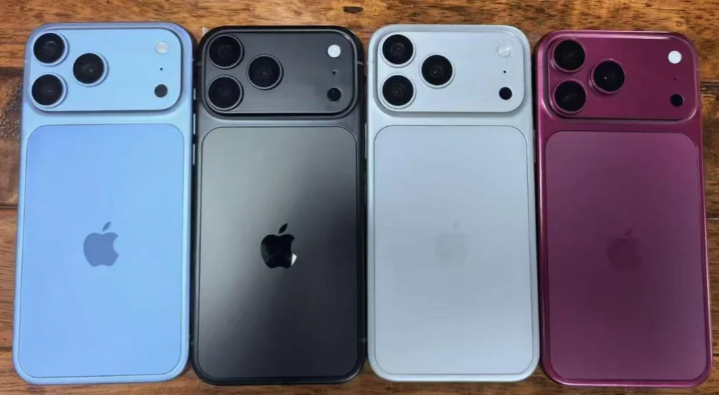
iphone 18 color
iPhone 18 Pro Case Planning Priorities
For iPhone 18 Pro and iPhone 18 Pro Max, brands should prioritize the areas most likely to affect fit and user complaints.
1. Camera Opening and Camera Bump
Camera changes are usually one of the biggest case development risks. Even a small camera bump difference can make an old mold unusable — a case may technically fit the phone body but fail around the camera ring, causing rocking, poor protection, or an outdated appearance.
Brands should test camera opening size, bump height, raised camera lip, lens clearance, flash and LiDAR clearance, camera ring material, and surface contact on flat tables. For premium leather cases, the camera area is especially important because poor cutting or weak reinforcement can make the case look cheap.
2. Button and Port Layout
Button placement can change between generations. Brands should test side button position, volume button position, Action button or Camera Control area, charging port clearance, speaker holes, microphone holes, and button feel through leather or TPU. A leather phone case can look correct but feel wrong if button feedback is weak or misaligned.
3. MagSafe Alignment
MagSafe is no longer optional for premium iPhone cases. Brands should test charging alignment, magnetic pull strength, wallet attachment, car mount stability, heat during charging, leather thickness over the magnet ring, and magnet position after bulk production. For thin leather cases, MagSafe is especially sensitive because the leather, adhesive, shell, and magnet layer must stay slim while still delivering reliable magnetic performance.
4. Leather Thickness and Wrapping
Leather cases are harder to adjust late than plastic cases because material thickness, wrapping tension, edge finishing, and lining all affect fit. For a full-wrapped leather case, leather may need to be skived thinner to fit camera openings, corners, and side walls. If the leather is too thick, the case becomes bulky. If the leather is too thin, the case loses hand feel. This balance should be tested before mass production.
The most important positioning decision is: slim Apple-style leather case, full-wrap leather case, MagSafe case, or thicker premium leather case with stronger hand feel? The answer changes both the material choice and the structure. For brands developing premium accessories, these positioning decisions should be translated into a clear product design strategy. Our guide on iPhone 18 Pro case design considerations explores how structure, materials, and functional requirements influence the final case development process.
iPhone DUO Case Planning Challenges
The rumored iPhone DUO is the bigger engineering challenge. An iPhone DUO case is not just a larger iPhone case — it is a different product category.
1. Hinge Protection
A normal phone case protects four corners and a flat back. A foldable case must also protect a moving center structure without blocking the fold. Brands need to consider hinge clearance, hinge cover flexibility, open and closed thickness, side rail alignment, fold angle movement, material fatigue, dust entry, and case separation during folding. If the hinge cover is too stiff, it may block folding. If it is too soft, it may not protect enough. If it is too thick, the phone may not close properly.
2. Dual-Screen Protection
An iPhone DUO may have both an outer display and a large inner display. The outer screen may need raised protection like a normal phone. The inner screen is more delicate because foldable displays require careful clearance and soft material contact. Brands should avoid rough inner edges, exposed glue, hard lining, or any structure that may rub against the folding display.
3. Slimness vs Protection
Foldable phones are already thicker when closed than normal phones. A bulky case can make the product feel too heavy or awkward. That means foldable cases need a careful balance: slim enough to close comfortably, protective enough around hinge and corners, soft enough near display areas, and strong enough to survive daily handling. This is especially difficult for leather cases because leather adds premium texture but must be controlled carefully around moving areas. For brands exploring premium foldable accessories, a slim leather structure requires careful planning of thickness, hinge flexibility, and material selection. Our guide on slim iPhone DUO leather case development explains how these factors influence case design and OEM production decisions.
4. New User Expectations
iPhone DUO buyers are likely to be premium early adopters. They may expect luxury materials, thin structure, strong hinge protection, scratch-resistant lining, MagSafe or magnetic accessory support, clean folding movement, premium packaging, and low visual bulk. For OEM brands, this creates an opportunity for high-end leather and hybrid designs, but also a higher complaint risk if the case interferes with folding.
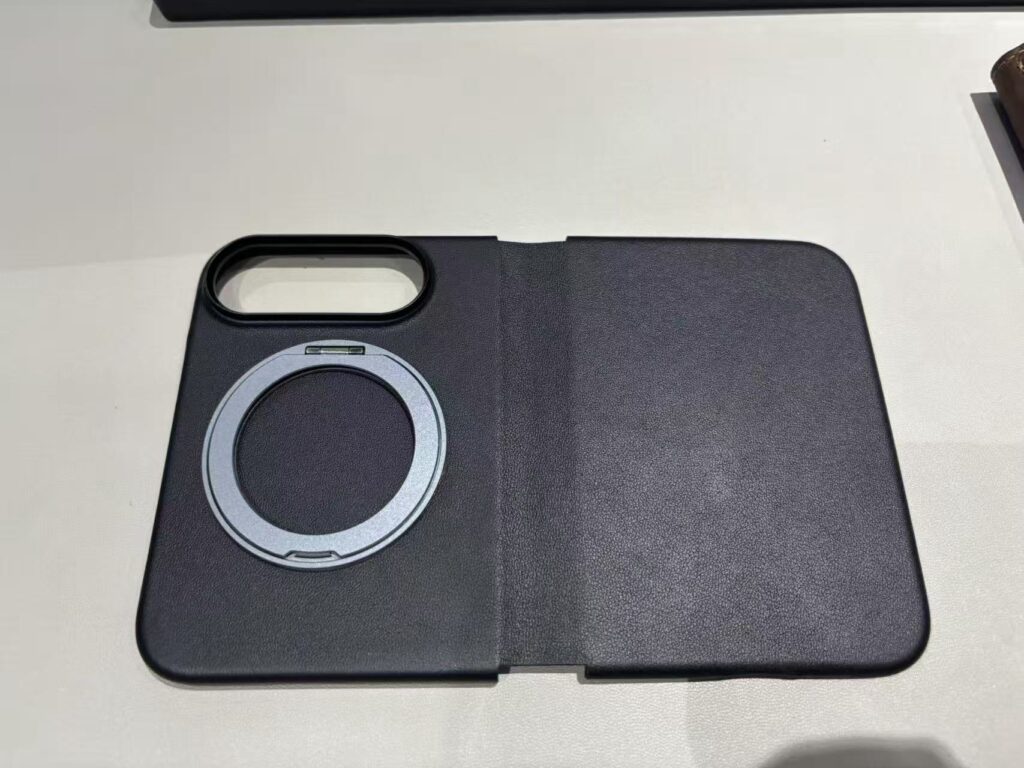
iPhone DUO case
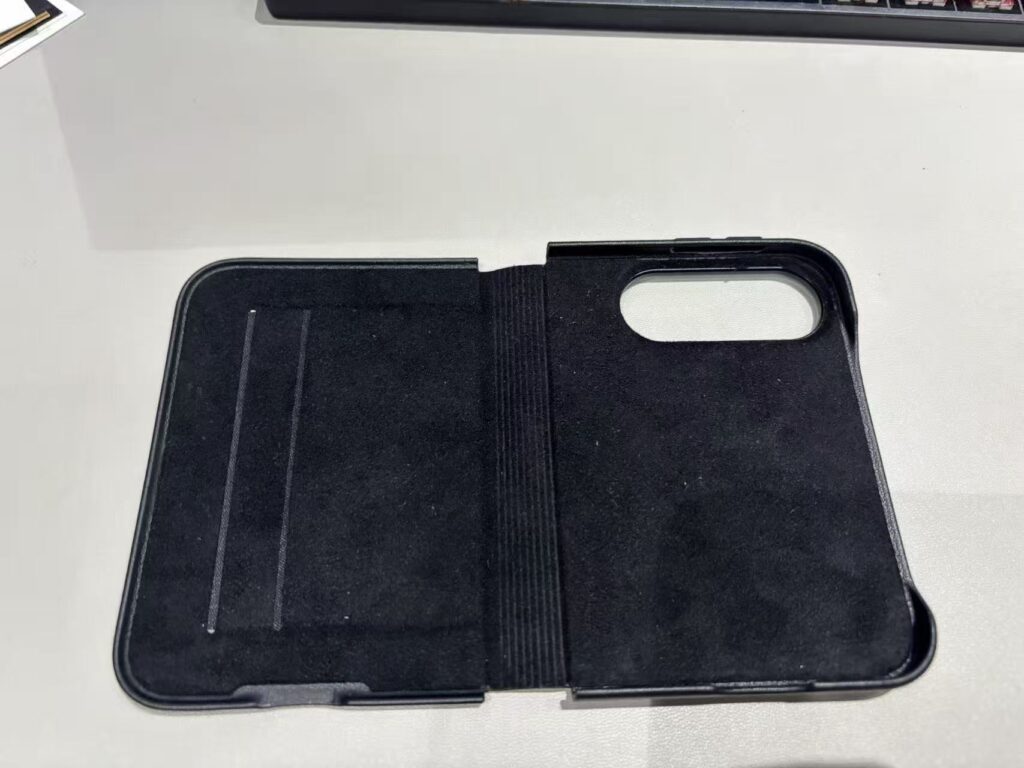
iPhone DUO case inside
Leather Case Strategy for iPhone 18
For iPhone 18 Pro cases, leather remains a strong premium direction. Apple stopped making new leather iPhone cases in 2023, which opened space for third-party leather case brands. Leather still appeals to users who want warmth, grip, business style, patina, and a more premium hand feel.
For iPhone 18 Pro leather cases, viable product directions include slim full-grain leather cases, full-wrapped leather cases, MagSafe leather cases, wallet phone cases, oil wax leather cases, vegetable-tanned leather cases, leather and TPU hybrid cases, and corporate gift leather case sets.
The most important decision is positioning. A slim leather case should not be developed the same way as a rugged leather case. A patina-focused leather case should not use the same surface finish as a low-complaint mass retail product. A corporate gift case may need cleaner packaging and logo consistency more than dramatic leather aging. Buyers exploring premium leather directions — including vegetable-tanned and oil wax options — should evaluate how surface finish, MagSafe compatibility, and leather skiving requirements affect the final structure before opening samples.
iPhone DUO leather case opportunities:
| Product type | Opportunity | Main risk |
|---|---|---|
| Slim leather back cover | Premium look with low bulk | Limited hinge protection |
| Leather + TPU hybrid case | Better balance of grip and protection | More complex assembly |
| Hinge-protective case | Solves foldable pain point | Harder to keep slim |
| Leather folio case | Luxury business positioning | May become bulky |
| Detachable magnetic case | Flexible usage modes | Magnet and hinge alignment risk |
| Premium gift set | High-end launch product | Higher packaging and inventory cost |
For iPhone DUO cases, leather should be used carefully. The hinge and folding areas may need flexible TPU, microfiber, or engineered fabric rather than thick leather. Leather works well on back panels, outer shells, wallet sections, or premium folio structures — but forcing leather into every moving area may create durability problems.
2026 Launch Timeline for Case Brands
| Timing | What Brands Should Do |
|---|---|
| May–June 2026 | Compare leak sources, evaluate dummy units, shortlist Pro and foldable case concepts |
| June–July 2026 | Build T0/T1 samples, test leather, magnets, camera opening, button feel, and foldable hinge clearance |
| July–August 2026 | Confirm safer SKUs, prepare packaging, lock material suppliers, start limited production for Pro models |
| August 2026 | Run fit checks, MagSafe tests, QC inspection, and launch content preparation |
| September 2026 | Respond to Apple’s official announcement, adjust molds if needed, prioritize confirmed Pro model demand |
| Late 2026 / Early 2027 | Prepare standard iPhone 18 cases if launch shifts to spring 2027 |
The key point is inventory discipline. Brands should prepare early, but they should not overproduce unconfirmed models.
Inventory and Risk Control
The biggest mistake before a new iPhone launch is not preparing too late — it is preparing too much in the wrong direction. For iPhone 18, brands should separate inventory into three risk levels.
Low-risk preparation: packaging concepts, leather material selection, MagSafe component sourcing, logo artwork, color planning, photography templates, product page drafts, supplier capacity planning.
Medium-risk preparation: iPhone 18 Pro sample molds, leather case prototypes, MagSafe test samples, camera ring samples, limited material stock, premium SKU planning.
High-risk preparation: large mass production before final dimensions, full inventory for standard iPhone 18, foldable case tooling based on one leak, large packaging print runs with unconfirmed model names, overproduction of niche colors.
This is especially important if the standard iPhone 18 shifts to spring 2027. A brand that produces too many standard iPhone 18 cases too early may tie up cash in inventory that cannot be sold for months.
OEM / ODM Checklist Before Mass Production
Before starting an OEM / ODM custom project, brands should confirm the following points before mass production.
- Which models are priority SKUs
- Whether dimensions are based on multiple sources
- Whether the dummy unit has been cross-checked
- Camera lip height, button positions, MagSafe alignment
- Leather thickness control and lining softness
- Edge finishing stability and packaging readiness
- Whether inventory is split between confirmed and speculative SKUs
- Whether there is a mold adjustment plan after Apple’s official announcement
For iPhone DUO cases, also confirm:
- Hinge clearance and fold angle movement
- Outer screen protection and inner screen safety
- Case behavior when fully closed and fully open
- Material fatigue after repeated folding
- Glue and bonding performance
- Hinge-area dust risk
A foldable case should not go to mass production based only on appearance. It must be tested through real opening and closing movement.
FAQ
When will the iPhone 18 Pro launch, and what about the standard iPhone 18?
Current reports suggest iPhone 18 Pro models may launch in fall 2026. The standard iPhone 18 is widely reported to shift to spring 2027, which means brands should keep standard model inventory flexible and prioritize Pro and Pro Max case planning first.
What makes iPhone DUO cases structurally different from normal cases?
Foldable cases must protect the hinge, outer screen, corners, and back panels without blocking fold movement. The inner display is more delicate than a normal screen, which means lining material, edge construction, and hinge clearance all need to be engineered differently — not just scaled up from a standard case.
Should brands use leather for iPhone DUO cases?
Leather works well on back panels, wallet sections, and premium folio structures. Hinge areas and folding zones should use flexible materials like TPU or microfiber instead. Forcing leather into every moving area creates durability problems that generate complaints from premium early adopters.
What is the biggest inventory risk for iPhone 18 planning?
The biggest risk is producing too much in the wrong direction before dimensions and launch timing are confirmed. Brands should use staged development: move low-risk material and packaging work forward early, keep sample molds at medium scale, and avoid large production runs until Apple’s official announcement.
Will iPhone 17 cases fit iPhone 18?
Brands should not assume compatibility. Even small changes to camera bump height, button positions, MagSafe ring placement, or overall thickness can make existing molds unusable. Always cross-check dimensions from multiple sources before committing to production.