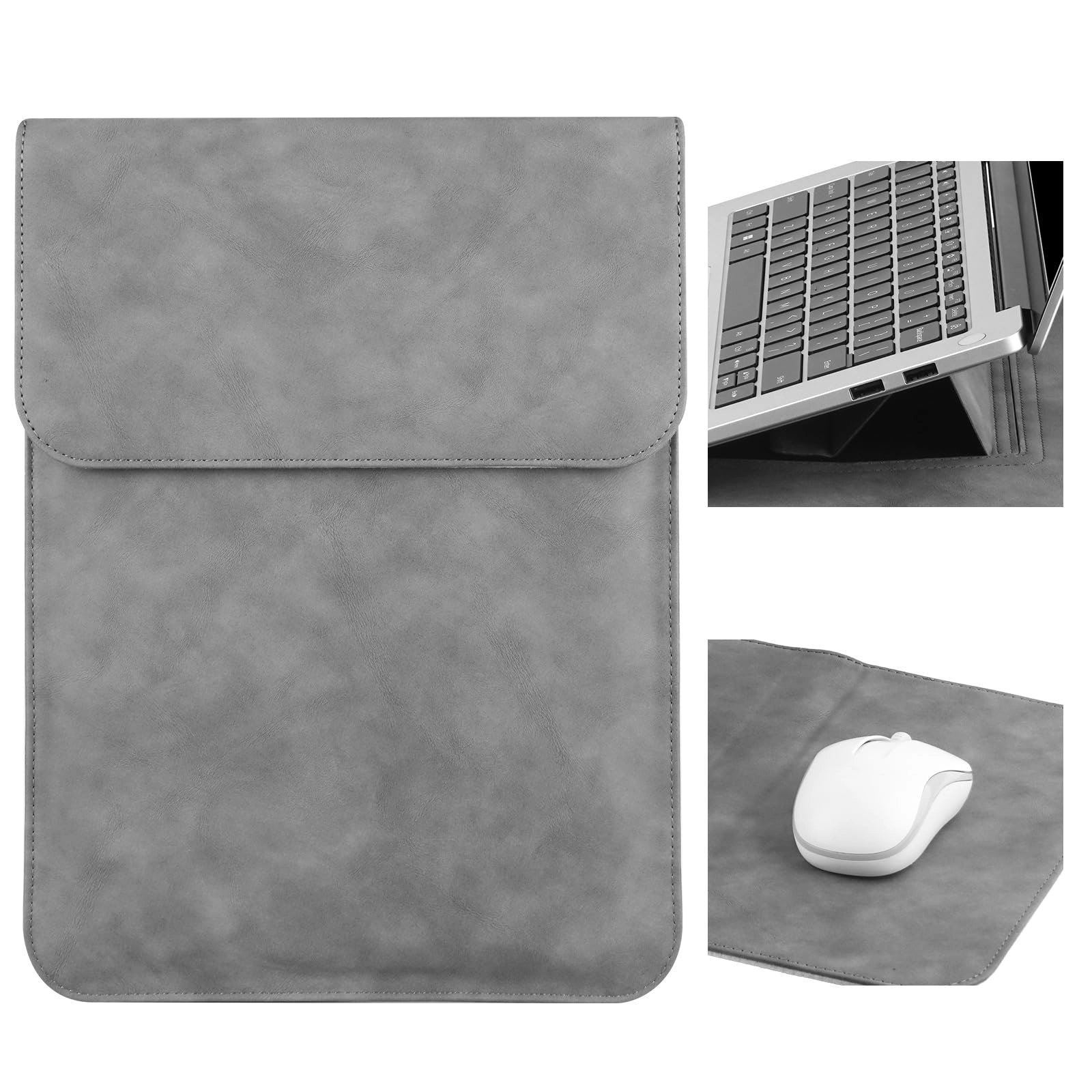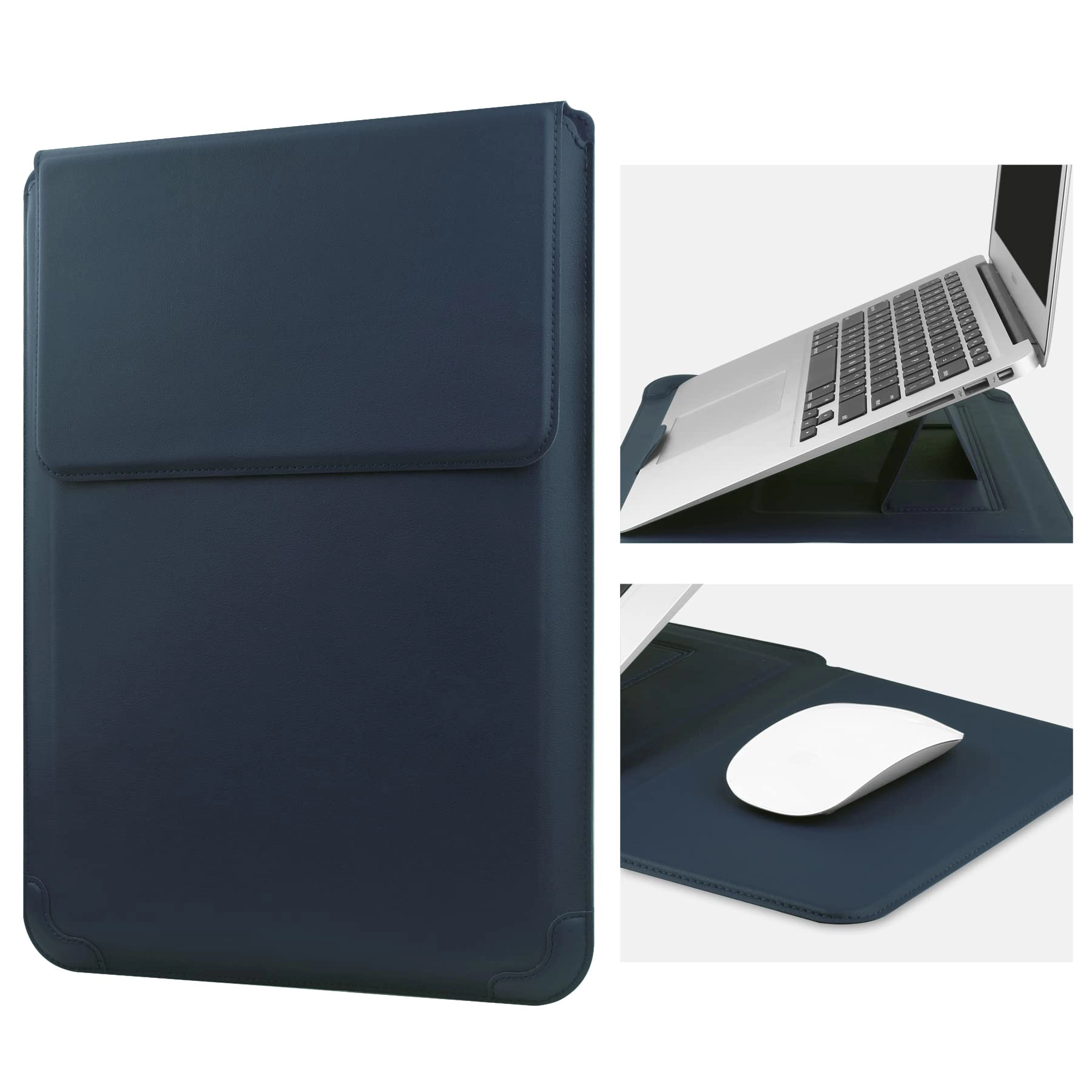
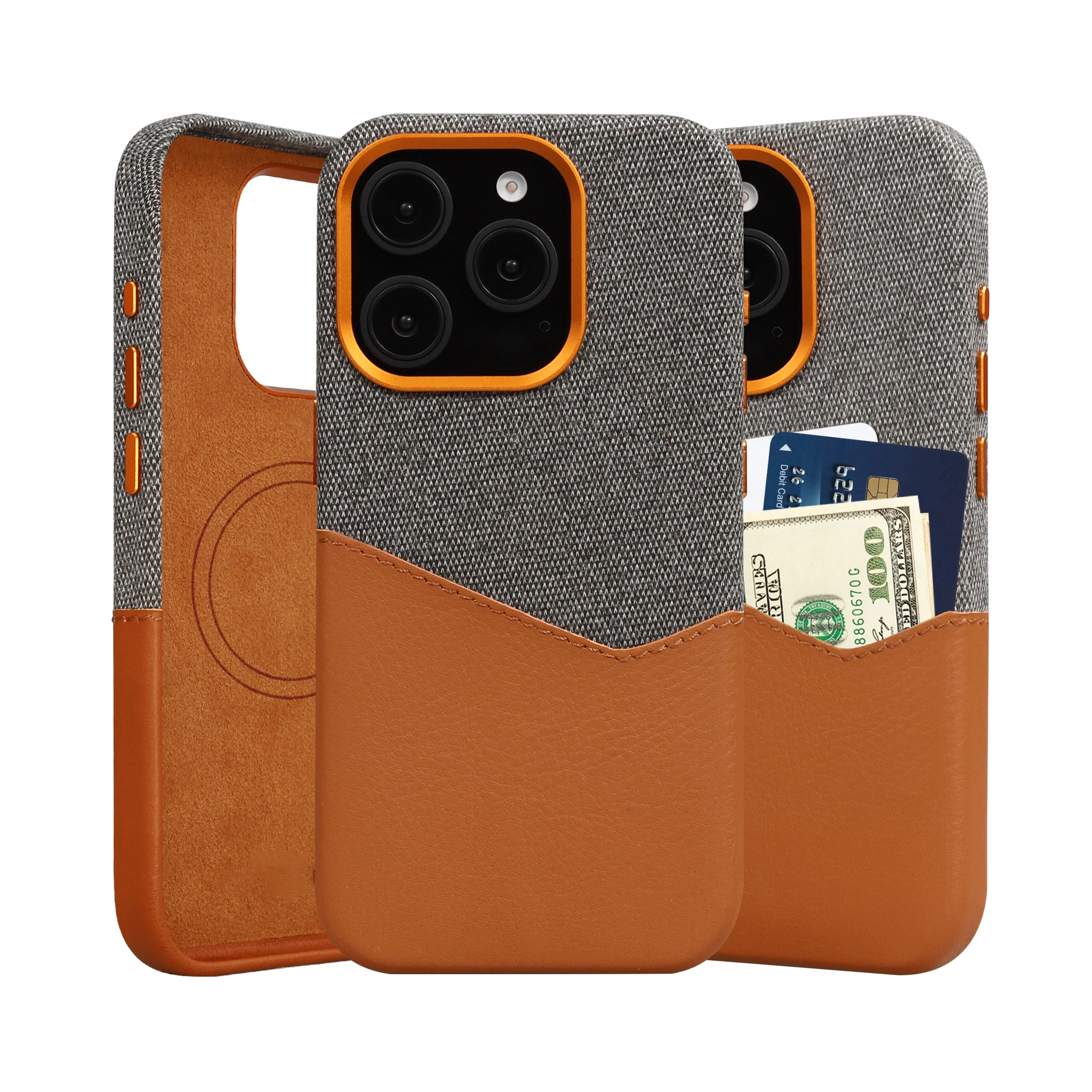
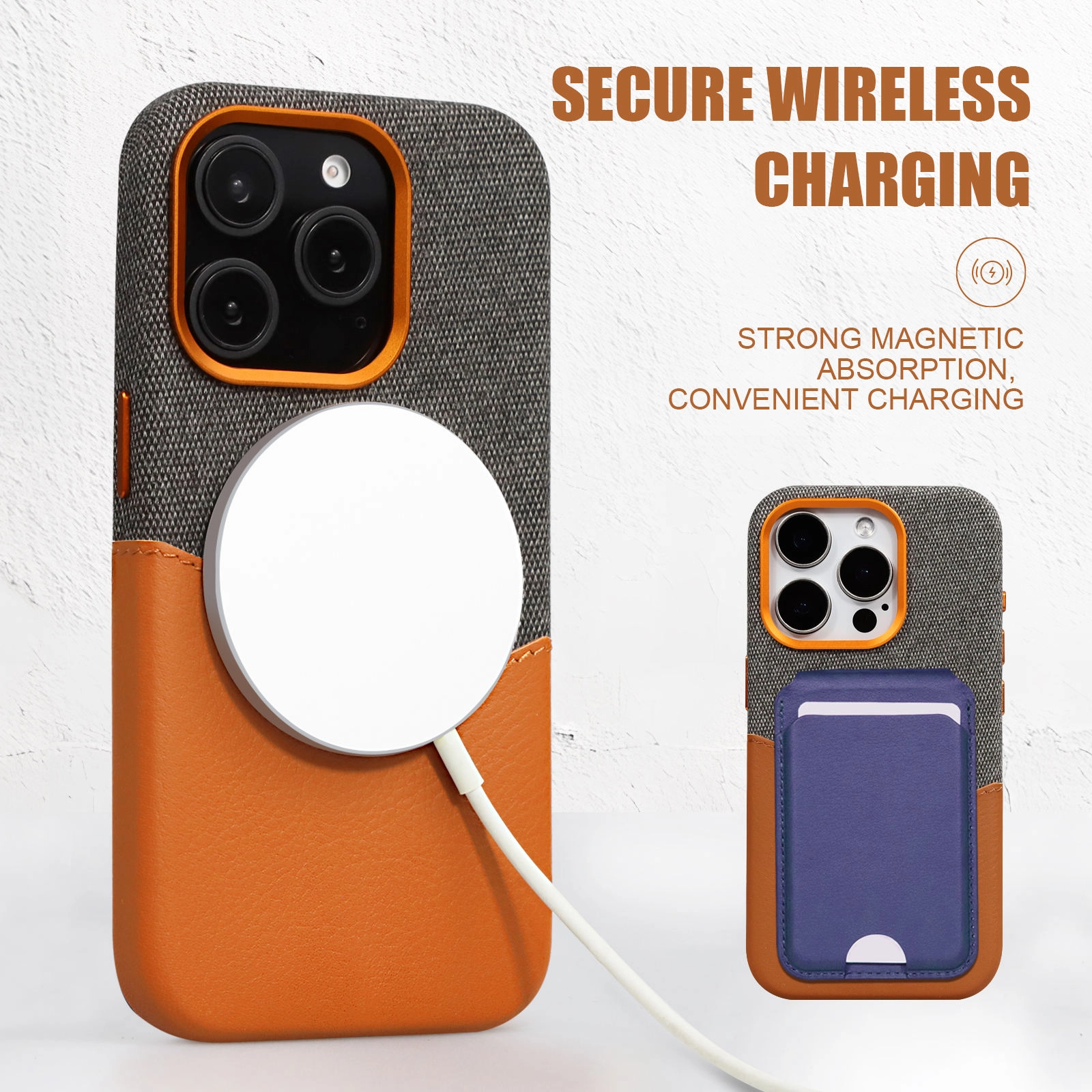
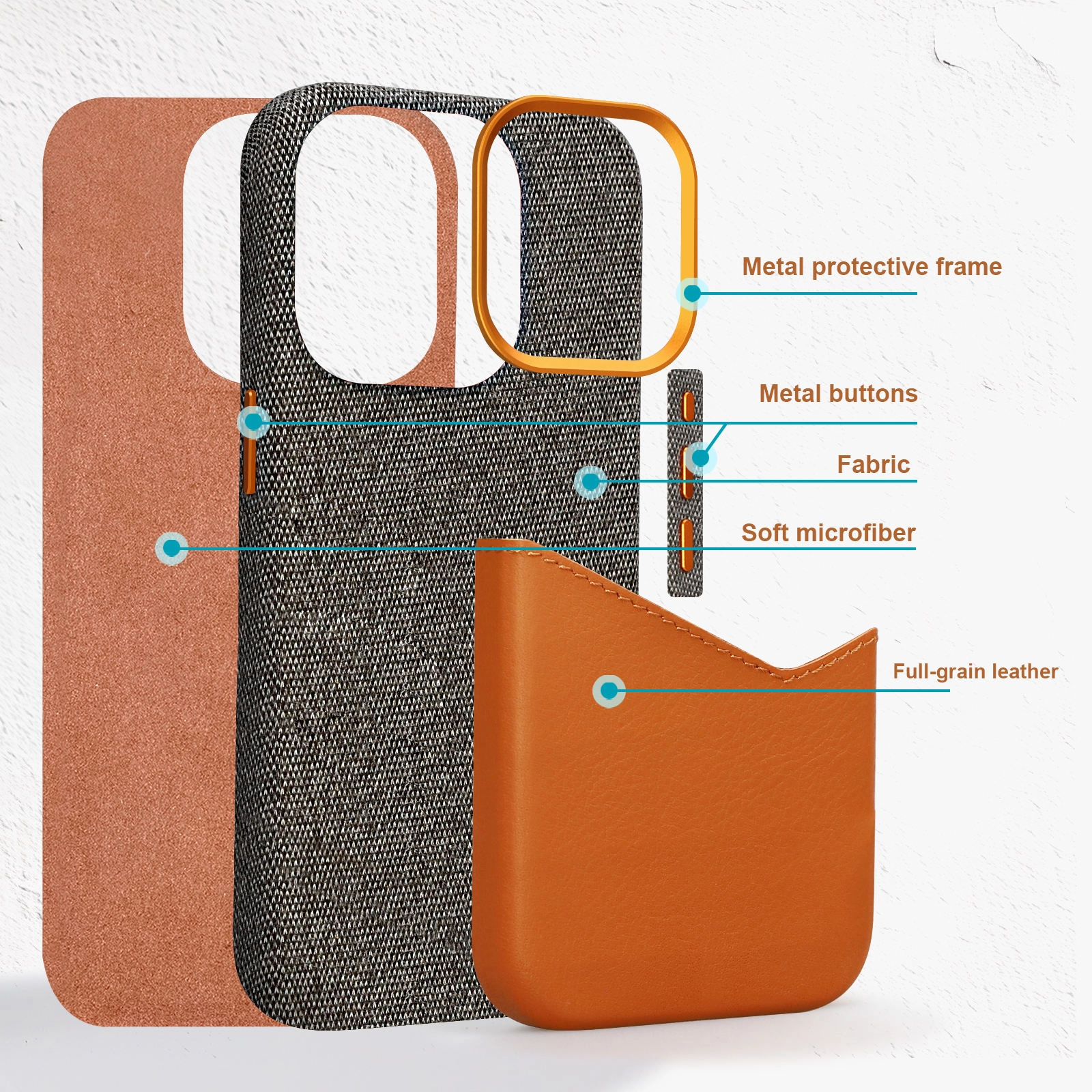
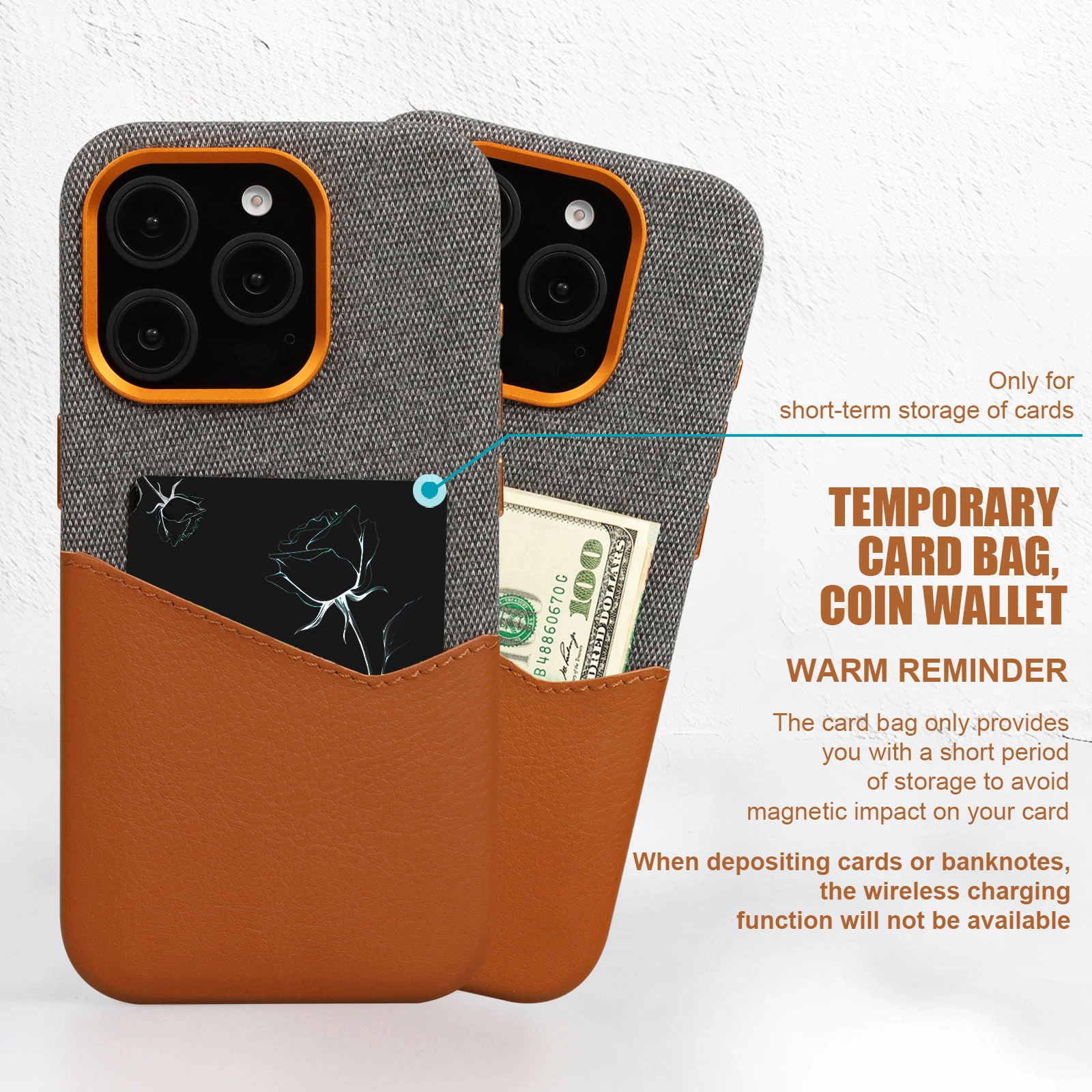
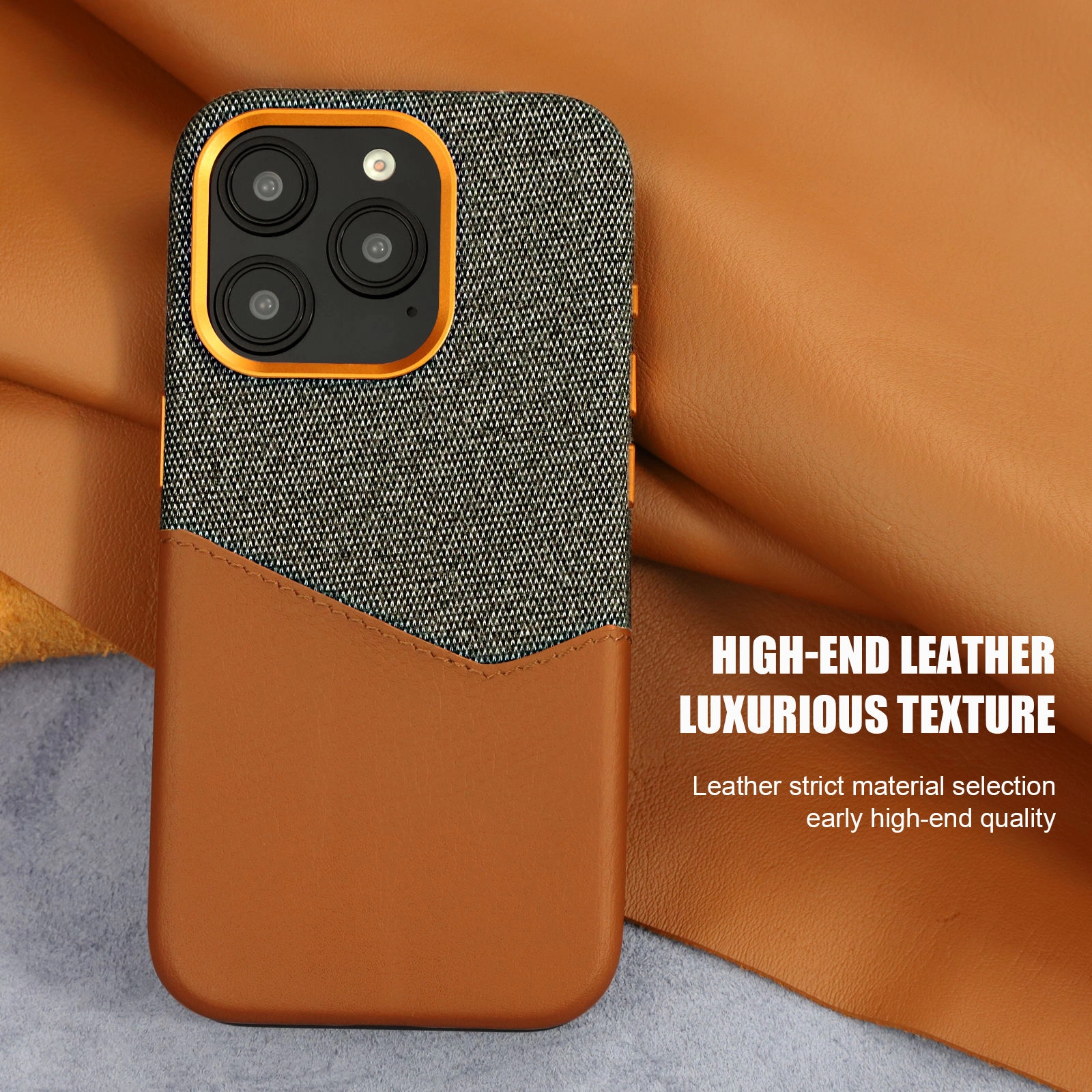
A leather phone case with card holder adds one or more card pockets to a fitted leather shell. This page refers to a card-holder case; a front flap, fold-out stand or full wallet panel is a separate structure and should be confirmed in the specification.
The useful questions are simple: how many cards must fit, whether they load from the top or side, how easily they come out, and whether the added layer affects camera clearance, grip or wireless charging. Pellove reviews those points on an assembled sample.
Card Slot, Capacity and Protection
Slot layout
A rear card pocket can open vertically or horizontally. The position must leave space for the camera, buttons, grip and any logo area.
Capacity and tension
Card count changes leather thickness, slot depth and tension. Approve the sample with the intended number of cards inside, then check that cards stay secure without being difficult to remove.
RFID and MagSafe
RFID blocking should be offered only when a tested layer is specified. A MagSafe phone case with card holder also needs charging and magnet tests with the planned cards in place.
Cards can scratch the phone body or camera if the pocket sits too close to an opening. A raised camera frame, lined pocket and controlled slot depth help reduce that risk. RFID blocking and MagSafe compatibility are feature claims, not automatic properties of leather.
Phone Fit and Material Choices
An iPhone phone case with card holder and a Samsung phone case with card holder need separate openings, button profiles and camera clearances. We start from the confirmed model list rather than stretching one generic shell across both.
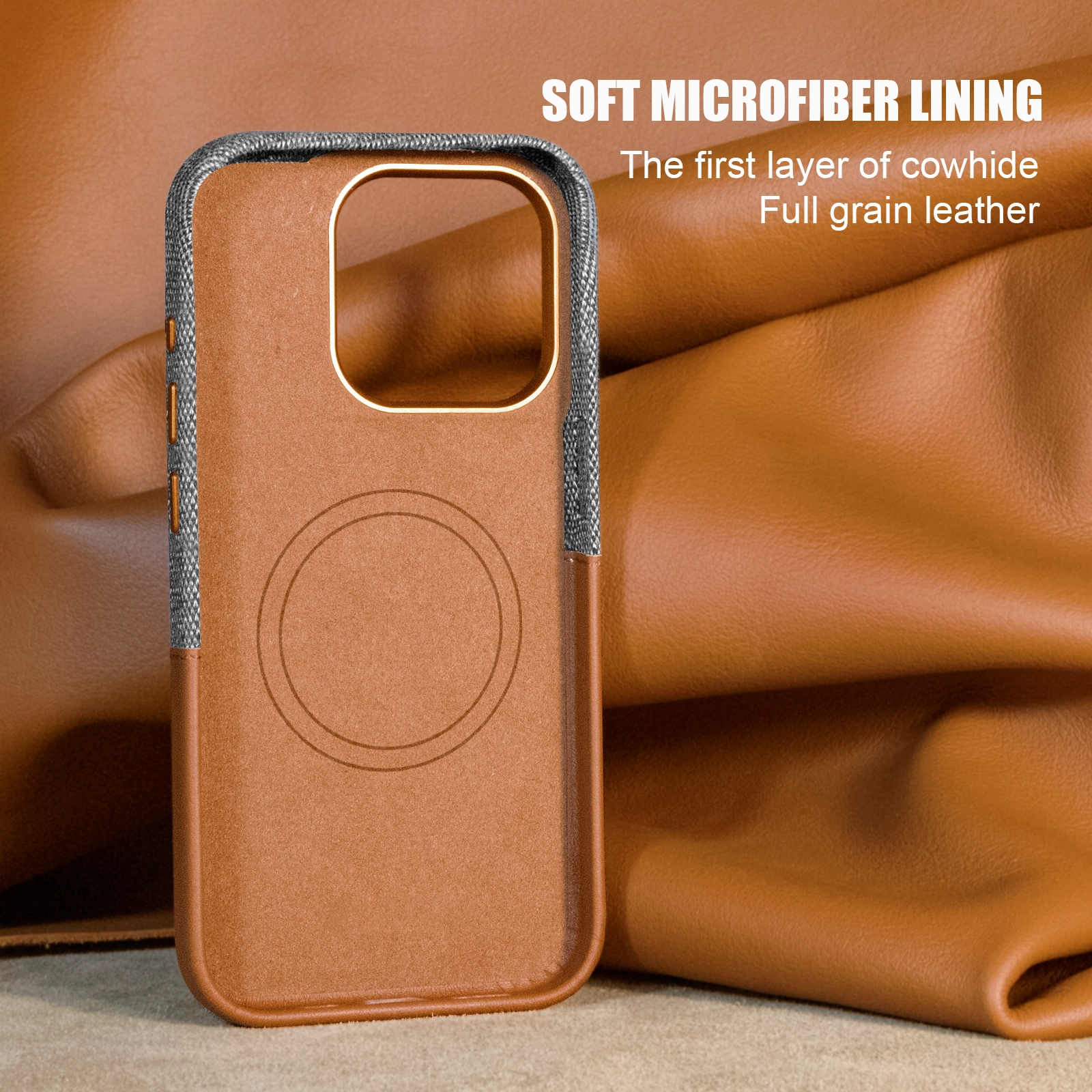
A cell phone case with card holder can use genuine leather, PU, microfiber leather or vegan leather. For a leather phone case card holder brief, the slot lining and leather thickness matter as much as the outer finish because they control card tension and edge bulk.
A smaller rear-slot design is usually closer to a slim leather phone case wallet than a large folio. Adding more cards, cash or a closure panel increases thickness and changes how the product sits in a pocket.
What to Confirm Before Sampling
- Phone model: exact iPhone, Samsung or Android model, camera size and button layout.
- Card capacity: number and thickness of cards, insertion direction and whether cash storage is needed.
- Retention: slot tension when full, card removal, stitch placement and lining wear.
- RFID: whether blocking is requested and which cards or frequencies must be tested.
- MagSafe: magnet spacing, card position, grip and charging performance with the wallet loaded.
- Branding: debossing, embossing, foil stamping, silk print, woven label, metal logo or custom placement.
- Packaging: pouch, retail box, gift box, insert card or complete private-label packaging.
The outer leather does not determine drop protection. Internal shell geometry, corner coverage, camera edge, stitching and bonding decide how the finished case behaves.
Best Fit and Less Suitable Uses
This format suits retail, gifting and customers who want one or two cards without carrying a separate wallet. It is less suitable when the brief requires several cards, cash, a front flap, a stand, or wireless charging without testing the complete card-holder assembly.
Request a fit and card-slot review: send the phone models, card count, insertion direction, RFID or MagSafe requirement, material, quantity and artwork. We can review the internal shell and card pocket together before sampling.
Contact Pellove with the brief, compare the wider leather phone case collection, or review the private-label production process.