
The best material for an iPhone 18 leather case is not simply the most expensive leather. It is the material that matches the customer, price point, hand feel, durability promise, complaint risk, and brand story.
A premium leather phone case buyer may want full-grain leather that darkens, scratches, softens, and develops patina over time. An Amazon seller may prefer a more stable material that reduces returns and negative reviews. A corporate gift buyer may care more about logo consistency, packaging, and color control. An animal-free brand may choose vegan leather or apple leather, but still needs to confirm durability and surface performance.
That is why material choice matters before the iPhone 18 launch.
Apple has not officially announced the iPhone 18 final dimensions yet, so case molds, cutouts, and exact fit details should remain flexible. But material planning can start earlier. Brands can already decide whether their iPhone 18 leather case line should feel premium, slim, rugged, sustainable, affordable, patina-focused, or low-maintenance.
For OEM buyers, the real question is not only:
What is the best leather for phone cases?
The better question is:
Which material will create the right product experience for this customer group?
Quick Answer: Which Material Is Best for iPhone 18 Leather Cases?
Full-grain leather is best for premium iPhone 18 cases where natural grain, patina, and high-end leather feel are the main selling points.
Top-grain leather is better for brands that want a premium look with more surface consistency and easier bulk production.
PU leather is suitable for budget, promotional, or short-term product lines, but it does not develop true leather patina and usually has weaker premium value.
Vegan leather and apple leather are best for animal-free or sustainability-focused brands, but buyers must verify composition, coating, durability, and test performance.
Crazy Horse and oil wax leather are good for vintage, rugged, patina-focused product lines, but they need stronger customer education because scratches and tone variation appear quickly.
| Material | Best For | Main Strength | Main Risk |
|---|---|---|---|
| Full-grain leather | Luxury and patina-focused cases | Natural grain, rich aging, premium hand feel | Higher cost, natural marks, more customer education |
| Top-grain leather | Mid-premium OEM lines | Cleaner look, more consistent surface | Less dramatic patina |
| PU leather | Budget and promotional cases | Low cost, many colors, easy cleaning | Peeling risk, synthetic feel, no true patina |
| Vegan / apple leather | Animal-free or eco-positioned brands | Ethical and modern material story | Quality varies; claims need verification |
| Crazy Horse / oil wax leather | Vintage and character-led cases | Pull-up effect, visible marks, strong personality | Scratches quickly, higher expectation risk |
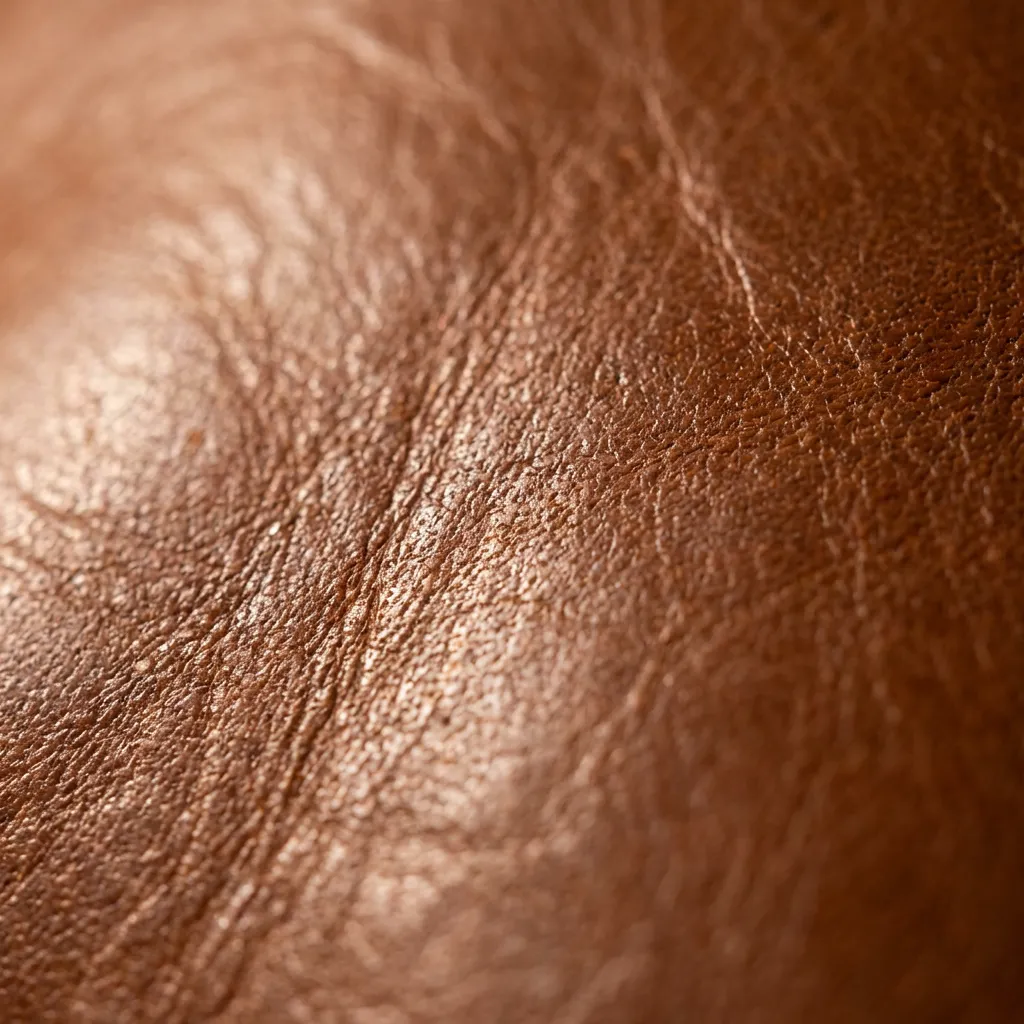
full grain leather
Why Material Choice Matters Before iPhone 18 Launch
The phone case market is large, but crowded. Grand View Research estimated the global mobile phone protective cover market at USD 25.51 billion in 2024 and projected it to reach USD 53.33 billion by 2030, with a CAGR of 8.6% from 2025 to 2030. Source: Grand View Research
That growth creates opportunity, but it also makes differentiation harder. A basic case with average material can easily disappear into a marketplace full of similar products.
For iPhone 18 leather cases, material choice affects:
- First touch
- Product photos
- MagSafe structure
- Finished thickness
- Leather wrapping
- Scratch resistance
- Patina
- Color consistency
- Complaint rate
- Price positioning
- Packaging strategy
- Brand story
Apple’s move away from leather also changed the market. In 2023, Apple said it would no longer use leather in new products, including iPhone accessories, and introduced FineWoven as a lower-carbon alternative made with 68% post-consumer recycled content. Source: Apple Newsroom
For third-party brands, this created a clearer opportunity: users who still want real leather, patina, warmth, and premium hand feel now need alternatives outside Apple’s own accessory line.
This is why material planning should happen before mold confirmation. The final iPhone 18 dimensions may change, but the brand’s material strategy can already be shaped.
How to Choose iPhone 18 Leather Case Materials in 3 Steps
A practical material decision should follow three steps.
Step 1: Define the Price Tier
Start with the target retail price.
| Price Tier | Suggested Material Direction |
|---|---|
| Budget | PU leather, microfiber leather |
| Mid-range | Selected genuine leather, top-grain leather, high-grade vegan leather |
| Premium | Full-grain leather, vegetable-tanned leather, oil wax leather |
| Luxury / limited edition | Full-grain leather, Crazy Horse leather, premium cowhide, special leather finishes |
| Eco / animal-free | Apple leather, vegan leather, recycled PU, plant-based alternatives |
If the target price is low, full-grain leather may create margin pressure. If the target price is premium, PU leather may weaken the brand story.
Step 2: Define the User
Different users judge leather differently.
| User Type | What They Usually Care About | Better Material Direction |
|---|---|---|
| Amazon buyer | Reviews, price, durability, fewer complaints | Top-grain, protected leather, high-grade PU |
| Leather enthusiast | Patina, grain, hand feel, character | Full-grain, vegetable-tanned, Crazy Horse |
| Corporate gift buyer | Logo consistency, packaging, clean surface | Top-grain, protected leather, apple leather |
| Eco-conscious buyer | Animal-free story, sustainability claims | Vegan leather, apple leather, recycled PU |
| Fashion buyer | Color, surface style, trend | PU, vegan leather, oil wax leather |
| Business user | Slimness, professional look, hand feel | Top-grain, full-grain, selected genuine leather |
This is where many brands make mistakes. They choose the material they personally like, not the material their customers will understand.
Step 3: Define Complaint Tolerance
Some materials create more customer education work.
Full-grain leather may scratch and darken. Crazy Horse leather may show marks quickly. Vegan leather may need composition explanation. PU leather may create peeling complaints if the quality is poor. Light-colored materials may show stains faster.
Before confirming material, ask:
- Will customers accept scratches?
- Will they understand patina?
- Do they expect a perfectly clean surface?
- Does the product need to pass dry and wet rub tests?
- Does it need alcohol resistance?
- Is color transfer acceptable? It usually should not be.
- Will the product be sold as premium, budget, or eco-friendly?
A good material choice reduces both production risk and customer misunderstanding.
1. Full-Grain Leather: Best for Premium Patina-Focused iPhone 18 Cases
Full-grain leather is commonly used to describe leather that keeps the natural grain surface instead of being heavily sanded or corrected. This makes it one of the most desirable materials for premium leather goods.
For iPhone 18 leather cases, full-grain leather is best when the brand wants a real leather experience: natural grain, warm hand feel, visible aging, and a surface that becomes more personal over time.
Carl Friedrik explains that full-grain leather and, to a lesser extent, top-grain leather are the leather types most associated with patina. Source: Carl Friedrik
Full-grain leather works especially well for premium iPhone 18 Pro and Pro Max cases because those users are more likely to buy higher-end accessories. The case is not only protection. It is part of the device experience.
For brands comparing natural leather grades, Pellove’s guide to real, bonded, and faux leather is a useful starting point before choosing between full-grain, top-grain, genuine leather, and synthetic alternatives.
Best For
Full-grain leather is best for:
- Premium iPhone 18 Pro cases
- Patina-focused leather cases
- Business gift lines
- Luxury private label phone cases
- Full-wrapped leather cases
- Wallet phone cases
- Brands targeting leather enthusiasts
Buyer Note
Full-grain leather is not automatically better for every brand. If the target customer expects a perfectly clean and unchanged surface, full-grain leather may create unnecessary complaints. If the target customer values patina and natural material character, it can become the strongest selling point.
A product such as Pellove’s cowhide genuine leather phone case is better aligned with brands that want a natural material story, full-wrap construction, and premium OEM/ODM positioning.
2. Top-Grain Leather: Best Balance of Premium Look and Production Consistency
Top-grain leather is often used in the market to describe leather made from the upper layer of the hide with a more refined or corrected surface. In phone case production, it is commonly chosen when brands want a premium appearance but also need more surface consistency.
For iPhone 18 cases, top-grain leather can be a very practical option. It gives a cleaner look than many full-grain leathers and can be easier to manage in bulk OEM production.
Not every customer wants strong patina, visible grain marks, or natural variation. Some buyers want leather to look clean and consistent from the first unit to the last.
Top-grain leather can help with that.
Best For
Top-grain leather is best for:
- Mid-premium iPhone 18 leather cases
- Bulk OEM phone case orders
- Minimalist leather case lines
- Corporate gift cases
- Business-style cases
- Brands that want fewer natural marks
- Clean color collections
Buyer Note
Top-grain leather can be the safest commercial choice for many OEM buyers. It may not have the strongest leather story, but it often gives a good balance of premium look, stable production, and customer acceptance.
This makes it especially useful for brands that want leather cases to look refined, not rugged.
3. PU Leather: Best for Budget and Promotional iPhone 18 Cases
PU leather is a synthetic material made with a polyurethane surface layer, usually applied to a fabric or split base. It is designed to imitate the look of leather at a much lower cost.
For iPhone 18 cases, PU leather is suitable when price, color variety, and fast production matter more than natural leather feel or long-term aging.
PU leather has several commercial advantages. It can be produced in many colors, textures, and finishes. It is easier to keep consistent across large batches. It is usually more affordable than natural leather.
For low-cost phone cases, promotional products, event giveaways, and entry-level retail lines, PU leather can make sense.
Pellove’s wallet phone case is a useful example of a structure where buyers may compare genuine leather, PU leather, microfiber leather, vegan leather, or custom material depending on price point and function.
Best For
PU leather is best for:
- Budget iPhone 18 cases
- Promotional gifts
- Short-term retail products
- Low-cost wholesale orders
- Large color collections
- Price-sensitive ecommerce listings
Buyer Note
PU leather should not be sold as genuine leather. If a product uses PU leather, the product copy should be clear. Mislabeling PU as real leather can damage customer trust.
PU leather is not wrong. It is simply a different product strategy.
It works when the goal is affordability, not leather heritage.
4. Vegan and Apple Leather: Best for Animal-Free and Eco-Positioned Brands
Vegan leather is not one single material. It is an umbrella term for animal-free leather alternatives. It can include PU leather, recycled PU, microfiber, apple leather, cactus leather, cork-based materials, pineapple-based materials, and other plant-based or bio-based materials.
This is why buyers need to be careful.
A product labeled “vegan leather” is not automatically sustainable, premium, or durable. It only means the material does not use animal leather.
Leather Naturally’s buying guide notes that materials labeled as vegan leather can be PVC or PU, or may be made from plant-based materials. Source: Leather Naturally
Apple leather and other plant-based alternatives can be useful for brands that want animal-free positioning with a more interesting material story than standard PU.
Pellove’s Apple Leather Phone Case is an example of how a plant-based material can be positioned for brands seeking a cruelty-free, eco-conscious alternative to traditional leather while keeping a full-wrap phone case structure.
Best For
Vegan leather and apple leather are best for:
- Animal-free brands
- Sustainability-focused products
- Youth-oriented phone case lines
- Fashion colors
- Minimalist designs
- Brands avoiding animal leather
- Corporate buyers with material policies
Buyer Note
For vegan leather, ask what it is actually made from.
Useful questions include:
- Is it PU, recycled PU, microfiber, or plant-based?
- Does it contain PVC?
- What is the backing material?
- Can it pass dry and wet rub tests?
- Does it resist peeling?
- Is it suitable for MagSafe phone case lamination?
- Does the supplier have material test reports?
Vegan leather can be a strong material direction, but vague claims are not enough.
5. Crazy Horse and Oil Wax Leather: Best for Vintage and Character-Led Cases
Crazy Horse leather and oil wax leather are good options when a brand wants a stronger leather personality.
These materials are usually chosen for their pull-up effect, visible marks, richer surface movement, and vintage look. They are not designed to stay perfectly clean. They are designed to change.
Pellove’s Crazy Horse leather phone case shows how a wax-treated leather can create a rugged, character-led product direction, while Pellove’s oil wax leather phone case is useful for buyers comparing a smoother patina-focused finish with MagSafe-compatible leather case options.
Best For
Crazy Horse and oil wax leather are best for:
- Vintage iPhone 18 case lines
- Masculine or rugged product direction
- Patina-focused brands
- Premium gift sets
- Leather accessory collections
- Brands that want visible surface character
Buyer Note
Crazy Horse leather and oil wax leather can be excellent materials when the customer understands them. If the buyer expects a perfectly clean surface, these materials may create complaints. If the buyer wants a case that looks more personal with use, they can become strong differentiators.
Material Comparison Table for iPhone 18 Case Sourcing
| Material | Durability | Patina | Hand Feel | Cost | Best Use Case |
|---|---|---|---|---|---|
| Full-grain leather | High | Strong and unique | Natural, warm, premium | High | Luxury and patina-focused cases |
| Top-grain leather | Medium-high | Subtle | Smooth and refined | Mid-high | Mid-premium OEM lines |
| PU leather | Low to medium | None | Synthetic, smooth | Low | Budget and promotional cases |
| Vegan leather | Varies by material | Minimal | Depends on material type | Low to mid-high | Animal-free and eco-positioned brands |
| Apple leather | Medium, depends on supplier | Subtle | Smooth and modern | Mid to high | Sustainable premium alternatives |
| Crazy Horse leather | Medium-high | Strong | Rugged, waxy, character-led | Mid-high | Vintage and patina-focused cases |
| Oil wax leather | Medium-high | Medium to strong | Smooth, rich, treated surface | Mid-high | Premium texture and MagSafe leather cases |
This table should be used as a starting point, not a final decision. The actual quality depends on tannery, surface finish, coating, thickness, backing, lamination, skiving, and factory process.
Real Buyer Scenarios: Which Material Fits Which Project?
Scenario 1: Amazon Seller Launching a First iPhone 18 Case
An Amazon seller may need stable color, fewer complaints, good packaging, and a price point that can survive ads and returns.
Best material direction:
- Top-grain leather
- Selected genuine leather
- High-grade PU
- Protected vegan leather
Full-grain leather may work, but only if the product page explains scratches, patina, and natural variation clearly.
Scenario 2: Corporate Gift Buyer
A corporate buyer usually cares about logo clarity, color consistency, packaging, and clean appearance.
Best material direction:
- Top-grain leather
- Apple leather
- Protected genuine leather
- High-grade vegan leather
For this buyer, dramatic patina may be less important than a clean first impression.
Scenario 3: Premium Leather Brand
A premium brand may want the case to feel like a small leather good, not just a tech accessory.
Best material direction:
- Full-grain leather
- Vegetable-tanned leather
- Crazy Horse leather
- Oil wax leather
This buyer should invest in better product education, because the customer needs to understand natural marks, patina, and color changes.
Scenario 4: Sustainability-Focused Brand
A sustainability-focused brand needs more than a green-sounding material name.
Best material direction:
- Apple leather
- Verified vegan leather
- Recycled PU
- Plant-based alternatives
This buyer should ask for material composition, backing details, supplier claims, and test results.
Scenario 5: Multi-Country Wholesale Buyer
A multi-country buyer may need different materials for different markets.
For example:
- Price-sensitive markets may prefer PU or microfiber leather.
- Premium urban markets may prefer top-grain or full-grain leather.
- Eco-focused retail channels may prefer apple leather or vegan leather.
- Leather enthusiast communities may prefer Crazy Horse, oil wax, or vegetable-tanned leather.
These are not fixed rules. They are starting points. Buyers should validate preferences with local customers, sales channels, and sample feedback.
How Pellove Helps Buyers Choose Materials
For many buyers, the challenge is not knowing the names of materials. It is knowing which material fits the project.
Pellove can help buyers evaluate leather case materials through a practical development path:
1. Match the Material to the Price Point
If the buyer wants a low-cost promotional phone case, Pellove may suggest PU leather, microfiber leather, or selected synthetic materials.
If the buyer wants a premium iPhone 18 Pro leather case, full-grain leather, top-grain leather, vegetable-tanned leather, or oil wax leather may be more suitable.
2. Match the Material to the User
If the target customer is an Amazon buyer, material stability and low complaint risk matter. If the target customer is a leather enthusiast, patina and hand feel matter more. If the target customer is a corporate buyer, logo consistency and packaging may become more important than dramatic leather character.
3. Match the Material to the Structure
A full-wrapped leather phone case, a wallet phone case, a MagSafe leather case, and a leather back-panel case do not use materials in exactly the same way.
Pellove can help review:
- Leather thickness
- Skiving thickness
- Surface finish
- Lamination performance
- MagSafe structure
- Microfiber lining
- Edge finishing
- Logo method
- Packaging direction
- MOQ and sample plan
This is where a factory’s material experience matters. A leather that looks good as a swatch may not work well after wrapping, bonding, cutting, skiving, and MagSafe assembly.
OEM Buyer Checklist for iPhone 18 Leather Case Materials
Before confirming material for iPhone 18 leather cases, buyers should check:
- What is the exact material type?
- Is it full-grain, top-grain, PU, vegan leather, apple leather, or another material?
- What is the original thickness?
- What is the thickness after skiving?
- Does it work with full-wrapped phone case construction?
- Can it bond well with PC or TPU shell?
- Does it support MagSafe structure?
- Does it pass dry rub and wet rub tests?
- Does it need alcohol resistance?
- Does it scratch easily?
- Does it develop patina?
- Is color consistent across batches?
- Does it have strong odor after packaging?
- Does it work with debossed, printed, or metal logo?
- Is the MOQ suitable for the project?
- Is the material available in stable supply?
- Does the material match the packaging and price point?
For iPhone 18, final dimensions are not confirmed yet, but material testing can start before mold confirmation. This helps brands save time once dummy units and final fit data become more reliable.
Pellove can support custom leather phone case projects with leather selection, material swatches, MagSafe planning, microfiber lining, logo methods, leather skiving review, sample development, and OEM/ODM production.
For brands building a broader accessory line, Pellove’s custom leather goods solutions can also help connect phone cases with AirPods cases, iPad cases, watch bands, wallets, passport holders, and packaging.
Common Material Mistakes
Mistake 1: Calling Every Leather “Premium”
Not all leather is premium.
A heavily coated split leather, a corrected leather, and a natural full-grain leather may all look good in photos, but they age differently.
Buyers should request material samples and test them before making claims.
Mistake 2: Choosing Full-Grain Leather Without Educating Customers
Full-grain leather can show scratches, grain marks, color variation, and patina. These can be selling points, but only if the customer understands them.
If the product page does not explain natural leather behavior, normal patina may become a customer complaint.
Pellove’s leather care guide can be used as supporting content for customers who need help understanding leather aging, cleaning, and daily care.
Mistake 3: Choosing PU Leather for a Premium Product
PU leather can be useful, but it does not create the same experience as natural leather.
If a brand wants to sell premium iPhone 18 Pro leather cases, PU may weaken the product story unless the positioning is clearly budget or animal-free.
Mistake 4: Assuming Vegan Leather Is Always Eco-Friendly
Vegan leather means animal-free. It does not always mean plastic-free, biodegradable, or sustainable.
Buyers should confirm material composition, backing, coating, supplier claims, and test reports.
Leather Working Group is a useful external reference for buyers who want to understand leather supply chain responsibility and certification frameworks. Source: Leather Working Group
Mistake 5: Ignoring Leather Thickness After Skiving
Phone cases are not made from leather alone. Leather often needs to be skived thinner for wrapping, corners, MagSafe, camera openings, and edge finishing.
A leather that feels rich as a raw sheet may feel very different after skiving and lamination.
For full-wrapped phone cases, buyers should check both original leather thickness and finished hand feel.
Mistake 6: Forgetting Surface Testing
Different brands have different tolerance for color transfer, scratches, water marks, and alcohol exposure.
A patina-focused brand may accept faster surface change. A mass-market brand may need stronger dry rub, wet rub, and alcohol resistance.
This is not only a quality decision. It is a brand positioning decision.
Material Strategy for iPhone 18 Pro and Pro Max Cases
For iPhone 18 Pro and Pro Max cases, premium material strategy matters because Pro users are usually more likely to buy higher-end accessories.
A practical material lineup could include:
| Product Tier | Suggested Material | Positioning |
|---|---|---|
| Luxury | Full-grain or vegetable-tanned leather | Premium patina and high-end gift |
| Mid-premium | Top-grain leather | Clean business leather case |
| Everyday | Selected genuine leather or microfiber leather | Balanced price and look |
| Budget | PU leather | Low-cost retail or promotional case |
| Eco / animal-free | Vegan leather, apple leather, recycled PU | Sustainability and animal-free positioning |
| Vintage | Crazy Horse or oil wax leather | Character-led patina and lifestyle branding |
| Ecosystem set | Pebbled leather or stable top-grain leather | Matching texture across multiple accessories |
Brands do not need to choose only one material forever. A stronger strategy is to build a material ladder.
For example:
- Full-grain leather for flagship models
- Top-grain leather for the main commercial line
- PU leather for promotional SKUs
- Apple leather or vegan leather for animal-free buyers
- Crazy Horse leather for vintage limited editions
- Pebbled leather for matching Apple ecosystem sets
This gives the brand more flexibility across price points.
Content Cluster Opportunity
This topic can also be split into a small SEO cluster later.
The current article can act as the main material guide. Then supporting articles can target more specific keywords:
- Full-Grain vs Top-Grain Leather for Phone Cases
- PU Leather vs Vegan Leather Phone Cases
- How to Choose Leather for Custom Phone Cases
- Best Leather for MagSafe Phone Cases
- Apple Leather Phone Case: Is It a Good Vegan Alternative?
- Crazy Horse Leather Phone Case: Pros, Cons and Patina
This helps avoid making one article too long while building stronger topical authority around leather phone case materials.
FAQ
What is the best material for iPhone 18 leather cases?
Full-grain leather is best for premium patina-focused iPhone 18 cases. Top-grain leather is better for clean mid-premium lines. PU leather fits budget products, and vegan leather or apple leather works for animal-free or sustainability-focused brands.
Is full-grain leather good for phone cases?
Yes. Full-grain leather is good for premium phone cases because it keeps natural grain, feels warm in the hand, and can develop patina over time. It is best for brands that want a real leather story.
Is top-grain leather better than full-grain leather?
Not always. Full-grain leather is better for natural grain and patina. Top-grain leather is often better for brands that want a cleaner, more consistent surface and lower customer education risk.
Is PU leather good for iPhone cases?
PU leather can be good for budget iPhone cases, promotional products, and colorful mass-market lines. It is affordable and consistent, but it does not develop true leather patina and may not feel as premium as natural leather.
Is vegan leather the same as PU leather?
Not always. Some vegan leather is PU-based, but vegan leather can also include recycled PU, microfiber, apple leather, cactus leather, cork-based materials, and other animal-free alternatives.
Is apple leather good for phone cases?
Apple leather can be suitable for phone cases if the material is durable, flexible, and stable after lamination. It is best for brands that want animal-free or sustainability-focused positioning, but buyers should test abrasion, color fastness, odor, and bonding performance before mass production.
Does vegan leather develop patina?
Most vegan leather does not develop true leather patina like full-grain or vegetable-tanned leather. It may show wear, but it does not age in the same way as natural leather.
Which material is best for MagSafe leather cases?
Full-grain, top-grain, selected genuine leather, PU, vegan leather, and apple leather can all work with MagSafe if thickness, lamination, magnet alignment, and shell structure are controlled properly. Material alone does not guarantee MagSafe performance.
Which material has the lowest complaint risk?
Top-grain leather, protected genuine leather, or high-quality synthetic leather may have lower complaint risk because they can offer more surface consistency. However, this depends on testing, finish, color fastness, and customer expectations.
Should iPhone 18 leather cases use full-grain leather?
Full-grain leather is a strong choice for premium iPhone 18 cases, especially for Pro and Pro Max users. But it is not necessary for every product line. Budget, corporate gift, and eco-focused lines may need different materials.
What should OEM buyers ask before choosing leather?
OEM buyers should ask for material type, original thickness, skiving thickness, color fastness, dry/wet rub test results, alcohol resistance if needed, MagSafe compatibility, logo effect, MOQ, lead time, and batch consistency.
Conclusion
The best material for iPhone 18 leather cases depends on the customer the brand wants to serve.
Full-grain leather is best for brands that want natural grain, patina, warmth, and premium value. Top-grain leather is better for buyers who want a clean and consistent leather case for mid-premium production. PU leather works for low-cost and promotional cases. Vegan leather and apple leather fit animal-free and sustainability-focused positioning, but buyers must verify what the material actually contains. Crazy Horse and oil wax leather are strong options when a brand wants visible character, pull-up effect, and a more rugged leather identity.
For B2B buyers, material choice is not just a sourcing decision. It is a brand strategy decision.
A full-grain leather case tells customers: this product will age with you.
A top-grain leather case says: this product is clean, refined, and reliable.
A PU leather case says: this product is affordable and accessible.
A vegan or apple leather case says: this product is animal-free and modern.
A Crazy Horse or oil wax leather case says: this product is meant to show character.
The best iPhone 18 leather case material is the one that makes that promise clearly and then performs well in real use.
For buyers who are not sure which direction fits their market, Pellove can help compare materials, review samples, test logo methods, evaluate MagSafe structure, and develop OEM/ODM leather phone case solutions based on target price, order quantity, and brand positioning.