
Quick Answer
If you’re choosing leather for phone case manufacturing, the decision impacts durability, return rates, and long-term brand perception.
Short answer:
- Coated leather is the best choice for most scalable phone case brands.
- Uncoated leather is only suitable for niche artisan or storytelling-driven brands.
Because phone cases are high-contact, daily-use products, material performance and consistency matter significantly more than raw or “natural” aesthetics.
What Is Coated vs Uncoated Leather?
To choose the right material for mass production, you first need to understand how they differ in structure and surface treatment.
Uncoated Leather (Natural Leather / Raw Finish)
Uncoated leather is leather that has no protective surface coating applied after the tanning process.
Key characteristics:
- Open pore structure
- Absorbs water, oil, and dirt easily
- Develops a natural patina over time
- High variation between hides
- Softer, more natural texture
Commonly used in: Handmade leather goods, artisan wallets and bags, and luxury storytelling products.
Coated Leather (Finished / Protected Leather)
Coated leather is treated with a thin protective layer (polymer, resin, or wax) during the finishing process.
Key characteristics:
- Water and stain-resistant surface
- Stronger scratch resistance
- Highly consistent color and texture
- Better for mass production and QC (Quality Control)
- Available in matte, semi-gloss, or textured finishes (like Saffiano, pebble)
Commonly used in: Premium phone cases, automotive interiors, and scalable consumer products (DTC / retail).
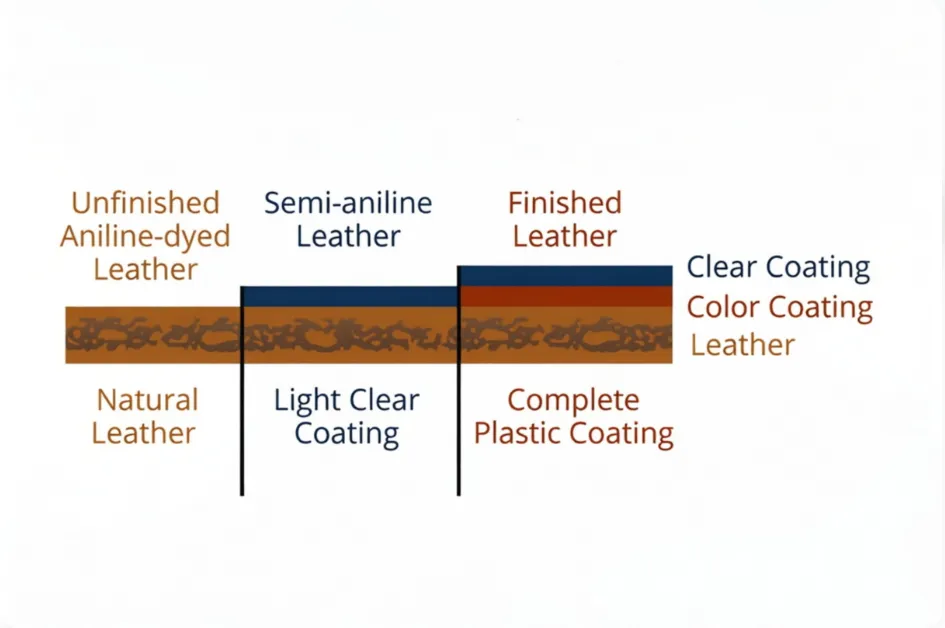
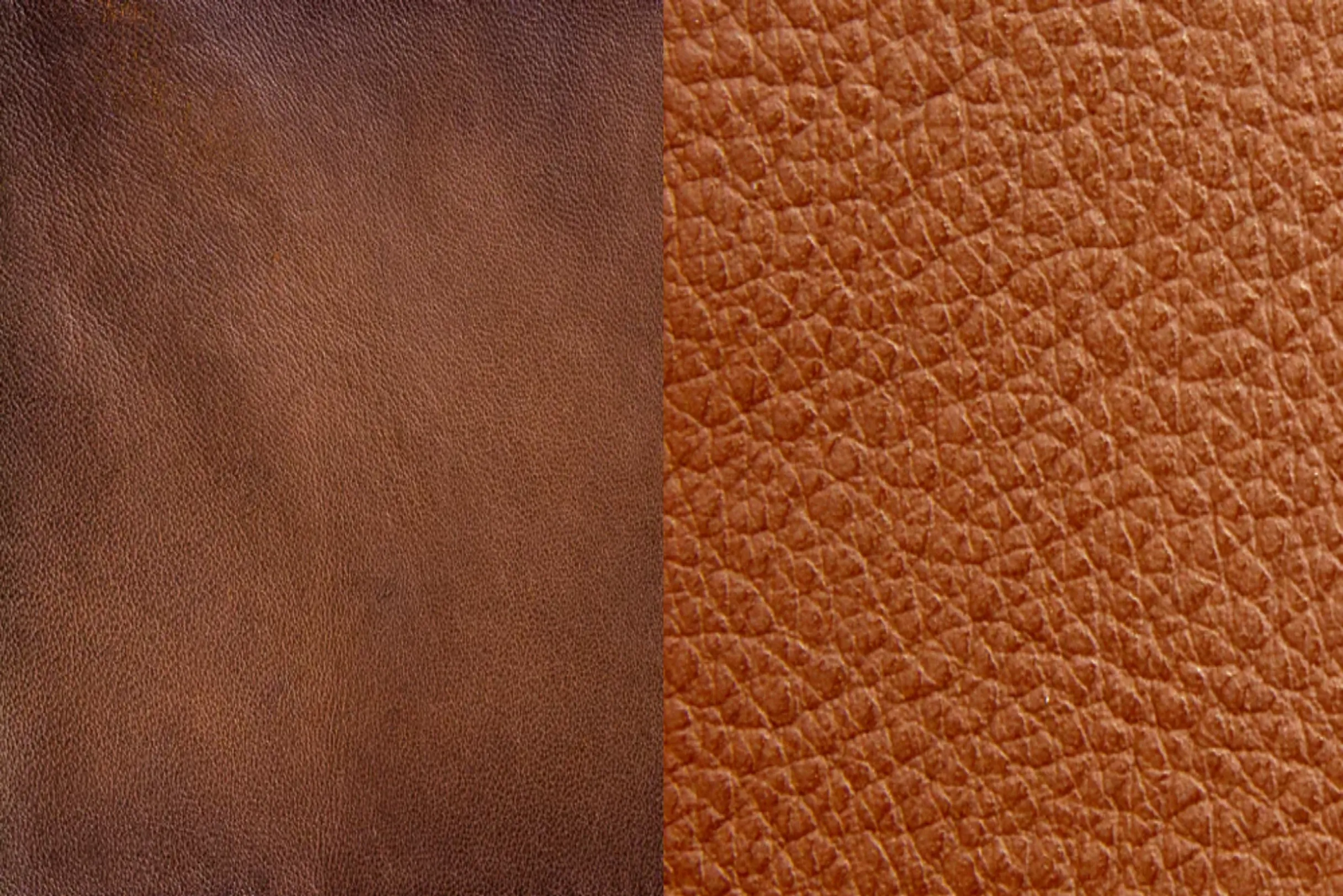
leather finish type
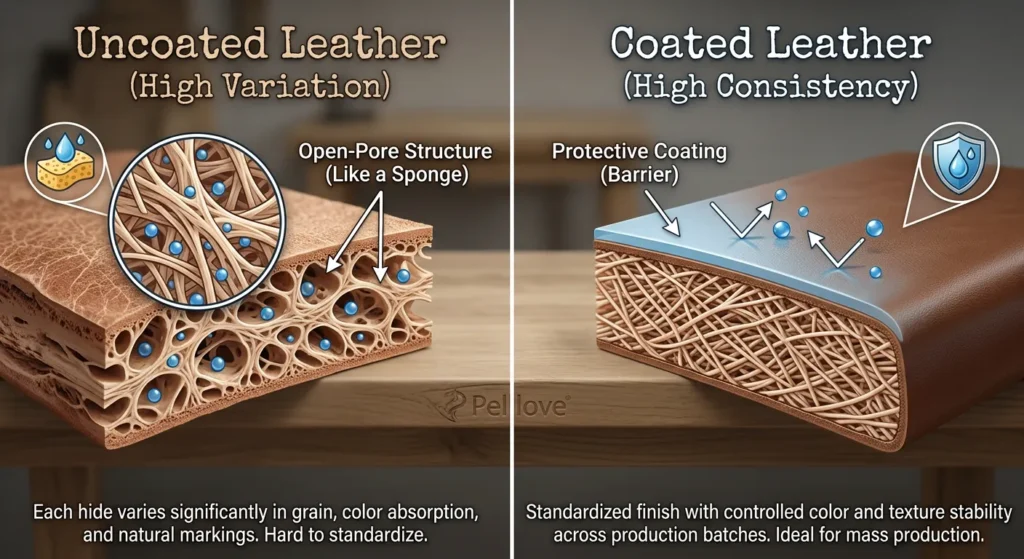
Micro visual of uncoated leather and coated leather
Key Differences for Leather Phone Cases
1. Durability & Water Resistance (Critical Factor)
Leather phone cases are constantly exposed to sweat, hand oils, friction, and accidental water contact.
Uncoated leather: Absorbs moisture instantly and can develop permanent dark stains.
Coated leather: Water beads on the surface with no immediate absorption, offering vastly superior daily-use performance.
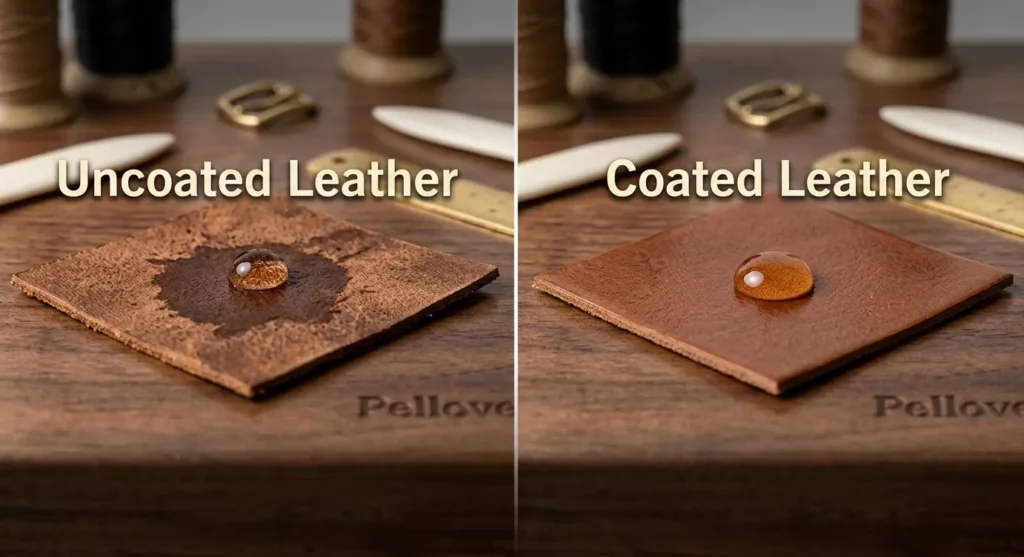
water resistance-uncoated leather VS coated leather
2. Scratch Resistance
Uncoated leather: Has no protective barrier, making it easily scratched by keys or fingernails during daily use.
Coated leather: The surface layer significantly reduces visible wear, maintaining a cleaner appearance over time.
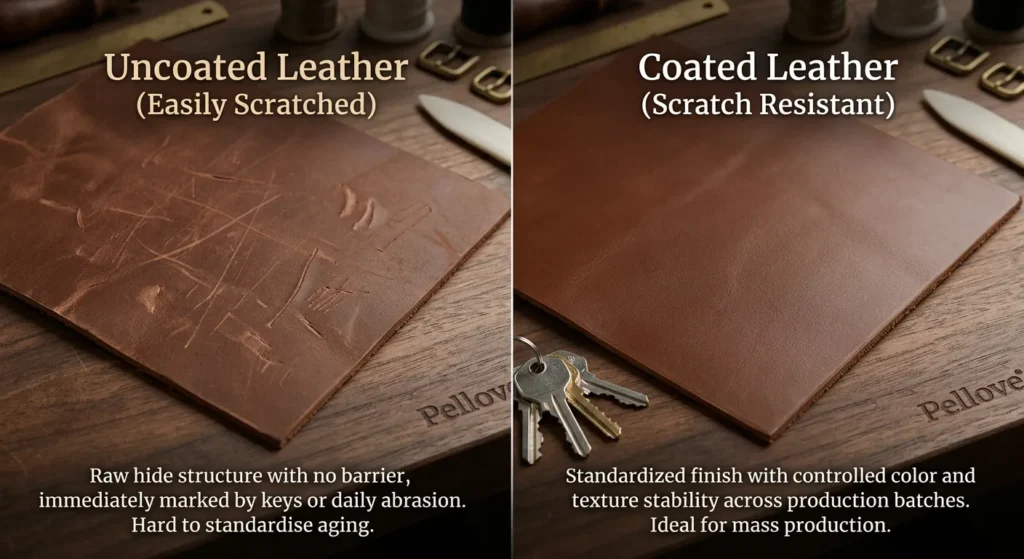
Scratch between uncoated leather and coated leather
3. Product Consistency (The Scaling Factor)
This is one of the most important differences for commercial brands.
Uncoated leather: Natural variation between hides means different color absorption and grain patterns. It is extremely hard to standardize for QC.
Coated leather: Offers a controlled surface finish and stable color across production batches. It is ideal for Amazon, Shopify, and retail distribution.
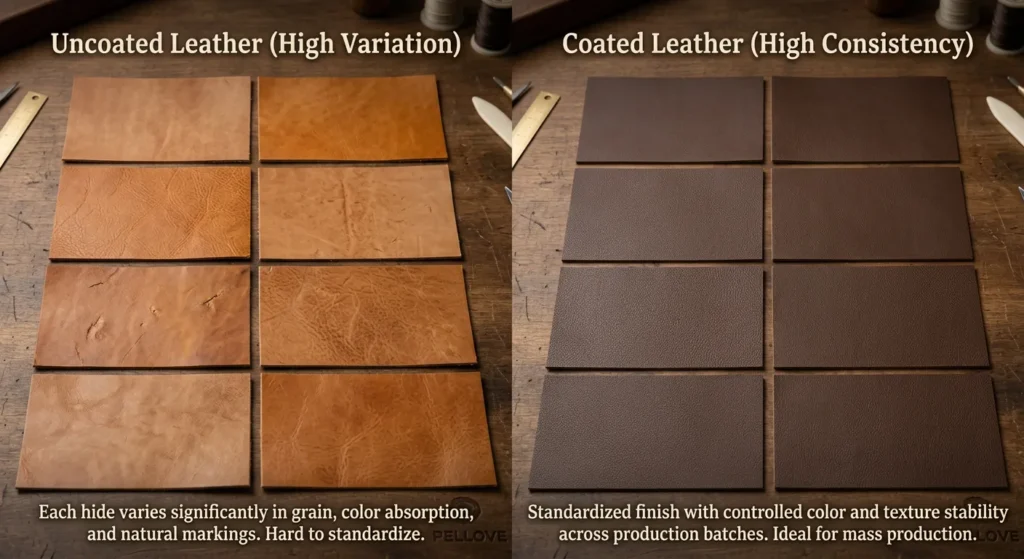
Uncoated Leather VS Coated Leather of Product Consistency
4. Customer Experience & Return Rate
Consumer perception plays a major role in phone case sales.
Uncoated leather risks: Natural scars are often mistaken as defects. Uneven darkening over time leads to a higher complaint rate from non-expert users.
Coated leather advantages: Delivers a clean appearance out of the box, predictable aging behavior, and a significantly lower return rate risk.
Coated vs Uncoated Leather Comparison Table
| Feature | Uncoated Leather | Coated Leather |
|---|---|---|
| Water Resistance | Low | High |
| Scratch Resistance | Low | High |
| Surface Consistency | Variable | Stable |
| Maintenance | High | Low |
| Mass Production Suitability | Low | High |
| Customer Complaint Risk | High | Low |
| Return Rate Impact | Negative | Positive |
Real Manufacturing Insight (Pellove Factory Test)
In real production testing at the Pellove factory:
Uncoated leather absorbs water within ~3 seconds, leaving visible, permanent staining.
Coated leather causes water to bead and roll off completely.
This single factor strongly affects: Customer satisfaction, product review ratings, and return rate performance after 3–6 months of use.
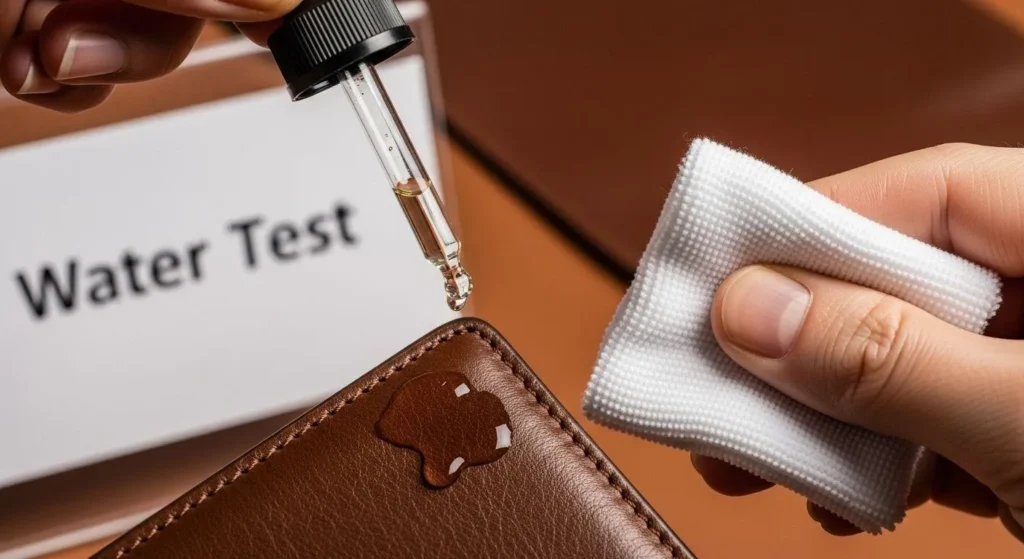
Coated Leather
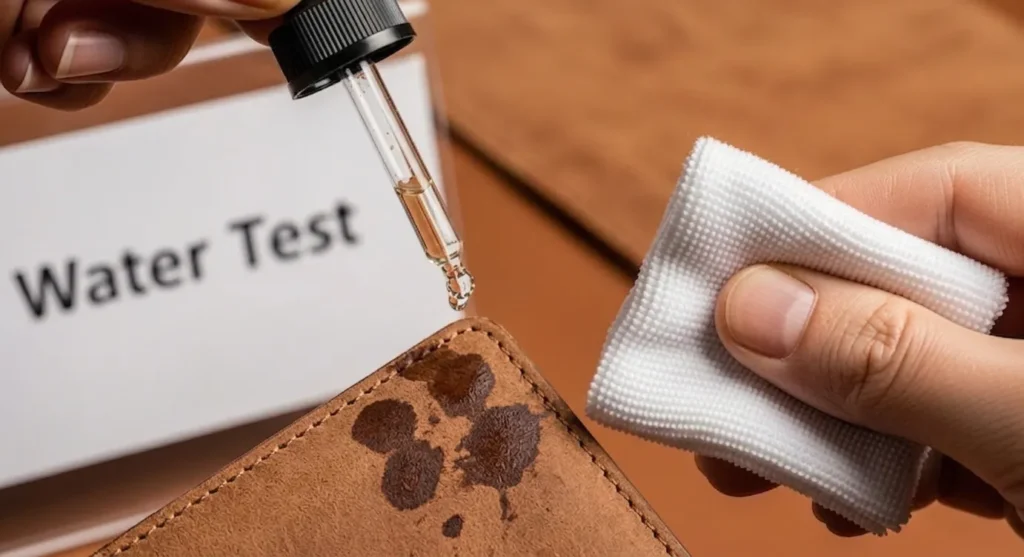
Uncoated leather
Why Uncoated Leather Can Hurt Phone Case Brands
While leather enthusiasts appreciate uncoated leather, it introduces severe risks in commercial tech accessories:
- Inconsistent aging across different users.
- Higher misunderstanding of natural marks (perceived as defects).
- Unstable appearance across production batches.
- Increased customer complaints in DTC channels.
Best Leather for Phone Cases in 2026 (Clear Recommendation)
For most brands, building scalable product lines:
Coated full-grain leather offers the best balance of durability, consistency, and commercial performance. This is especially true if you source materials from Leather Working Group-certified tanneries, ensuring both quality and environmental compliance.
Only choose uncoated leather if:
Your brand is heavily storytelling-driven.
Patina development is part of your core product value.
You operate in a low-volume, premium artisan positioning.
Common Misconception: “Uncoated Leather = Higher Quality.”
This is not always correct. In manufacturing, “quality” is defined by real-world durability, customer satisfaction, production consistency, and return rate impact.
In phone cases, coated leather often delivers better overall commercial performance than uncoated leather.
FAQ
Is coated leather still real leather?
Yes. Coating is only a surface finish and does not change the base leather type (it can still be full-grain or top-grain).
Why does a leather phone case stain easily?
If it stains easily, it is likely uncoated leather, which absorbs oils and moisture due to its open pore structure.
What is the best leather for phone cases?
For most brands, coated full-grain leather is the best balance of durability, premium feel, and scalability.
Does coated leather look cheap?
No. High-quality coatings can maintain a premium matte or semi-gloss appearance while drastically improving durability.
Keep Learning (Recommended Guides)
For deeper technical understanding, explore our other expert guides:
What Is Full-Grain Leather? A Sourcing Guide
Vegetable-Tanned vs Chrome-Tanned Leather
How to Source High-Quality Leather Phone Cases for Amazon
Work With Pellove
Choosing the right leather finish is not just a material decision—it directly impacts your return rate, customer satisfaction, and long-term brand positioning.
To avoid production risks and scale confidently:
Request a leather sample kit (to compare coated vs. uncoated firsthand).
Get a technical recommendation based on your target market and price positioning.
Validate material performance before committing to mass production.
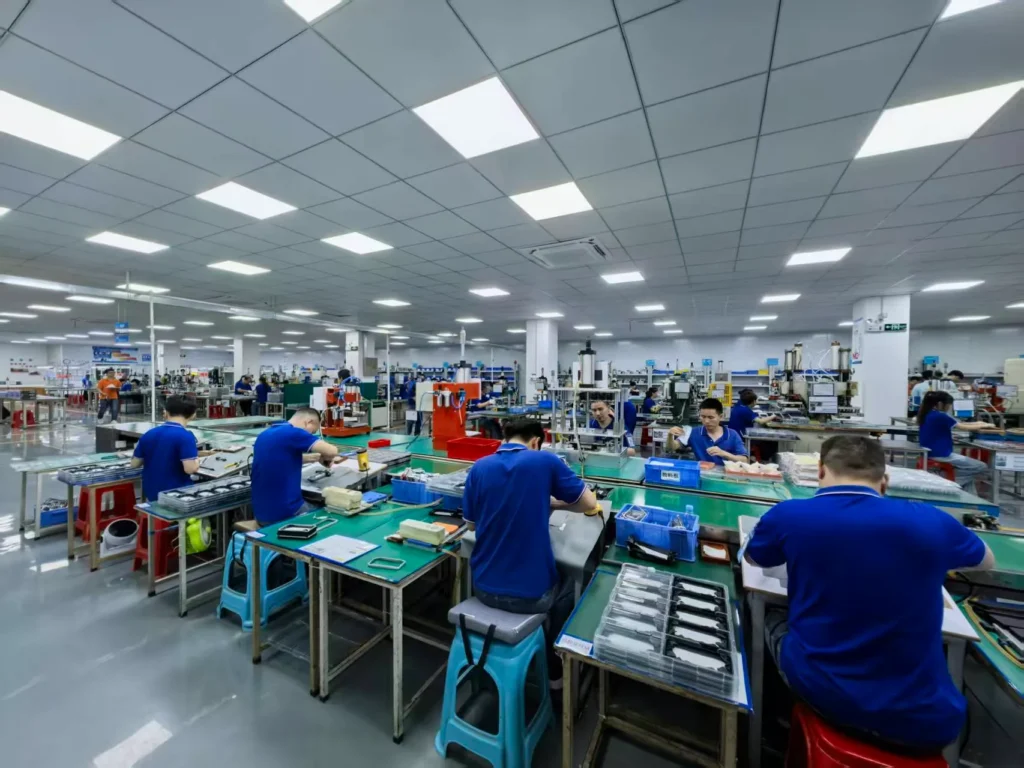
A Glimpse of Our Factory