
Leather finishing for premium products is the single most important factor that determines whether your brand captures high-margin “luxury” customers or competes in the price-sensitive “commodity” market. While the raw hide provides the structural integrity, it is the finishing process that defines the “hand-feel,” color consistency, and long-term durability. For B2B buyers and product designers, selecting the right finishing is not just a design preference—it is a strategic business decision that dictates your retail pricing, profit margins, and return rates.
If you are developing leather phone cases, MagSafe wallets, or iPad cases, you must understand that “luxury” is often a surface-level achievement. A premium look relies on a balance between the natural beauty of the hide and the protective layers applied during the final stages of production. In this guide, we will break down the technical aspects of leather finishing to help you optimize your next collection for the global market.
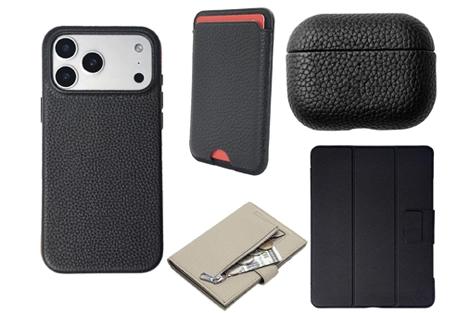
Leather accessories
What Is Leather Finishing? (The “Personality” Layer)
Leather finishing refers to the series of chemical and mechanical treatments applied to the surface of tanned leather. Think of it as the skin’s “armor” and “makeup” combined into one. Raw tanned leather is naturally absorbent, porous, and vulnerable to environmental damage. Without a proper finish, a premium iPhone case would absorb sweat, stain within hours, and lose its color under UV light.
The finishing process serves three critical business functions:
Correcting Imperfections: Even the most expensive hides have scars, insect bites, or wrinkles. Leather finishing for premium products allows factories to improve the “yield” of a hide, reducing material waste and lowering your COGS (Cost of Goods Sold).
Performance Engineering: By applying specific topcoats, we can add scratch resistance, water repellency, and anti-bacterial properties—essential for high-touch items like smartphone accessories.
Aesthetic Consistency: For brands selling on Amazon or through retail chains, every unit must look identical. Finishing ensures that the “Midnight Blue” case you ship today matches the one you shipped six months ago.
The 3 Main Types of Leather Finishing (Strategic Comparison)
Choosing between Aniline, Semi-Aniline, and Pigmented leather is where most brands either succeed or fail in their positioning. Each type serves a different target market and price point.
1. Aniline Leather — The Gold Standard for Luxury
Aniline leather is the most natural form of leather. It is dyed exclusively with transparent soluble dyes, meaning the surface is not covered by any pigment or opaque coating.
- Characteristics: You can see every natural pore and grain pattern. It feels incredibly soft, warm, and “organic.”
- Best For: Ultra-high-end brands (retailing above $70) that want to highlight the authenticity of the material.
- B2B Risk: It is highly sensitive to staining and sunlight. For phone cases, which people handle thousands of times a day, Aniline leather will develop a unique patina very quickly.
2. Semi-Aniline Leather — The High-Performance Balance
Semi-aniline leather strikes a middle ground by applying a very thin layer of pigment followed by a clear protective topcoat. This process retains the natural look while adding a layer of “security.”
- Characteristics: More consistent color than pure aniline, but still maintains a soft, premium touch.
- Best For: Mid-to-high-tier DTC brands ($40–$60 retail). It offers the durability customers expect from a daily-use accessory without looking like plastic.
- B2B Advantage: It reduces customer complaints about “random marks” on the leather, as the light pigment masks minor natural flaws.
3. Pigmented (Corrected) Leather — The Scalable Solution
Pigmented leather involves a heavy, opaque coating. Often, the surface is buffed to remove deep scars and then embossed with a pebbled leather texture to simulate a perfect grain.
- Characteristics: Extremely durable, waterproof, and easy to clean. The color is 100% uniform.
- Best For: Mass-market e-commerce sellers and corporate gifting.
- Business Impact: High durability leads to low return rates. However, the “plastic-like” feel might deter customers looking for a heritage luxury experience.
Technical Comparison Table for Product Managers
Popular Special Finishes That Define Your Brand Identity
Beyond the basic coating thickness, specialized types of leather finishing can give your product a distinct “vibe” that resonates with your target demographic.
Embossed Textures (Pebble, Saffiano, Croc)
Embossing uses heat and high-pressure plates to stamp a pattern into the leather. Saffiano leather, originally popularized by Prada, is a great example of a functional finish that is both iconic and incredibly durable. If your brand targets professional women, a Saffiano or “Croc” finish adds a layer of fashion-forward sophistication.

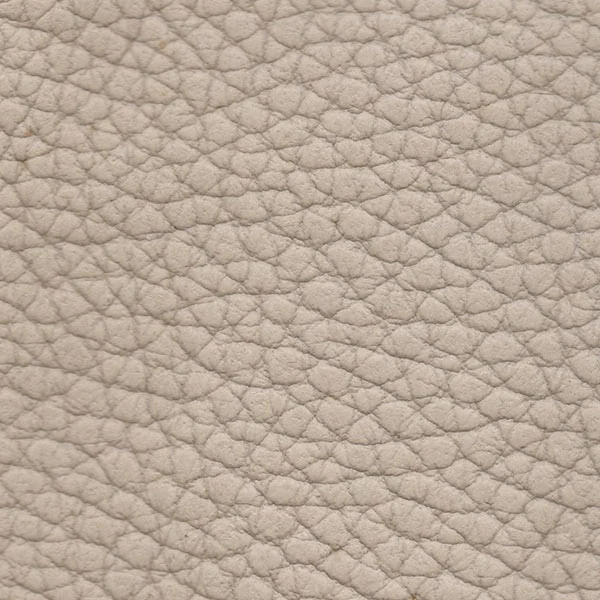
pebbled leather
Oil-Waxed & Crazy Horse Finishes
These finishes involve applying heavy waxes to the surface. When the leather is bent or scratched, the waxes shift, creating a “pull-up” effect that looks vintage. This is the ideal choice for Crazy Horse leather accessories aimed at the “rugged” or “heritage” male market. It tells a story of adventure and longevity.
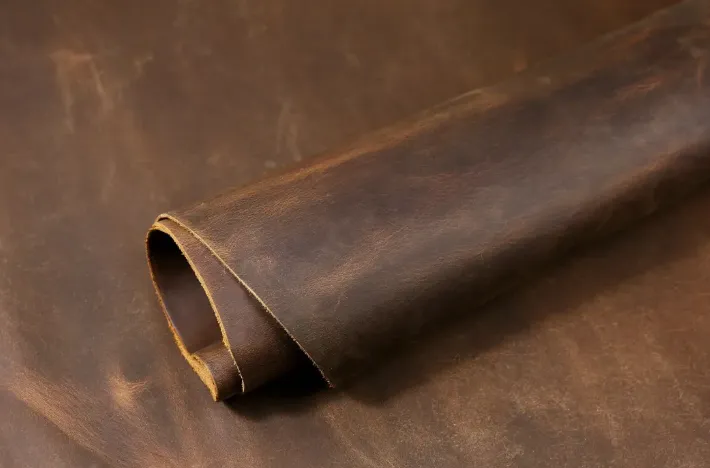
crazy horse leather
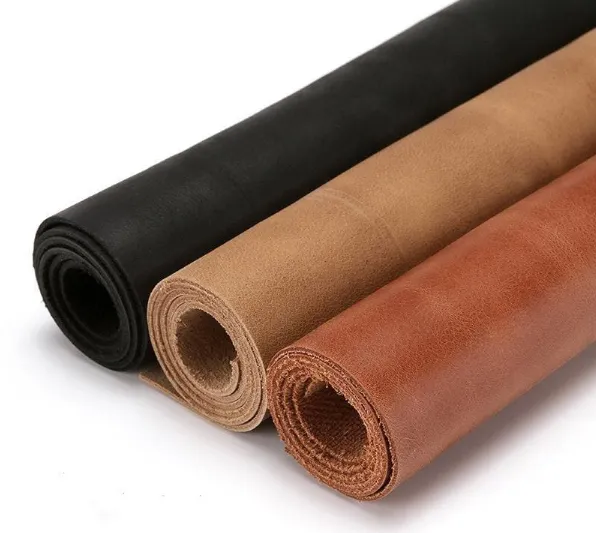
Oil Waxed leather
Nappa and Milled Finishes
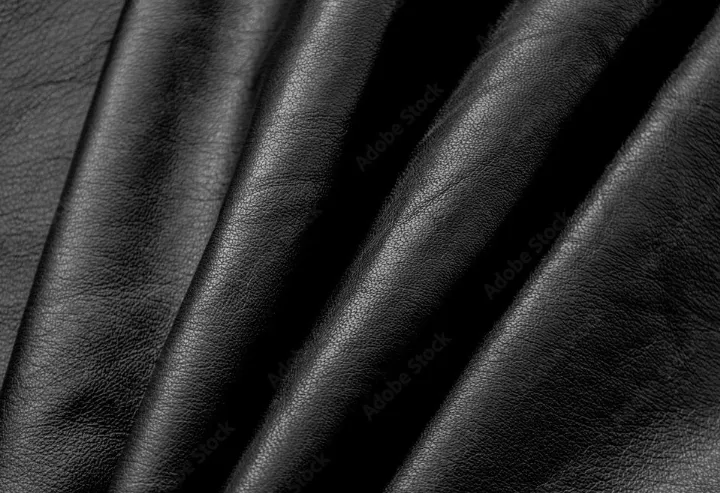
Nappa leather is characterized by its extreme softness, often achieved through a “milling” process where the leather is tumbled in a dry drum to loosen the fibers. This creates a buttery texture that customers immediately associate with high-end luxury car interiors or designer gloves.
Nappa Leather
2026 Trends: Sustainability in Finishing
For brands exporting to the EU or the US, sustainability is no longer optional. According to the Leather Working Group (LWG), the industry is rapidly shifting toward Water-Based Finishing. Traditional solvent-based coatings emit high VOCs (Volatile Organic Compounds), which are harmful to workers and the environment. Switching to water-based topcoats ensures your brand complies with modern environmental regulations while maintaining a high-quality finish.
Factory Insights: How Finishing Impacts Your Lead Times
From a leather phone case factory perspective, complex finishes require more time.
- Aniline/Semi-Aniline: Requires “Grade A” hides, which are harder to source and inspect.
- Pigmented/Embossed: Can use “Grade B or C” hides, making mass production faster and more stable.
If you are planning a launch for the iPhone 17 series, we recommend finalizing your leather selection early to ensure hide availability. You can learn more about this in our Leather Case Guide.
For product teams comparing this material for commercial use, pair the material decision with leather types guide, OEM and ODM manufacturing choices, and the quality control checklist so appearance, durability, MOQ, and inspection standards are reviewed together.
FAQ: Frequently Asked Questions
1. Which leather finish is best for iPhone cases?
For most brands, Semi-Aniline is the winner. It provides the “real leather” smell and feel that customers pay for, but the thin protective layer prevents the case from looking “dirty” after just a week of use.
2. Is pigmented leather “real” leather?
Yes, it is genuine cowhide leather. The “pigment” is simply a surface treatment. It shouldn’t be confused with PU leather or synthetic alternatives.
3. Does a thicker finish mean better quality?
Not necessarily. In the luxury world, a thinner finish is often seen as higher quality because it requires a “cleaner” hide with fewer natural flaws. However, for a construction worker’s rugged phone case, a thick pigmented finish is objectively better for performance.
4. How can I tell if a finish is Aniline or Pigmented?
A simple “light scratch” test (using a fingernail) can help. Aniline leather will usually show a temporary mark or change color slightly, whereas a pigmented finish will resist the scratch entirely.
Final Takeaway: It’s a Business Decision
The choice of leather finishing for premium products should be driven by your Ideal Customer Profile (ICP).
- Aniline = Branding & High Margins
- Semi-Aniline = Balance & Low Returns
- Pigmented = Stability & Mass Scale
At Pellove, we specialize in helping brands navigate these technical choices. Whether you need a buttery Nappa touch for a luxury iPad sleeve or a high-durability pebbled finish for a best-selling Amazon iPhone case, our team can provide samples within 3–7 days to help you make an informed decision.
Ready to elevate your product line? Contact Pellove today for a material consultation or to request our 2026 Leather Finishing Swatch Kit.