
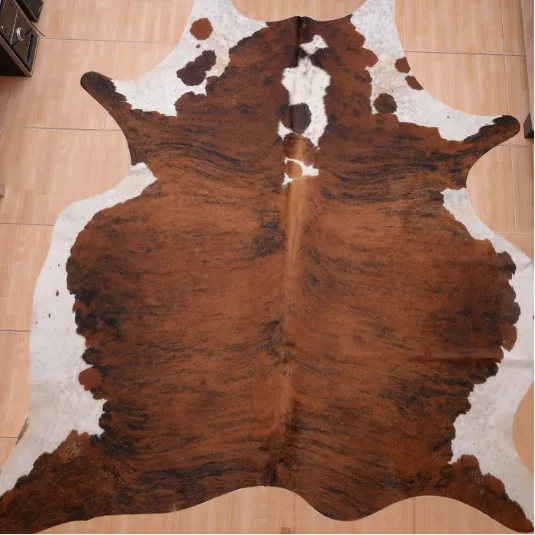
Cowhide leather is one of the most widely used and trusted natural materials in the leather industry. Known for its strength, thickness, and versatility, it is used in everything from luxury leather phone cases, handbags, and footwear to upholstery and industrial goods. However, not all cowhide is the same. There are several types of cowhide leather, each defined by its grain structure, tanning method, and surface finish. Understanding these different types of cowhide leather helps buyers choose the right material for durability, appearance, and long-term performance.
This complete guide breaks down cowhide leather classifications clearly and professionally.
1. What Is Cowhide Leather?
Cowhide leather is derived from cattle hides and is valued for its dense fiber structure, natural durability, and resistance to wear. Compared to sheepskin or goatskin, cowhide is thicker and stronger, making it ideal for products that require structure and longevity.
Key advantages:
High tensile strength
Excellent abrasion resistance
Suitable for both soft goods and structured items
Develops character over time
Cowhide leather can be classified in three main ways:
By hide structure (layer/grade)
By tanning method
By surface finish
Each classification affects quality, feel, durability, and price.
Cowhide Leather
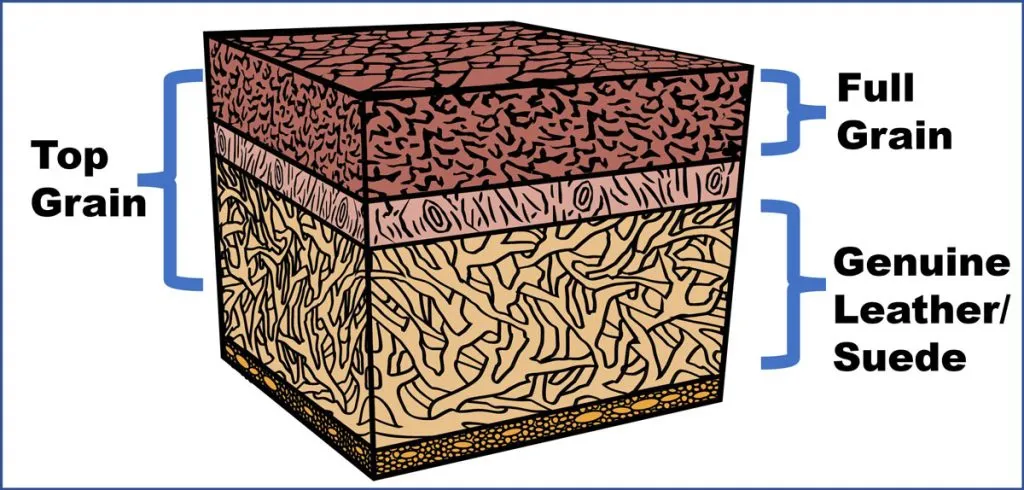
2. Types of Cowhide Leather by Hide Structure (Grade-Based Classification)
This is the most important classification in the leather industry.
Grade-Based Classification
2.1 Full Grain Cowhide Leather
Full grain leather is the highest quality cowhide available. Full grain leather retains the entire natural grain layer and develops a natural patina over time. According to the Leather Working Group, full grain leather maintains the highest structural integrity among leather grades.
It uses the entire top layer of the hide without sanding or correcting the surface. The natural grain, pores, and markings remain intact.
Characteristics:
Extremely strong and durable
Visible natural grain patterns
Develops a rich patina over time
Breathable and long-lasting
Best for:
Premium leather bags
- Full Grain leather phone case
High-end furniture
Luxury watch straps
Heritage boots
Full grain cowhide can last 10+ years with proper care. For detailed cleaning, conditioning, and storage tips, refer to our Ultimate Leather Care Guide.
2.2 Top Grain Cowhide Leather
Top grain leather is slightly sanded or buffed to remove surface imperfections. This creates a more uniform appearance while maintaining good durability.
Characteristics:
Smooth and consistent surface
Softer and more flexible than full grain
Slightly reduced strength compared to full grain
Best for:
Sofas and upholstery
Mid-to-high-end leather goods
Fashion accessories
Top grain leather offers a balance between quality and aesthetic uniformity.
2.3 Corrected Grain (Often Labeled “Genuine Leather”)
Corrected grain leather is sanded more heavily and embossed with an artificial grain pattern.
Important clarification:
“Genuine leather” simply means real leather — it does not indicate top quality.
Characteristics:
Artificially embossed surface
Lower fiber strength
More uniform appearance
Best for:
Budget belts
Entry-level leather products
Durability is moderate, typically 3–5 years. If longevity is your main concern, see our Ultimate Guide to Leather Durability: Which Type Lasts Longest? for a full comparison.
2.4 Split Grain Cowhide Leather
Split grain leather comes from the lower layer of the hide after the top grain is separated.
Characteristics:
Looser fiber structure
Less durable than top layers
Often coated or turned into suede
Best for:
Suede products
Coated leather goods
Budget-friendly items
Split grain is real leather but lacks the strength of upper layers.
2.5 Bonded Leather
Bonded leather is made from shredded leather scraps mixed with polyurethane or latex binders.
Characteristics:
Contains some real leather fibers
Thin and less durable
Can peel or crack over time
Best for:
Low-cost furniture
Temporary fashion products
It typically lasts 1–3 years.
Quick Comparison Table
| Type | Durability | Surface | Thickness | Lifespan | Price |
|---|---|---|---|---|---|
| Full Grain | Very High | Natural | 2.0–3.0mm | 10+ years | High |
| Top Grain | High | Lightly Sanded | 1.4–2.0mm | 7–10 years | Mid-High |
| Corrected Grain | Moderate | Embossed | 1.2–1.6mm | 3–5 years | Mid |
| Split Grain | Low–Mid | Coated or Suede | 1.0–1.4mm | 2–4 years | Low |
| Bonded Leather | Low | Artificial Blend | Thin | 1–3 years | Very Low |
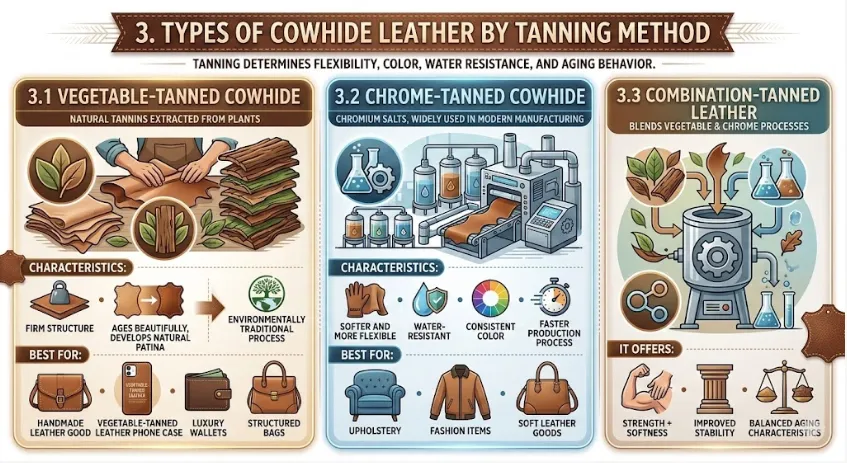
3. Types of Cowhide Leather by Tanning Method
Tanning determines flexibility, color, water resistance, and aging behavior.
3.1 Vegetable-Tanned Cowhide
Vegetable tanning uses natural tannins extracted from plants.
Characteristics:
Firm structure
Ages beautifully
Develops natural patina
Environmentally traditional process
Best for:
Handmade leather goods
- Vegetable-Tanned Leather Phone Case
Luxury wallets
Structured bags
3.2 Chrome-Tanned Cowhide
Chrome tanning uses chromium salts and is widely used in modern manufacturing.
Characteristics:
Softer and more flexible
Water-resistant
Consistent color
Faster production process
Best for:
Upholstery
Fashion items
Soft leather goods
3.3 Combination-Tanned Leather
Combination tanning blends vegetable and chrome processes.
It offers:
Strength + softness
Improved stability
Balanced aging characteristics
Tanning Method
4. Types of Cowhide Leather by Finish
Finish refers to the final surface treatment applied after tanning.
Important: Finish is different from grade.
Aniline Leather
Dyed only, no heavy coating
Natural grain visible
Premium appearance
Semi-Aniline Leather
Light protective topcoat
More durable than aniline
Balanced natural look
Pigmented Leather
Strong protective coating
Uniform color
Highly durable
Nubuck
Sanded top grain
Velvety texture
Sensitive to stains
Pull-Up Leather
Oil-infused
Color changes when bent
Vintage aesthetic
Oiled Leather
Enhanced water resistance
Rugged look
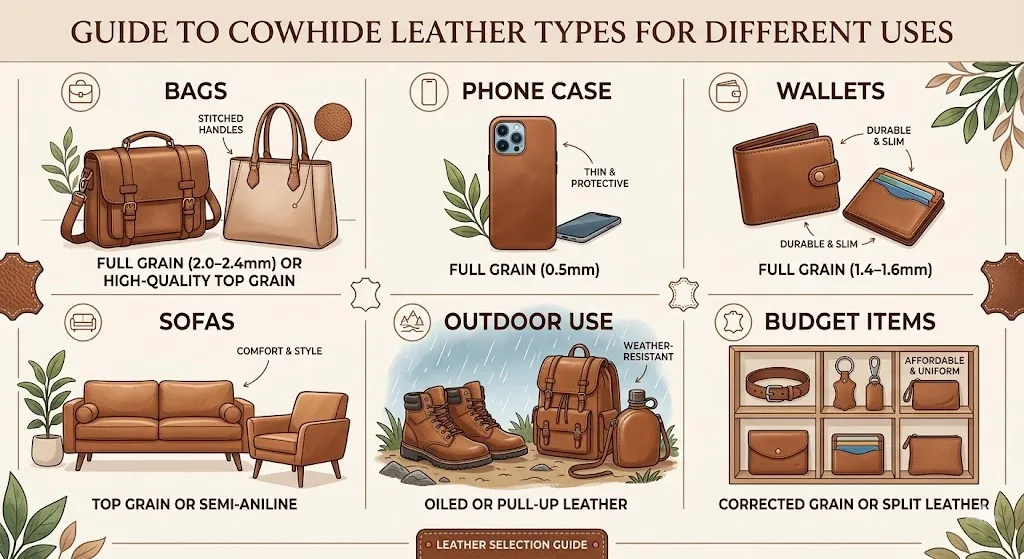
5. Best Types of Cowhide Leather for Different Uses
For bags:
Full grain (2.0–2.4mm) or high-quality top grain
For Leather phone case:
Full grain (0.5mm)
For leather wallets:
Full grain (1.4–1.6mm)
For sofas:
Top grain or semi-aniline
For outdoor use:
Oiled or pull-up leather
For budget items:
Corrected grain or split leather
Different Uses
6. How to Identify High-Quality Cowhide Leather
Examine the grain – natural variation indicates quality
Check the edge – dense fibers suggest strong structure
Press test – genuine leather wrinkles naturally
Smell – real leather has an earthy scent
Water drop test – vegetable-tanned leather absorbs slowly
7. Frequently Asked Questions
Is cowhide leather real leather?
Yes. Cowhide leather is genuine leather made from cattle hides.
Is split grain leather durable?
It is real leather but less durable than full grain or top grain.
What is the strongest type of cowhide leather?
Full grain cowhide leather is the strongest and most durable.
Is vegetable-tanned leather better?
It depends on the use. It ages beautifully but is firmer than chrome-tanned leather.
How thick should cowhide leather be for bags?
Typically between 1.8mm and 2.4mm, depending on structure requirements.
Final Thoughts
Cowhide leather remains one of the most versatile and durable materials in the leather industry. By understanding the differences between full grain, top grain, split, and bonded leather — as well as tanning methods and finishes — buyers can make informed decisions based on durability, aesthetics, and budget.
Whether you are sourcing materials for leather goods, furniture, or accessories, selecting the right type of cowhide leather ensures long-term performance and lasting value.