
Ostrich leather is one of the most distinctive and luxurious exotic leathers in the world, recognized for its raised quill follicle pattern, exceptional softness, and long-term durability. Unlike traditional cowhide, it combines a unique 3D texture with natural oil richness, making it highly resistant to cracking and wear. For brands and B2B buyers, ostrich leather is more than just a material—it is a strategic positioning tool for entering the high-luxury segment with strong margins and brand differentiation.
Ostrich Leather Buying Path for Luxury Phone Case Projects
Ostrich leather is a premium exotic material for high-end accessories, but it is not the default choice for every leather phone case. Brands should evaluate quill pattern placement, thickness control, yield, price positioning, and surface protection before using it in custom leather phone case manufacturing.
| OEM buyer question | Practical answer |
|---|---|
| Is Ostrich Leather suitable for custom leather phone cases? | It can be suitable when the case structure, surface finish, bending zone, lining, and edge finishing match the intended price point and use case. |
| What should brands confirm before sampling? | Ask for material thickness, backing, color consistency, logo compatibility, abrasion expectations, MOQ, and packaging pressure tests. |
| Which commercial page should buyers read next? | Use the custom leather phone case manufacturer guide for OEM structure planning and the leather phone case category for product direction. |
Material education pages should support sourcing decisions, not sit alone as dictionary content. Buyers comparing ostrich leather with other options can also review full-grain leather and phone case leather selection before preparing a sample brief.
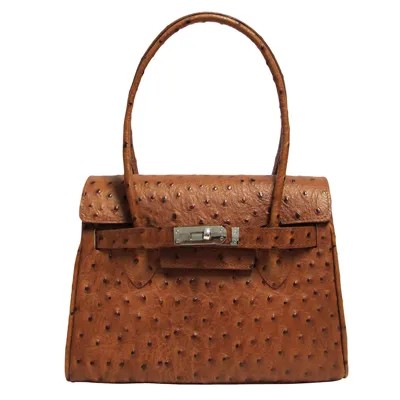
Ostrich Leather bag
1. What Is Ostrich Leather?
Ostrich leather is made from the skin of the Struthio camelus, the largest bird species in the world. It is classified as an exotic leather and is widely used in luxury goods such as handbags, footwear, watch straps, and premium leather phone cases. What sets it apart is the quill follicle pattern—small raised bumps left from feather follicles—which creates a natural texture that cannot be authentically replicated by embossing.
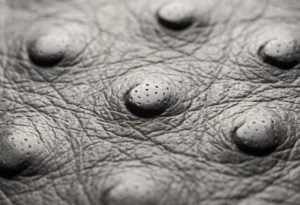
Ostrich Leather
2. Where Does Ostrich Leather Come From?
The majority of premium ostrich leather comes from South Africa, which dominates the global supply chain.
- Controlled farming system
- Regulated by CITES standards
- High traceability (important for luxury brands)
For B2B buyers, sourcing origin matters because it directly affects quality consistency, ethical compliance, and factory supply stability.
3. Full Quill vs Half Quill: What’s the Difference?
Understanding this is critical for pricing and product development.
- Full Quill (Crown Area): Located on the back of the ostrich. Prominent, evenly spaced follicles. Premium luxury segment. Only 30–40% of the total hide.
- Half Quill / Smooth: From the belly or side areas. Less visible or no follicles. Lower cost, more yield.
If your product uses full quill panels, your material cost can increase by 2–3x compared to mixed panels during custom OEM leather manufacturing.
4. Ostrich Leather Grades Explained
Grading determines usability and pricing.
- Grade I: No defects in the crown. Best for luxury handbags.
- Grade II: Minor imperfections. Best for mid-size goods.
- Grade III: Visible marks. Best for small leather goods.
Always request a grading report from your supplier to avoid overpaying.
5. Key Properties of Ostrich Leather
- Softness & Flexibility: Ostrich leather is known for its buttery-soft feel, thanks to high natural oil content. It does not stiffen over time.
- Exceptional Durability: High tear resistance and crack-resistant. Often outperforms standard cowhide in longevity.
- Breathability: The porous structure allows airflow, making it ideal for footwear and high-end protective phone cases (heat dissipation).
6. How Ostrich Leather Is Made
The tanning process is more complex than cowhide: extended soaking time, deep dye penetration, and specialized drum processing. Finishing Options:
- Matte: modern luxury
- Glazed: high shine
- Saddle finish: natural look
Ostrich leather absorbs dye extremely well, enabling vivid, luxury colors.
7. Ostrich Leather Price (B2B Breakdown)
Pricing varies significantly depending on quality and usage.
- Typical Range: Raw hide: USD 600+ per skin.
- Cost Factors: Quill density, Grade level, color processing, and cutting efficiency.
Due to low yield in the crown area, material waste is higher than standard leather.
8. Ostrich Leather vs Other Leathers
| Feature | Ostrich | Cowhide | Crocodile |
|---|---|---|---|
| Texture | Quill (3D) | Smooth | Scales |
| Softness | Very High | Medium | Low |
| Durability | Excellent | High | Medium |
9. Common Products Made from Ostrich Leather
- Luxury handbags
- Wallets & cardholders
- Watch straps (leg skin)
- Footwear (boots, loafers)
- Premium leather phone cases
Increasing demand for tech accessories (MagSafe leather wallets) is driven by tactile differentiation.
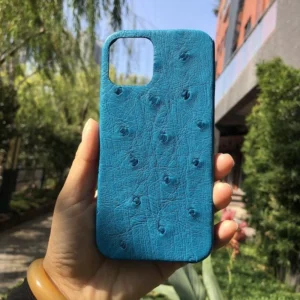
Ostrich Leather Phone Case
10. How to Identify Genuine Ostrich Leather
Pore Test: Real quills have visible pores (feather follicles).
Touch Test: Warm and soft → genuine; Cold and stiff → embossed.
Pattern Check: Natural irregularity = real; Perfect repetition = fake.
11. Advantages & Limitations
- Advantages: Strong luxury signal, unique tactile experience, long lifespan, low maintenance.
- Limitations: High material costs, low cutting efficiency, and the need for skilled craftsmanship.
12. Is Ostrich Leather Worth It?
Yes, if your target price is 300+ retail. Reasons include higher perceived value, strong brand differentiation, and premium positioning leverage. To maintain these products, refer to our leather care guide.
13. OEM & Wholesale Ostrich Leather Solutions
For brands entering the exotic leather segment, available options include:
- Full ostrich exterior + cowhide interior (cost optimization)
- Custom colors & finishes
- Logo embossing (private label)
Explore our wholesale luxury program for established OEM buyers.
14. Final Thoughts
Ostrich leather is not just a material—it is a brand positioning asset. It signals exclusivity, craftsmanship, and a high-end identity. For brands looking to stand out, it offers a rare combination of technical performance and luxury storytelling.
For brands considering exotic textures in a leather goods line, compare the material choice with leather types guide and full-grain and top-grain leather comparison before confirming sourcing, compliance, and production feasibility.
FAQ
Q1: Is ostrich leather expensive?
Yes. It is typically 5–10 times more expensive than cowhide.
Q2: Does ostrich leather scratch easily?
No. It has natural elasticity that helps resist minor scratches.
Q3: Can ostrich leather get wet?
It is water-resistant but should not be exposed to prolonged moisture.
Q4: What is full quill ostrich leather?
It refers to the premium crown area with visible quill follicles.
If you’re sourcing ostrich leather products for your brand, you can contact our B2B team to request a sample or validate your luxury line before scaling.