
Exotic leather is a category of high-value skins sourced from non-traditional animals—primarily reptiles, birds, and fish—that are prized for their unique natural patterns, limited availability, and luxury positioning. For brands and B2B buyers, it is defined not just by the species but by its ability to command a premium price point and provide visual differentiation that standard bovine leather cannot replicate.
In short, if you are looking to elevate a product’s perceived value instantly, exotic leather is the strategic choice. However, it requires a sophisticated understanding of supply chain risks and material behavior to avoid costly production errors.
What Is Exotic Leather (Real Definition)
Technically, exotic leather refers to any hide derived from animals outside the common livestock categories (cow, sheep, goat, and pig). While traditional leather is a byproduct of the global meat industry, exotics are often raised specifically for their skins or managed through strict conservation programs.
Common Exotic Leather Types
The commercial “Big Three” in the exotic world are:
- Crocodilians: Including Nile crocodile, American alligator, and Caiman.
- Ratites: Primarily Ostrich, known for its distinctive quill follicles.
- Reptiles: Such as Python, Lizard, and various snake species.
For a deeper look at the most prestigious reptile skin, see our guide on crocodile leather, python leather, and ostrich leather.
For a B2B buyer, the “real” definition also includes the material’s rarity. Unlike cowhide, which is sold by the square foot, most exotic skins are sold by the centimeter (width) or by the individual skin, reflecting their scarcity and the technical expertise required for tanning and finishing.
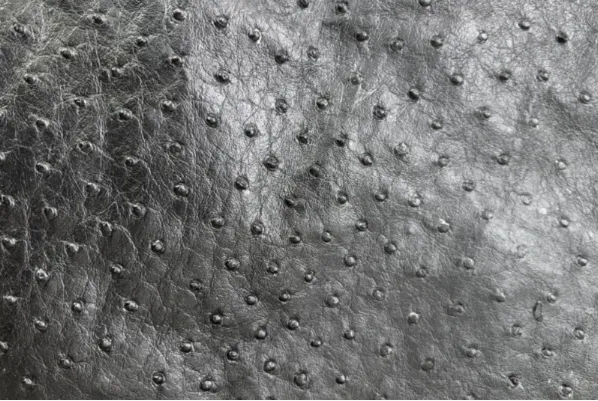
Ostrich Leather
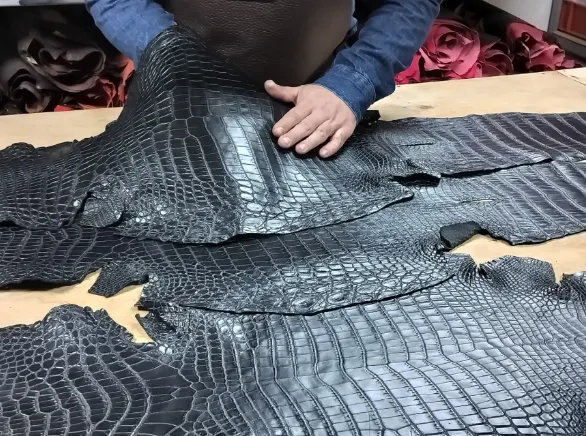
Crocodile leather
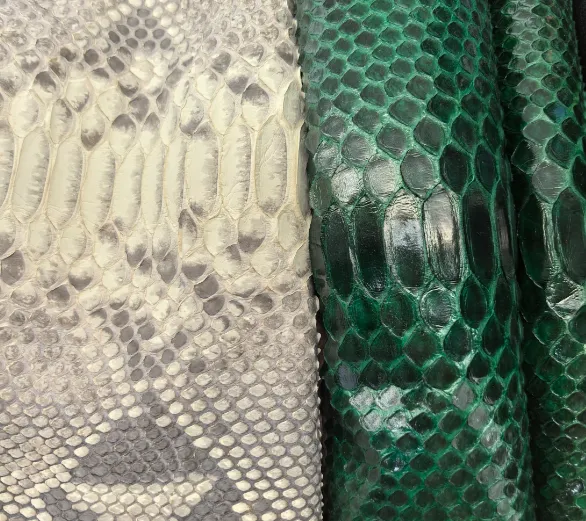
Python Leather
Key Characteristics (What Actually Matters)
When developing a product line, aesthetics are only half the story. You must understand how these materials perform under industrial stress.
1. Natural Pattern Uniqueness
Every skin is a biological fingerprint. In a production run of 500 alligator leather phone cases, no two units will be identical. This “flaw” is actually your strongest selling point for B2B clients looking to market “one-of-a-kind” luxury.
2. Material Behavior and Durability
Different skins have wildly different mechanical properties.
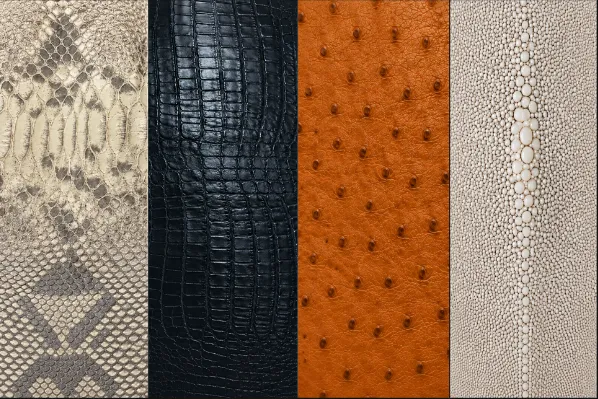
Exotic leather
Exotic Leather vs Regular Leather (Critical Comparison)
From a product development perspective, switching from cowhide to exotic leather is not a simple substitution; it is a change in your entire business model.
- Cost Factor: While full-grain leather is already a premium choice, specialty skins can increase raw material costs by 5x to 20x.
- Scalability: While you can order 10,000 square feet of black calfskin and receive consistent quality, sourcing 1,000 “Grade A” crocodile skins may take months and involve multiple suppliers.
- Consistency: Standard leather allows for high-yield nesting during cutting. Exotic skins have “dead zones” (limbs, tail, head) that significantly reduce your yield rate.
Key Insight: Exotic leather is a branding material, not a mass-production material. It is designed to drive margins, not volume.
Where Exotic Leather Makes Sense (Use Cases)
For brands aiming to penetrate the high-end market, this material is indispensable.
High-Value, Low-Volume Products
The luxury market thrives on scarcity. Limited drops of accessories using specialty skins allow brands to test higher price tiers without overcommitting capital. For example, a brand might launch a core line in calfskin but offer a “Signature Collection” featuring an ostrich leather phone case to anchor the brand’s premium status.
Premium Branding Applications
In B2B scenarios, providing exotic options demonstrates your manufacturing capability. If a factory can handle the complexities of stingray or belly-cut alligator, it signals to the buyer that their quality control standards are top-tier.
Where Exotic Leather Does NOT Make Sense
1. Mass Production Products
If your business model relies on “Just-in-Time” manufacturing with zero tolerance for texture variance, stay away from real exotics. The biological reality of the animal means no two batches will ever be perfectly uniform.
2. High-Touch Daily Items (Low Grade)
While top-tier exotics are durable, lower-grade python or lizard skins can be fragile. If the product will be subjected to heavy moisture, sun exposure, or rough handling without a protective finish, standard leather or embossed alternatives are superior.
3. Price-Sensitive Markets
Adding exotic leather to a mid-market product often results in “price-point shock.” Unless the customer base is educated on the value of the material, the increased cost will not translate into a proportional increase in sales volume.
Exotic Leather for Phone Cases (Real-World Insight)
In the tech accessory space, this is where most brands face their steepest learning curve. A phone case is a small object with tight tolerances.
The Pros for Luxury Positioning
- Tactile Luxury: The hand-feel of an ostrich follicle or a crocodile scale provides a sensory experience that plastic or silicone cannot match.
- Perceived Value: A $200 phone case is an easier sell when it’s made of genuine python than when it’s just “premium leather.”
The Cons (The “Factory Truth”)
- Alignment Issues: Fitting a large-scale crocodile pattern onto a small iPhone frame requires surgical precision. If the “hornback” or the belly scales are off-center by even 2mm, the product looks cheap.
- Bonding Challenges: The natural oils in ostrich leather can sometimes interfere with the adhesives used to bond the leather to the internal PC/TPU frame. This requires specialized primers.
- Rejection Rates: In a typical B2B order, we often see a 15% higher rejection rate for exotics compared to calfskin due to natural scars or pattern “interruptions.”
Best Practice: If you are new to this segment, read our Leather Phone Case: The Ultimate Guide 2026 to understand how to balance luxury materials with functional durability.
Cost Structure (What Drives Price)
Understanding exotic leather pricing is crucial for maintaining your margins. It isn’t just about the price of the skin.
1. Skin Section Selection
- Belly Cut: The most expensive part of the crocodile. It is smooth, symmetrical, and the gold standard for luxury bags.
- Back/Hornback: Features the bony osteoderms. It is more “rugged” and often used for statement pieces, though it is harder to work with.
2. Grading (The 1-4 Scale)
Skins are graded based on the absence of defects in the “central zone.” A Grade 1 skin (zero scars, zero holes) can cost twice as much as a Grade 3 skin. For B2B buyers, choosing the right grade is a balancing act between quality and budget.
3. Yield Rate and Waste Calculations
In cowhide, you might achieve 80% yield. With a python skin, because of its long, narrow shape, you might only utilize 50-60% for specific components. You are paying for the waste, not just the finished product.
Supply Chain Reality (Critical for Buyers)
MOQ (Minimum Order Quantity)
Most tanneries specializing in exotics have high MOQs for custom colors because the dyeing process is delicate. However, working with a factory like Pellove allows for smaller runs when stock colors are available.
Lead Times and Production Cycles
Expect 8–12 weeks for custom-tanned skins. This doesn’t include the time for CITES permit processing, which is a mandatory legal step for international trade.
Risk Factors in Consistency
Color matching across batches is notoriously difficult. If you order 500 units today and 500 in six months, there will be a slight tonal shift. This is a characteristic of the material, not a defect.
Legal & Compliance (CITES)
If you ignore CITES (Convention on International Trade in Endangered Species of Wild Fauna and Flora), your shipment will be seized by customs. Period.
Most exotic leather, especially from the reptile family, is protected under Appendix II of the CITES treaty. This means:
- The tannery must provide a “Re-export Certificate.”
- The buyer must ensure their country allows the import of that specific species.
- Documentation must follow the goods at every border crossing.
For more information on the legalities of sustainable sourcing, refer to the official CITES Trade Database or the IUCN Red List to verify the conservation status of the materials you intend to use. At Pellove, we only source skins from tanneries that strictly adhere to these international regulations to ensure our B2B clients face zero legal risk.
Real vs Embossed Exotic Leather
Many brands opt for “Exotic Look” leather, which is actually cowhide embossed with a steel plate to mimic scales.
| Feature | Real Exotic | Embossed Leather |
|---|---|---|
| Texture | Deep, three-dimensional, organic | Repeatable, flatter, symmetrical |
| Aging | Develops a unique patina over time | The “scales” can wear down or flatten |
| CITES Required? | Yes | No |
| Cost | High | Low |
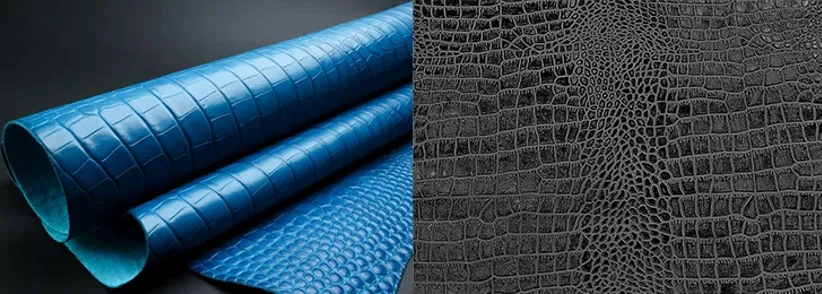
real crocodile leather vs crocodile-embossed leather
Strategic Takeaway for Brands
Treat exotic leather as a positioning asset, not a commodity. It is an ideal choice for businesses looking to launch private label leather phone cases in the high-end market. Use it to:
Anchor Your Pricing: Having a 300 alligator case makes your 80 calfskin case look like a bargain.
Create Momentum: Use limited-edition exotic drops to drive traffic and PR buzz.
Ensure Loyalty: High-end B2B clients stay with suppliers who can master these difficult materials.
Frequently Asked Questions (FAQ)
Is exotic leather sustainable?
When sourced through CITES-regulated channels, it supports local economies and provides incentives for habitat conservation. Many programs actually help increase wild populations of species like the American Alligator.
Does the leather have a strong odor?
High-quality specialty skins undergo a rigorous tanning process that removes all biological odors, leaving only the classic, rich scent of premium leather.
How do I care for a Python phone case?
Keep it away from excessive moisture. If scales lift, a specialized exotic conditioner can help, but generally, the natural oils from your hands are sufficient for maintenance.
Partner with a Specialist
Navigating the world of luxury hides requires more than a supplier; it requires a partner who understands the technical and legal landscape. Whether you are looking for a genuine leather phone case manufacturer or need a custom consultation on specialty skin sourcing, we can help.
Contact Pellove today to discuss your next premium collection.