
What Is PU Leather?
PU leather is a synthetic leather-like material made with a polyurethane coating over a fabric or similar backing. It gives products the look of leather without using a full animal hide.
In short, PU leather usually does not mean real leather. In most product descriptions, it refers to a synthetic material with a polyurethane surface.
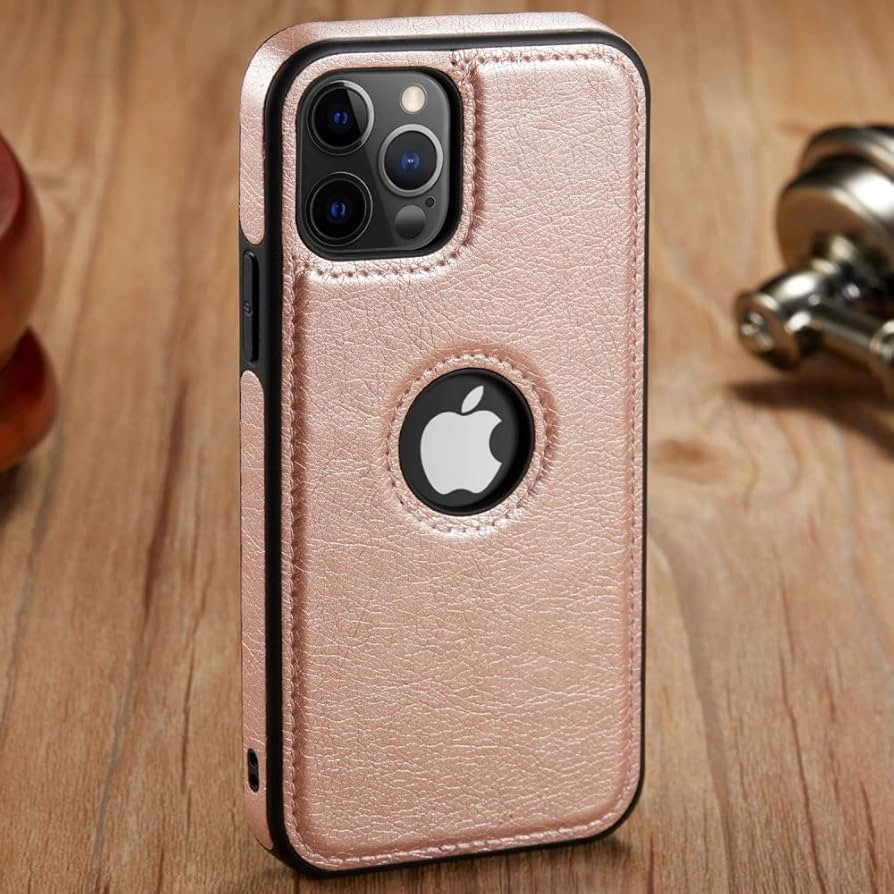
Because this term can confuse buyers, many people compare PU leather with real leather, bonded leather, and faux leather before choosing a material, especially when they need to balance price, appearance, and durability.
Why Brands Use PU Leather
Brands use PU leather because it solves common production problems quickly. Most importantly, it lowers material cost, keeps color and texture more consistent, and supports many finishes.
As a result, manufacturers often use it in:
- phone cases
- wallets
- handbags
- belts
- watch straps
- notebook covers
- small accessories
For trend-led or price-sensitive collections, PU leather often makes sense because it delivers a leather-like finish without the cost and variation of natural hides.
Quick Comparison Table
| Item | PU Leather | Genuine Leather |
|---|---|---|
| Base material | Polyurethane coating on fabric or similar backing | Animal hide |
| Price | Lower | Higher |
| Appearance | Uniform and customizable | Natural and more varied |
| Aging | No natural patina | Often develops patina |
| Consistency | High in bulk production | Lower due to natural variation |
| Durability | Depends on quality; often lower long term | Usually stronger long term |
| Best for | Cost-sensitive scalable products | Premium long-life products |
[Image suggestion: side-by-side comparison of PU leather and genuine leather]
How PU Leather Is Made
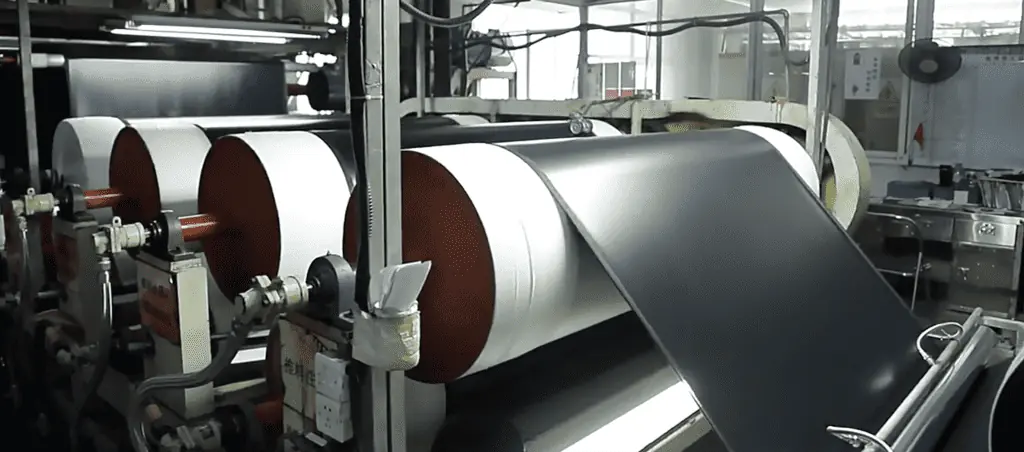
Manufacturers make PU leather by coating a textile base with polyurethane. After that, they can emboss texture, add color, and adjust the finish to create different looks.
That process gives PU leather one of its biggest strengths: flexibility. For example, a supplier can make it look smooth, pebbled, matte, glossy, or closer to a premium fashion finish.
BASF describes polyurethane systems for synthetic leather production, and Covestro also highlights how PU-based materials can create soft, leather-like surfaces with broad design flexibility.
Is PU Leather Real Leather?
Usually no.
That is the most important point to understand. In normal product language, PU leather means synthetic material, not genuine leather.
However, some products may use a split leather base with a PU coating. Even so, most buyers use “PU leather” to mean artificial leather. Because of this, material wording matters a lot in sourcing and product marketing.
This difference becomes more apparent in product categories where multiple finishes are compared before a final decision is made, such as PU leather phone case, Apple Leather phone case, and full-grain leather phone case options.
What PU Leather Feels Like
PU leather usually feels smooth, coated, and even. At the same time, not every PU material feels the same. Some versions feel soft and flexible, while others feel firmer and more plastic-like.
That is why sampling matters. Two PU materials may look similar in photos but feel very different in hand. In practice, a better-grade PU material may feel refined and dry to the touch, while a lower-grade version may feel glossy, sticky, or stiff.
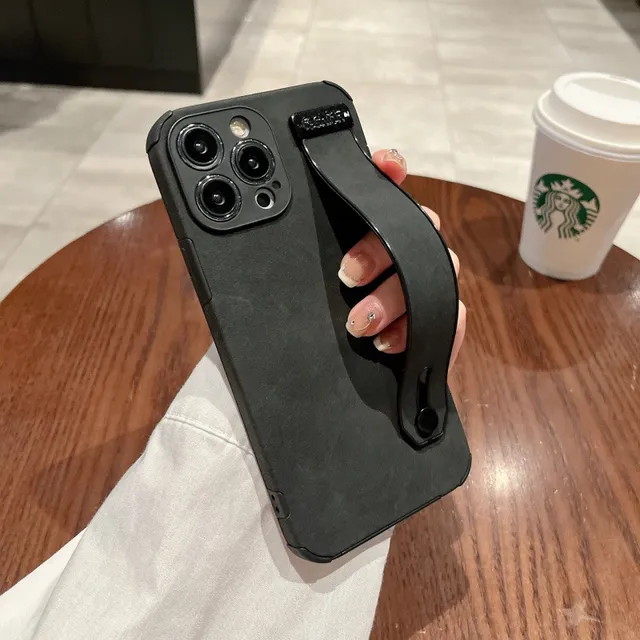
hand holding a PU leather phone case
Benefits of PU Leather
PU leather gives brands several clear advantages.
For example, its main benefits include:
- lower cost than genuine leather
- strong color consistency
- wide texture and finish options
- easier matching across repeat orders
- no animal hide use in standard PU versions
- good fit for trend-driven collections
For many brands, the biggest benefit is control. More specifically, PU leather makes it easier to repeat the same finish across bulk production.
Downsides of PU Leather
At the same time, PU leather also has limits.
Its main drawbacks include:
- it usually does not age like real leather
- lower-grade versions may crack or peel
- it often feels less natural than genuine leather
- it may weaken premium brand positioning
- quality can vary a lot between suppliers
That does not make PU leather a bad material. Instead, it means brands should match it to the right product goal. If a product depends on natural grain, patina, and long-term leather character, genuine leather usually fits better.
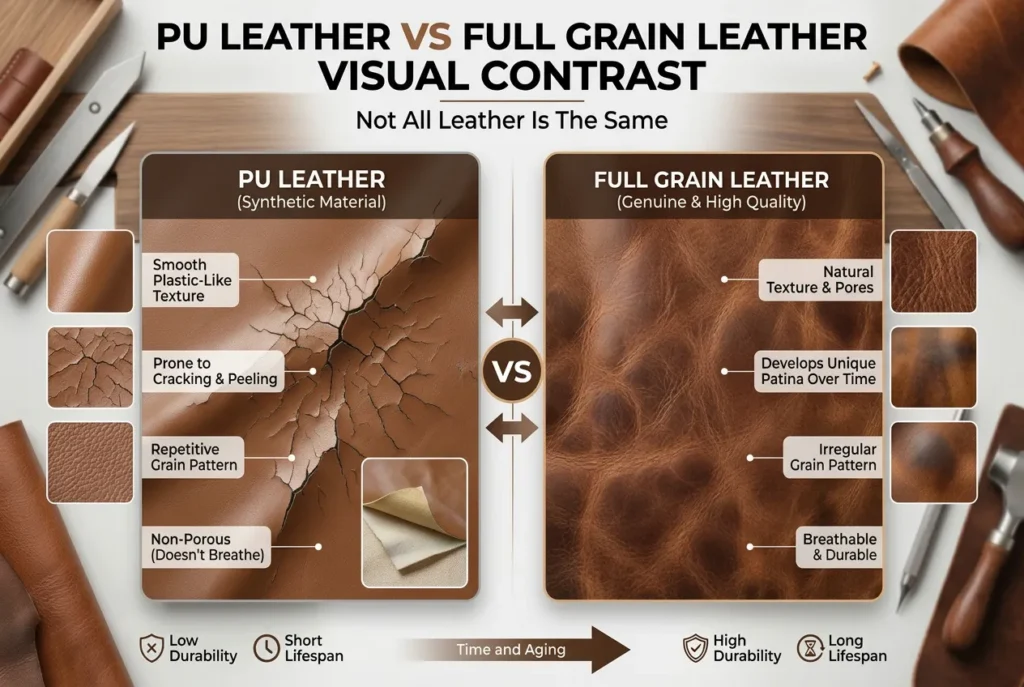
PU leather VS full grain leather
Is PU Leather Durable?
PU leather can be durable enough for daily-use accessories, but it usually does not match the long-term wear of good genuine leather.
Again, quality matters a lot. A well-made PU material can work well for phone cases, wallets, and fashion accessories. By contrast, a low-grade PU material may crack, peel, or lose surface quality much faster.
That is why testing matters so much in OEM and ODM development. Before approving a material, buyers should check:
- flex resistance
- abrasion resistance
- scratch visibility
- peeling resistance
- edge finish behavior
- color consistency
Finish choice matters even more in daily-use product categories such as phone cases, where surface feel and wear visibility shape the customer experience.
PU Leather vs Genuine Leather
PU leather and genuine leather solve different problems.
Choose PU leather when you want:
- lower cost
- stable bulk consistency
- easier color matching
- faster trend adaptation
- animal-free standard options
By contrast, choose genuine leather when you want:
- stronger premium positioning
- natural grain character
- better aging and patina
- longer-term durability
- higher perceived material value
This difference shows up clearly in accessories. For example, a PU leather phone case may fit a trend-focused or budget-conscious line. Meanwhile, a full-grain leather phone case or vegetable-tanned leather phone case version usually fits a more premium collection better.
What Products Use PU Leather?
PU leather appears in many commercial categories:
- phone cases
- wallets
- fashion bags
- watch straps
- belts
- notebook covers
- promotional accessories
Brands choose it because it offers design flexibility and more predictable production. As a result, it works well for projects that need controlled cost and a consistent look.
It also fits naturally into accessory programs where brands compare PU with Apple Leather or genuine leather across the same product family.
What Brands Should Check Before Sourcing PU Leather
If you plan to source PU leather, start with these questions.
| Checkpoint | Why It Matters | What to Ask |
|---|---|---|
| Base construction | PU leather can use different backings | What is under the PU layer? |
| Surface durability | Quality varies widely | How does it perform in abrasion, flex, and peel tests? |
| Hand feel | Feel affects quality perception | Does it feel soft, dry, matte, glossy, or plastic-like? |
| Product fit | Different PU materials suit different categories | Is this better for phone cases, wallets, or watch straps? |
| MOQ and consistency | Bulk consistency matters | Can you repeat the same grain and color across orders? |
| Positioning | Material affects price point and brand story | Does PU fit this product’s target customer and margin? |
Final Answer
PU leather is a synthetic leather-like material made with a polyurethane coating over a fabric or similar backing. It gives brands a lower-cost and more consistent alternative to genuine leather.
In most product descriptions, PU leather does not mean real leather. So, for brands and buyers, the smart move is simple: confirm the material construction, test the finish for the intended use, and choose PU leather when cost control, visual consistency, and design flexibility matter more than natural aging or premium leather character.
For product teams comparing this material for commercial use, pair the material decision with custom leather phone case development, OEM and ODM production planning, and the quality control checklist so appearance, durability, MOQ, and inspection standards are reviewed together.
FAQ
What is PU leather?
PU leather is a synthetic material that uses polyurethane to create a leather-like surface, usually over a fabric backing.
Is PU leather real leather?
Usually no. In most product descriptions, PU leather means synthetic leather.
Is PU leather durable?
It can be durable enough for many products, but quality varies a lot and it usually does not age like genuine leather.
Does PU leather peel or crack?
Lower-grade PU leather can crack or peel over time, especially under heavy wear, heat, or poor storage conditions.
Is PU leather good for phone cases and accessories?
Yes. It can work well for phone cases, wallets, and fashion accessories when a project needs lower cost, stable appearance, and flexible customization.