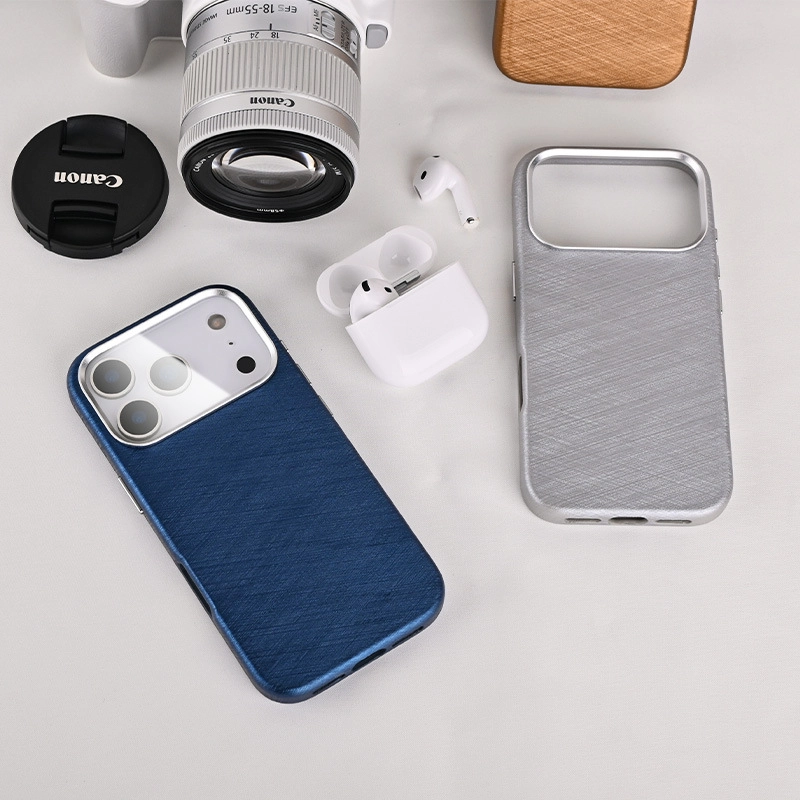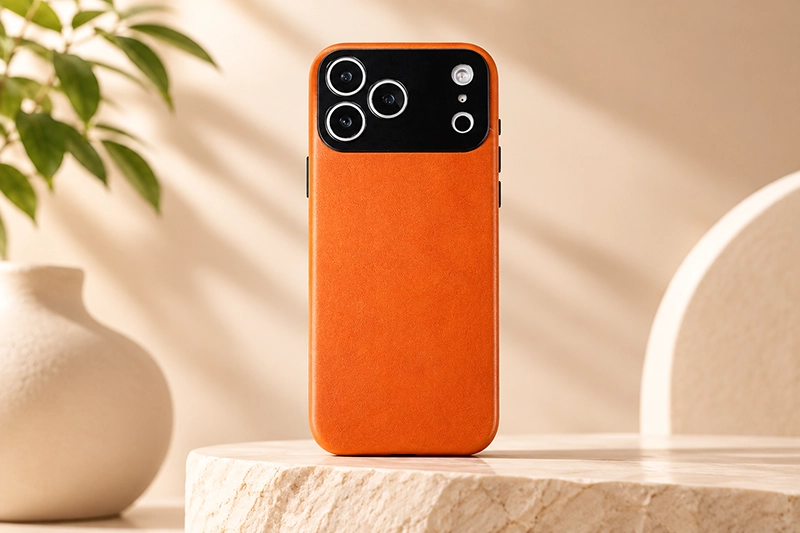

A leather phone case is not automatically more protective than a plastic case. Protection comes mainly from the internal shell, corner coverage, fit and reinforcement. Leather becomes a strong choice when the customer values touch, visible aging and brand differentiation, and the brand is prepared to explain care.
The comparison is also broader than “leather versus plastic.” A TPU phone case, a hard polycarbonate phone case and a hybrid shell behave differently. Some leather cases also use a plastic internal frame, so a leather exterior does not automatically make the product a non plastic phone case.
| Comparison | Leather case | Plastic case |
|---|---|---|
| Protection | Depends on the internal shell, bumper and construction. | TPU, polycarbonate and hybrid designs can provide strong impact protection. |
| Grip | Often warm and tactile, though smooth coated leather can be slippery. | TPU and silicone usually offer a grippier, softer touch. |
| Aging | Genuine leather may darken and develop patina; coated leather may stay more uniform. | May scratch, yellow or discolor, depending on the material and finish. |
| Customization | Strong for embossing, material selection and premium packaging. | Strong for molded shapes, transparent looks and broad color production. |
| Sustainability | Depends on tannage, source, finish and lifespan. | Depends on polymer, recycled content, production and lifespan. |
1. Leather Offers a Warmer Hand Feel
Genuine leather has a tactile quality that many plastic surfaces cannot reproduce. It can feel warmer in the hand, soften gradually and show grain or texture rather than a perfectly uniform molded finish. For a product handled throughout the day, that difference matters.
Grip varies by leather and coating. An oil-wax or lightly finished surface may feel more secure than a smooth, polished leather. A soft TPU phone case can also provide excellent grip, so this advantage depends on the material specification rather than the word “leather” alone.
2. Aging Can Add Character
A plastic case usually becomes visually tired as it accumulates scratches, edge wear or discoloration. A genuine leather case can also wear, but some leathers develop a patina that customers treat as part of the product. High-contact areas darken, corners become smoother and light marks blend into the surface.
This is not universal. Heavily coated leather may change very little, while a natural vegetable-tanned or oil-rich leather may show visible aging quickly. Brands should choose the finish intentionally and follow the leather phone case patina guide when setting customer expectations.
3. Leather Supports Stronger Brand Expression
Leather gives a brand more ways to create a distinctive surface. Grain, color, stitching, edge finish, embossing and lining all contribute to the final product. The case can carry a subtle logo, a tonal brand mark or a more textured material story without relying only on a printed graphic.
The same is true across a wider range of leather phone cases. A premium collection can use full-grain leather, a more controlled top-grain leather or a different finish while keeping the same case structure. The guide to leather options for phone cases explains those material tradeoffs.
4. Leather Creates a Different Retail Position
For a brand selling through gifting, lifestyle retail or a design-led website, material character can justify a premium position. Packaging, care guidance and a credible leather story can turn a basic protective item into a more developed product.
That premium position is not guaranteed by adding leather. Poor edge finishing, loose lining or a weak case structure will undermine the price just as quickly as a low-quality plastic product. The value comes from the complete product, not from the material label.
5. Leather Can Make a Case Feel Less Disposable
Customers who understand leather often keep using a case as it ages because the appearance becomes personal. That emotional durability can extend the useful life of the product and support repeat collections built around care, material and color.
The word here is “can.” Leather might stain, scratch or absorb moisture, and a poorly finished case may still peel. Plastic is not necessarily short-lived either. A well-built polycarbonate phone case or TPU design can remain useful for a long time, while recycled plastic phone case programs can support a more circular material story.
When a Plastic Case May Be the Better Choice
Plastic remains the practical answer for some briefs. A rugged TPU shell may offer better grip and shock absorption around the corners. Polycarbonate can provide a rigid structure and crisp molded detail. Transparent cases let the phone design remain visible, and wipe-clean surfaces are easier for customers who do not want leather care.
Sustainability claims also need context. Leather is not automatically biodegradable after tanning and finishing, and plastic is not automatically the worse choice if it contains verified recycled material and lasts longer in the intended use. Compare the actual material, production process and product lifespan.
Where plastic may win:
- The brief prioritizes rugged impact protection, easy cleaning or the lowest unit cost.
- The buyer wants a transparent or high-saturation molded design.
- The target customer will not accept darkening, scratches or leather care.
- The sustainability strategy depends on verified recycled content and a long service life.
What Brands Should Approve Before Choosing
Start by separating the outer material from the protective structure. Record whether the leather is full grain, top grain or another substrate; identify the internal shell, lining, edge construction and magnet system. A leather exterior over a weak frame is not a premium case.
The sample should be tested for fit, camera and button clearance, corner coverage, edge adhesion, surface rub and color transfer. For MagSafe, test the assembled case with the intended charger and accessories. For a leather range, review how the selected finish looks after a defined short use period rather than relying on studio photos.
Claims should match the evidence. Do not call a product “non plastic” if the internal shell contains plastic. Do not call leather “biodegradable” without a defined test and scope. Do not claim a lower cost per day without a realistic lifespan comparison.
Leather or plastic is a product decision, not a material contest. Send the target phone models, intended level of protection, material preference, logo, packaging and quantity. Pellove can help define the structure and sample against the actual use case.
For production planning, see the leather phone case manufacturer guide and custom leather phone case development guide. You can also compare current constructions in the leather phone case collection.
Questions Buyers Ask
Are leather phone cases more protective than plastic cases?
Not automatically. Protection depends on the internal shell, bumper, fit and corner construction. A well-designed TPU or polycarbonate case can protect better than a thin leather case.
Do leather phone cases last longer?
They can remain desirable longer when the leather and construction are suitable, but leather may stain, scratch or absorb moisture. Plastic can also last years depending on the material and use.
Are leather phone cases more sustainable?
There is no universal answer. Tanning, finish, sourcing and lifespan all matter. Plastic can use virgin or recycled polymer, and leather can involve different supply chains and finishes.
Are leather cases slippery?
It depends on the finish. Oil-wax or textured leather may provide more grip, while smooth coated leather can be slippery. Test the exact surface rather than judging by material name.
Can a leather phone case support MagSafe?
Yes, when the magnet, spacing, lining and shell are designed together. Wireless charging and magnetic grip should be tested on the assembled case.
Does a leather case contain plastic?
It may. Many leather cases use a plastic internal shell or structural frame beneath the leather. Ask for the construction breakdown before using a “non plastic phone case” claim.