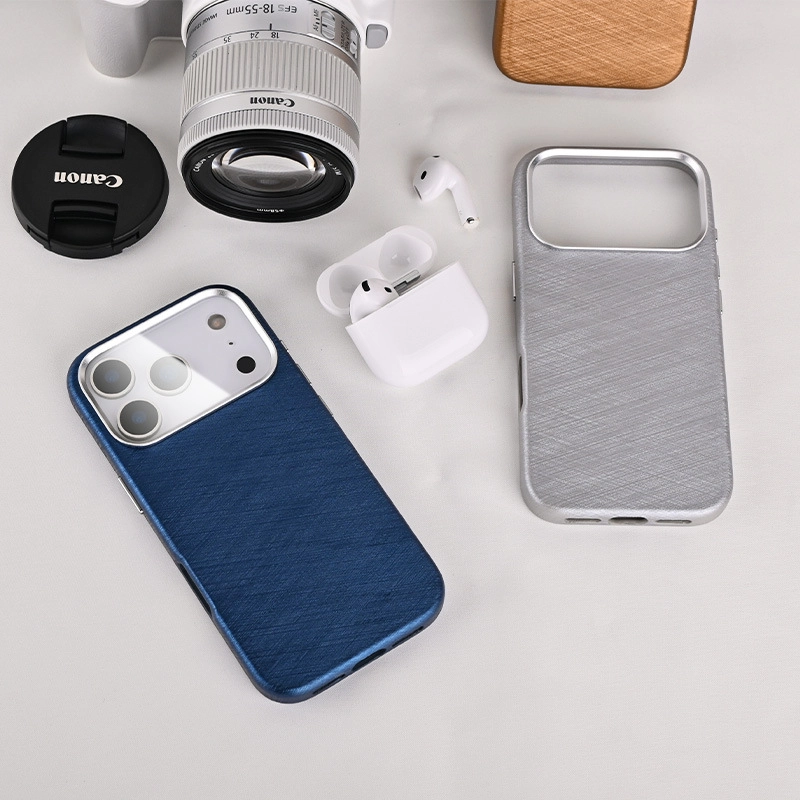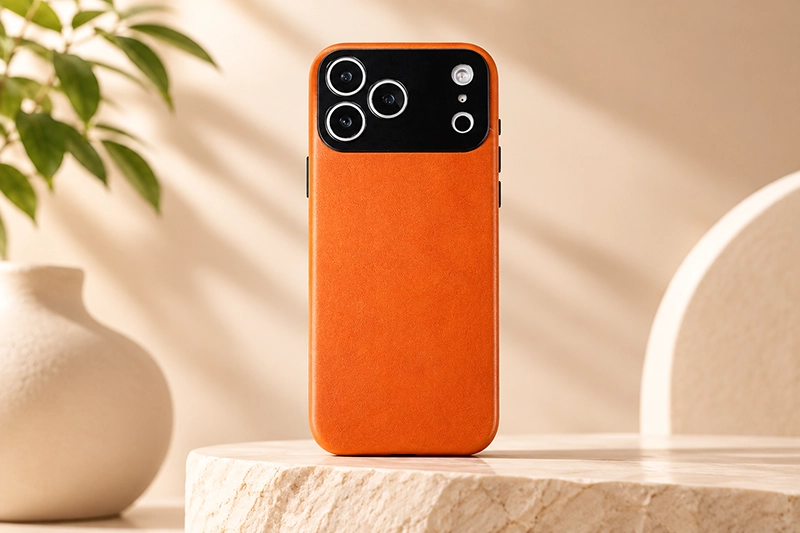

A leather phone case is usually the better choice for a premium collection where touch, colour depth, branding and natural aging can support the retail price. Silicone makes more sense for a lower-priced, colour-led range built around easy cleaning and straightforward protection.
The material alone does not settle the question. Drop protection comes from the complete case structure: the inner shell, corner coverage, raised edges, camera surround and fit. Both materials can protect a phone well; both can feel disappointing when those details are poorly made.
The practical answer: choose leather when the case is meant to feel like an accessory and the customer will pay for texture, detail and character. Choose silicone when speed to colour, easy care and a lower entry price matter more than long-term material identity.
Leather vs silicone at a glance
| Consideration | Leather phone case | Silicone phone case |
|---|---|---|
| Best product fit | Premium retail, gifting, private label and accessory-led collections | Casual ranges, promotional lines, bright colour stories and high-volume basics |
| Touch and character | Warmer, more tactile and available in grain, finish and lining combinations | Soft, grippy and visually uniform |
| Ageing | Can develop darker areas, softness and patina; marks are part of the material story | May show shine, lint, staining or print wear while keeping its original colour direction |
| Branding options | Debossing, embossing, stitching, edge colour, lining and hardware | Moulded details, colour, surface finish and printed graphics |
| MagSafe potential | Can work when the magnet array, rear thickness and lining are engineered together | Can work when mould accuracy, magnet bonding and rear thickness are controlled |
| Main cost drivers | Leather yield, shell, lining, cutting, assembly, finishing, logo and packing | Tooling, colour minimums, quantity, printing, magnet assembly and packing |
When leather is the better fit
Leather becomes worthwhile when the case has to carry more than a protective function. Grain, stitching, edge finish and the way the material changes with use give customers something recognisable. That suits boutiques, corporate gifting, premium marketplaces and accessory-led direct-to-consumer ranges.
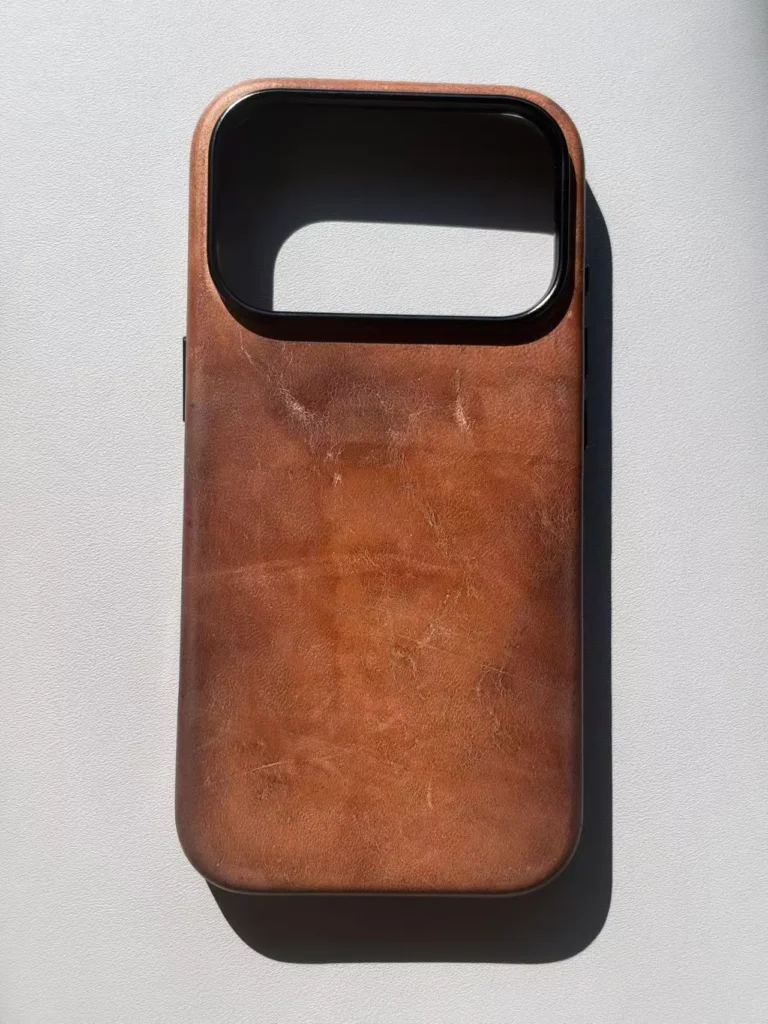
Good Patina leather phone casse
Smooth, pebbled, Saffiano-style and vegetable-tanned leathers create different surfaces. A coloured edge, contrast lining or debossed mark can also turn one case structure into another product for a new market. If material is part of the design story, compare vegetable-tanned leather phone cases and this guide to leather phone case patina.
A custom made phone case in leather carries a customer-education burden. Natural grain varies, light colours mark more easily, and darkening should be explained before sale. A brand that promises an identical surface across thousands of units should choose a more protected finish or another material.
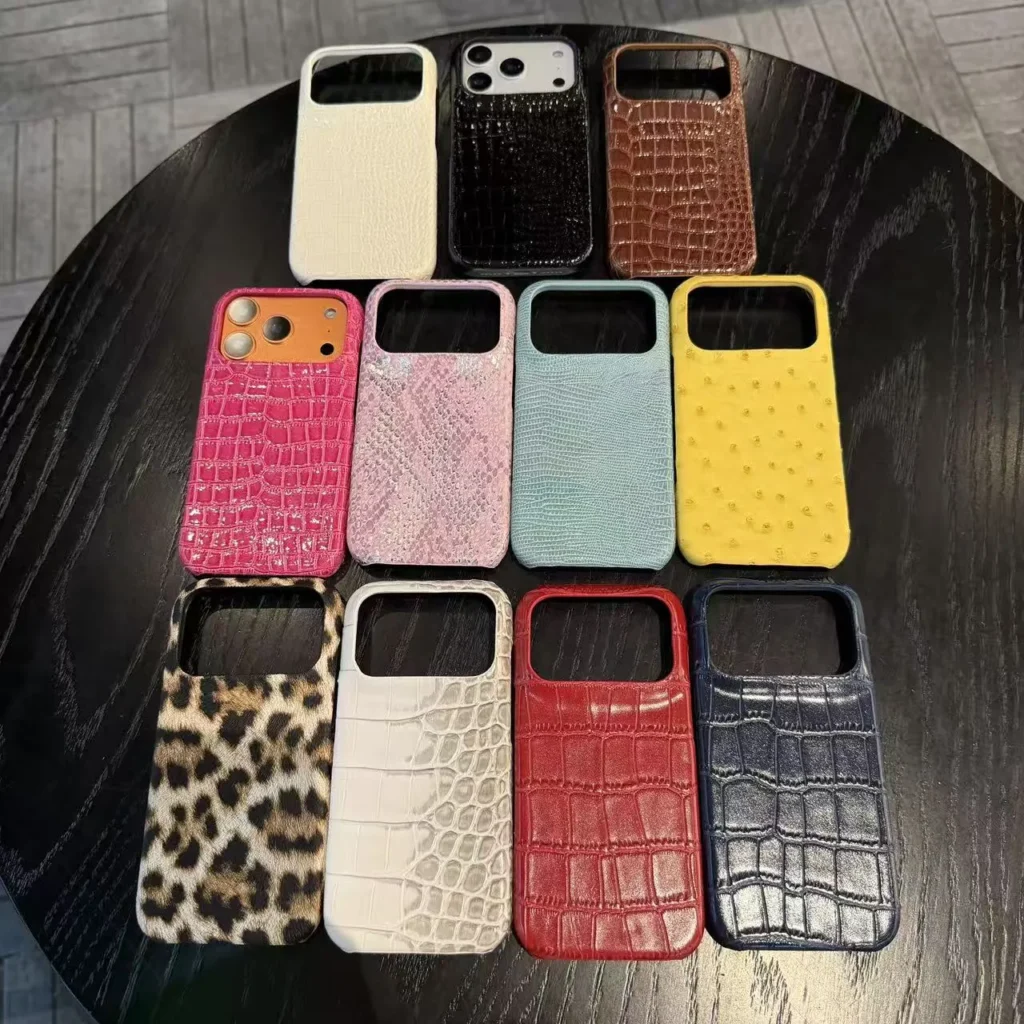
Different leather phone cases
When silicone earns its place
Silicone suits a product brief built around comfort in the hand, broad colour choice and low maintenance. It can feel reassuringly grippy, wipes down easily and does not need the same care instructions as natural leather. For a fashion-led capsule, sports collection or promotional programme, those advantages can matter more than patina.
The weak point is appearance over time. Some finishes collect dust or lint, repeated handling can create shine, and pale colours may stain. Printed graphics can wear at high-contact edges. Check the exact formulation and finish rather than judging silicone as one material.
A common mistake is comparing a premium leather sample with a generic silicone sample at the same price. Specify both properly first: shell strength, colour consistency, magnets, logo quality, retail packing and inspection standard. The cheaper unit price means little without those constants.
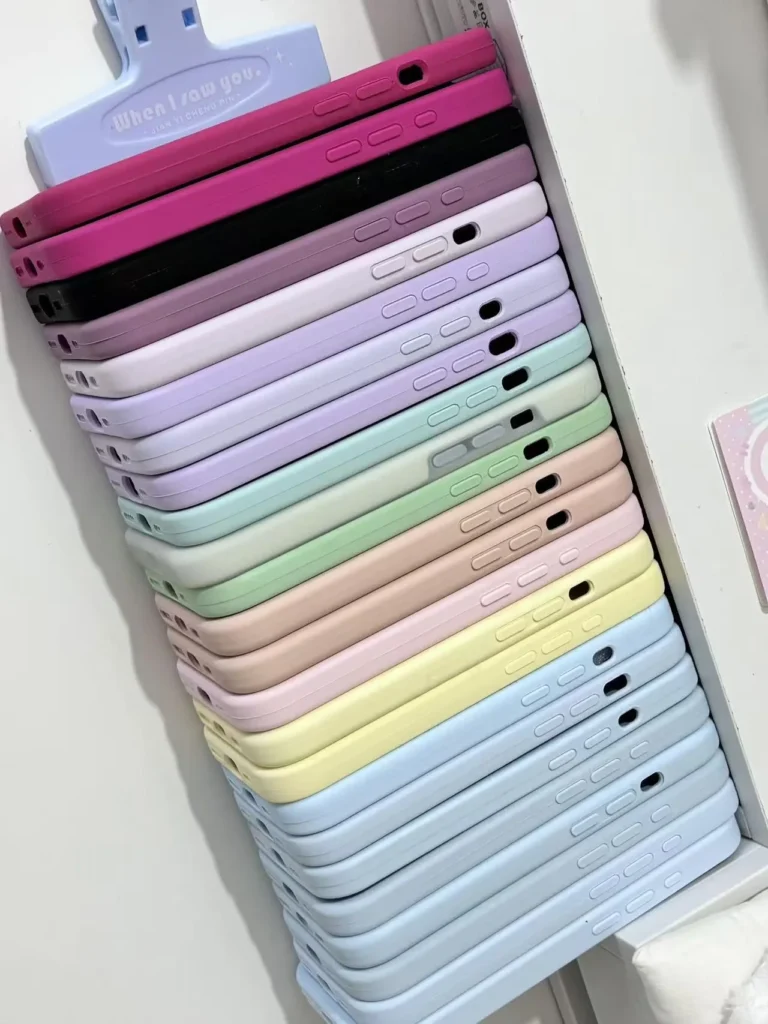
Different color silicon clors
Protection, wear and MagSafe
Protection is an assembly question
Do not ask which material is “more protective” in isolation. Check that the shell hugs the phone without gaps, the corners stay covered, the camera sits below its surround and the buttons work cleanly. The front lip should clear the screen protector without making the case awkward to hold.
A weak leather backing can flex away from the phone, and uneven lining adhesion can create bubbles. Thin silicone bridges near a port or button may tear. Both need a sample fitted to the actual device.
Wear looks different on each surface
Leather scuffs, creases and darkens. Protected finishes reduce marking but can still abrade at edges. Silicone may collect soil, shine or lose print definition. Neither pattern is automatically a defect; the question is whether it matches the product promise.
MagSafe has to be tested as one unit
MagSafe performance is not created by adding a magnet ring to a finished case. Ring position, polarity, rear-panel thickness and lining all affect attachment and charging. Each material needs the magnets held in the correct plane without creating weak spots.
Test the sample with the actual phone, charger and a magnetic accessory. Check alignment by feel as well as charging, then repeat after several attach-and-remove cycles. Apple’s MagSafe charging guidance explains compatible hardware, but it cannot replace testing the finished case.
Customization and quote drivers
The right phone case logo follows the surface. Leather can take a blind deboss, foil mark, embossed detail or metal plate; each behaves differently across grain and colour. A custom silicone phone case is more likely to use a moulded or printed mark. Approve it on the final material, not only in a digital mock-up.
Cost conversations go wrong when one supplier includes packing or magnets and another treats them as extras. Compare what is included. Leather pricing moves with hide yield, lining, shell quality, edge work, stitching, logo method and presentation box.
Silicone pricing is shaped by tooling, colour minimums, order quantity, printing, magnet assembly and packing. A lower unit price at scale still carries upfront development and colour commitments. Before committing to bulk phone cases, ask for the price assumptions in writing.
What a useful sample comparison should include
- Both cases built for the same phone model, with the same camera and button requirements.
- The same MagSafe request and a charging test on the actual device.
- A logo applied to the proposed surface using the production method.
- Retail packing, labels and any insert card that affect presentation and cost.
- A list of MOQ assumptions by model, colour, material and logo process.
- A sample checklist covering fit, edges, lining, buttons, camera clearance and surface appearance.
View leather at arm’s length for silhouette, colour balance and perceived value. Up close, inspect cut edges, stitch tension, lining bubbles, camera trimming and logo definition. On silicone, look for mould lines, loose magnets, uneven colour and dust traps. These details repeat in production.
Pellove works as a custom phone case manufacturer for leather programmes, including private label production, logo development and retail packing. Our custom leather phone cases page covers structural options, while the leather phone case manufacturer guide explains the RFQ and approval process in more detail.
Sample approval and sourcing checklist
Start with the commercial target, not a material preference. A premium case needs a finish that remains convincing after a week of handling. An impulse-purchase range built on colour may be better served by silicone and simpler decoration.
Prepare a brief the factory can quote without guessing: phone models, quantity, target retail price, material direction, MagSafe requirement, logo artwork, packing and launch date. For custom leather phone cases across several models, share the complete model list before sampling.
Approval should cover more than a photograph. Keep the signed sample, material swatch and approved logo reference together, and record colour and grain tolerances. This matters when a new hide or silicone batch enters repeat production.
FAQ
Is leather better than silicone for a phone case?
Leather is better when the product needs a premium feel, richer branding and natural aging. Silicone is better when colour range, easy cleaning and a lower entry price are the priority.
Which material protects a phone better?
Neither material wins by itself. Shell strength, corner coverage, raised edges, button fit and camera clearance determine protection more than the outer surface alone.
Can a leather phone case work with MagSafe?
Yes, when the magnet array, rear thickness and lining are designed together. Test the finished sample with the actual phone, charger and a magnetic accessory before production.
Does a silicone phone case get dirty?
Some silicone finishes collect lint, dust or shine more readily than others. Ask to handle a production-representative sample rather than judging by colour alone.
Which material costs less?
Silicone often has a lower unit cost for a simple, high-volume design. Leather usually carries more material and finishing variables. Compare quotes with the same shell, magnets, logo and packing included.
Can I approve a sample before ordering in bulk?
Yes. Approval should include fit on the target phone, material and colour references, logo, MagSafe function if requested, and the final packing.
How to order custom phone cases?
Compare two production-ready samples against the same brief. For a leather programme, send Pellove the model list, target quantity, logo method and packing plan so the sample route can be reviewed.