
Leather iPad cases have evolved beyond simple protective accessories. In 2026, they combine premium materials, magnetic systems, folding structures, and Apple Pencil compatibility within increasingly complex product designs.
For OEM and ODM buyers, selecting a leather iPad case manufacturer is not just about appearance or leather quality. Fit precision, magnetic alignment, fold durability, and charging compatibility all directly affect product performance and long-term reliability.
As one of the most engineering-sensitive categories in tablet accessory manufacturing, leather iPad cases require specialized development, testing, and QC processes. Buyers looking for a broader overview of tablet case materials, OEM workflows, and manufacturing structures can also refer to: The Ultimate Tablet Case Manufacturer Guide (2026)
This guide focuses specifically on leather iPad case engineering, OEM/ODM development, Apple Pencil compatibility, magnetic systems, and supplier evaluation in 2026.
Quick Answer: What a Professional Leather iPad Case Manufacturer Must Provide
A reliable leather iPad case manufacturer should support:
- OEM and ODM development capability
- iPad model-specific structural engineering
- Apple Pencil compatibility testing
- magnetic folio system validation
- auto wake/sleep function testing
- fold durability engineering
- leather, PU, vegan leather, and microfiber material systems
- logo and packaging customization
- prototype and pre-production validation
- full functional QC before shipment
A premium leather iPad case is not defined by leather alone.
The real difference lies in engineering consistency across fit precision, magnet systems, folding structures, Apple Pencil integration, and assembly quality control.
What Is a Leather iPad Case?
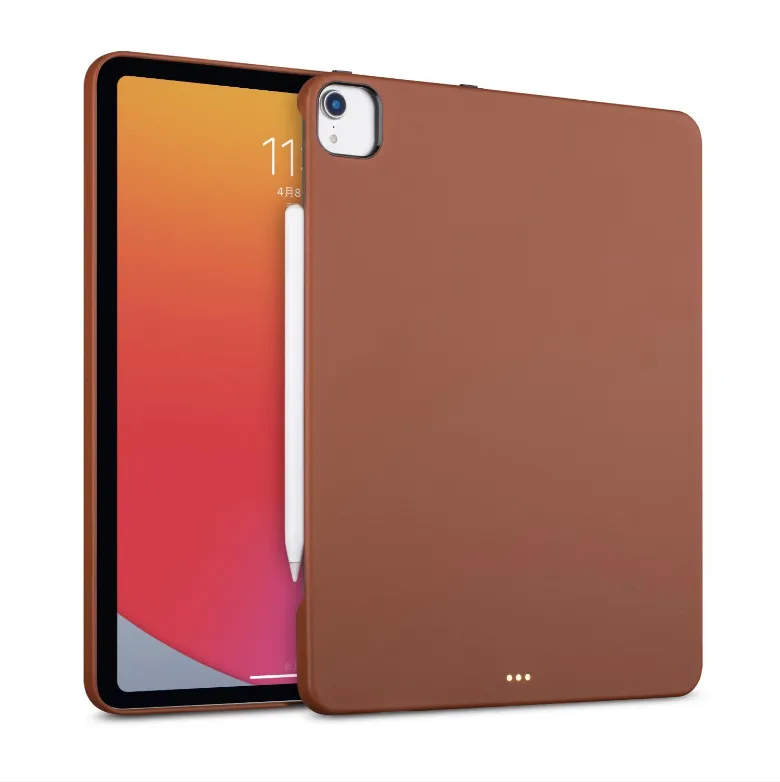
leather tablet case
A leather iPad case is a protective and functional tablet accessory designed to combine:
- premium aesthetics
- structural protection
- productivity support
- stand functionality
- accessory integration
Modern leather iPad cases may include:
- front and back protection systems
- folio folding structures
- magnetic attachment systems
- auto wake/sleep functionality
- Apple Pencil storage or charging support
- TPU or PC internal shell systems
- microfiber interior lining
- detachable magnetic folio structures
- keyboard integration systems
- retail-ready packaging solutions
Different iPad generations require completely different engineering structures because Apple continuously changes:
- camera module dimensions
- magnetic positioning zones
- speaker layouts
- Apple Pencil charging locations
- chassis thickness
- edge curvature
This is why professional manufacturers must validate each iPad generation separately rather than reusing older tooling systems.
Why Leather iPad Cases Require Engineering-Level Manufacturing
Compared to simple silicone or TPU tablet cases, leather iPad cases contain multiple interacting engineering systems.
Core Engineering Systems
| System | Engineering Function |
|---|---|
| Fit Precision | Controls the alignment of the camera, ports, speakers, and buttons |
| Magnetic System | Supports closure, wake/sleep, stand stability, and detachable functions |
| Apple Pencil System | Controls charging alignment and magnetic attachment |
| Folding Structure | Determines stand angles and fatigue durability |
| Material Lamination | Affects surface consistency, durability, and delamination resistance |
| Reinforcement Structure | Maintains rigidity and fold stability |
| Edge Finishing | Prevents cracking and long-term wear |
These systems must function simultaneously.
Failure in one system often causes instability in others.
For example:
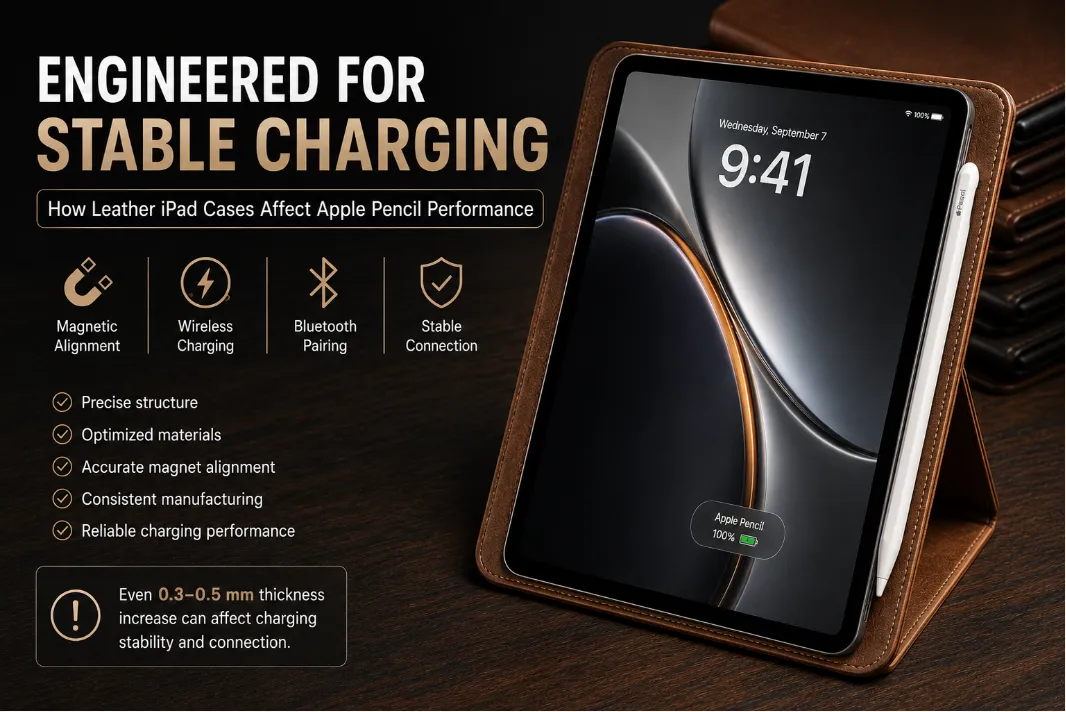
- excessive leather thickness may interrupt Apple Pencil charging
- weak reinforcement boards may destabilize stand angles
- magnet misalignment may disrupt wake/sleep functionality
- poor lamination may create fold cracking after repeated use
This is why leather iPad case manufacturing should be evaluated as a system-engineering process rather than simple leather assembly.
Main Types of Leather iPad Cases
Leather Folio iPad Case
A leather folio iPad case is the most common premium structure in retail and private label programs.
Typical structure includes:
- leather or PU exterior
- microfiber interior lining
- TPU or PC inner shell
- magnetic folding cover
- reinforced standing structure
Best For
- retail collections
- executive accessory lines
- corporate gifting programs
- premium private label brands
Common Engineering Risks
| Risk | Cause |
|---|---|
| Weak stand support | Insufficient reinforcement stiffness |
| Fold fatigue | Weak hinge structure |
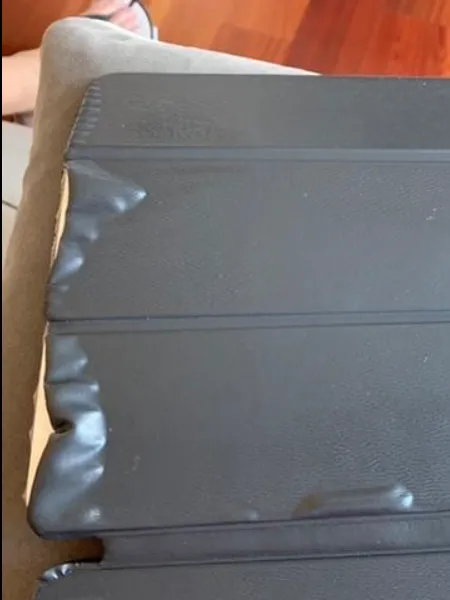
| Edge cracking | Repeated stress concentration |
| Lamination wrinkles | Material tension inconsistency |
| Deformation | Poor structural balance |
Magnetic Leather iPad Case
Magnetic leather iPad cases use embedded magnet systems for:
- closure alignment
- wake/sleep activation
- detachable structures
- stand positioning
Key Engineering Variables
- magnet polarity consistency
- placement tolerance accuracy
- lamination shift control
- material thickness near magnetic zones
- magnet retention stability
Magnet quantity alone does not determine performance.
Incorrect polarity or inaccurate placement can completely disrupt user experience.
Apple Pencil Compatible Leather iPad Case
Apple Pencil compatibility is a precision engineering requirement — not a marketing feature.
A properly engineered case must control:
- side clearance geometry
- charging zone thickness
- magnetic attachment stability
- lamination consistency
- material compression tolerance
Supported Pencil versions may include:
- Apple Pencil Pro
- Apple Pencil USB-C
- Apple Pencil 2nd Generation
- Apple Pencil 1st Generation
Different iPad models require different charging-zone tolerances.
Common Apple Pencil Failure Modes
| Issue | Root Cause |
|---|---|
| Pencil not charging | Excessive material thickness |
| Weak magnetic attachment | Magnet misalignment |
| Intermittent charging | Lamination variation |
| Difficult Pencil removal | Poor holder geometry |
| Bulky side structure | Over-reinforced internal layers |
Professional manufacturers must validate charging performance after full assembly rather than testing bare shells only.
Detachable Magnetic Folio iPad Case
Detachable structures allow separation between:
- inner protective shell
- outer folio cover
Advantages
- flexible usage modes
- lightweight handheld operation
- productivity-focused experience
- easier replacement structure
Engineering Challenges
| Challenge | Engineering Risk |
|---|---|
| Detachment instability | Weak magnetic retention |
| Alignment shift | Repeated assembly wear |
| Structural deformation | Uneven magnetic distribution |
| Higher defect rate | Increased assembly complexity |
This category requires significantly tighter QC standards than standard folio cases.
Keyboard Leather iPad Case
Keyboard leather iPad cases combine mechanical structure and electronic functionality.
Best For
- business users
- enterprise mobility programs
- education projects
- productivity-focused brands
Key Engineering Risks
- hinge instability
- Bluetooth inconsistency
- battery quality variation
- keyboard module sourcing instability
- weight imbalance
- thermal deformation
This category requires coordination between:
- electronics suppliers
- structural engineers
- tooling systems
- firmware vendors
Leather Material Options
Material selection directly affects:
- product positioning
- durability
- pricing
- aging performance
- manufacturing consistency
| Material | Positioning | Advantages | Risks |
|---|---|---|---|
| Full-Grain Leather | Luxury | Premium texture and aging | High cost + inconsistency |
| Top-Grain Leather | Premium Retail | Balanced quality and consistency | Higher cost |
| Genuine Leather | Mid-Range | More accessible pricing | Quality variation |
| PU Leather | Mass Market | Scalable and consistent | Peeling risk |
| Vegan Leather | Sustainable Line | Eco positioning | Performance variability |
| Microfiber Lining | Premium Interior | Soft touch and protection | Wear sensitivity |
For large-scale OEM programs, PU and premium synthetic materials are often preferred because they offer:
- higher batch consistency
- lower color deviation
- easier scalability
- more stable supply chains
Common Manufacturing Failure Modes
Even experienced factories may encounter systemic issues when engineering validation is insufficient.
Magnetic Misalignment
Usually caused by:
- lamination shift
- unstable assembly fixtures
- inaccurate magnet placement tolerances
Results
- weak closure
- unstable stand positioning
- wake/sleep failure
Apple Pencil Charging Instability
Typically caused by:
- excessive material thickness
- structural deformation
- charging-zone inconsistency
Results
- intermittent charging
- charging interruption
- weak Pencil attachment
Fold Fatigue
Caused by:
- poor reinforcement design
- insufficient hinge flexibility
- repeated stress concentration
Results
- weakened stand stability
- fold deformation
- structural collapse over time
Edge Cracking
Usually caused by:
- incompatible edge paint systems
- repeated folding stress
- weak material bonding
Results
- cosmetic deterioration
- peeling
- shortened product lifespan
Delamination
Often caused by:
- adhesive mismatch
- humidity exposure
- improper heat control
Results
- bubbling
- surface separation
- fold-zone instability



OEM vs ODM Development for Leather iPad Cases
OEM and ODM are not simply manufacturing labels.
They represent different engineering complexity levels.
OEM Development
OEM is ideal when:
- existing structures are already validated
- modifications are limited to logo, material, or color
- faster launch speed is required
- lower tooling investment is preferred
Advantages
| Advantage | Benefit |
|---|---|
| Faster development | Reduced launch timeline |
| Lower risk | Proven structure |
| Lower tooling cost | Easier market testing |
| Easier MOQ management | Better for new brands |
ODM Development
ODM is suitable when:
- custom magnetic systems are required
- new Apple Pencil structures are needed
- detachable or hybrid systems are involved
- structural differentiation is important
Advantages
| Advantage | Benefit |
|---|---|
| Higher differentiation | Unique market positioning |
| Better functionality | Custom engineering |
| Stronger brand identity | Exclusive product structure |
| Greater pricing power | Reduced direct competition |
ODM projects typically require deeper engineering collaboration and longer development cycles.
Typical OEM/ODM Workflow
Development Process
- Requirement confirmation
- iPad model validation
- Material and structure recommendation
- Engineering review
- Quotation and MOQ confirmation
- Prototype development
- Functional testing
- Sample revision
- Pre-production approval
- Mass production
- QC inspection
- Packaging and shipment
Typical Timeline
| Stage | Duration |
|---|---|
| Sample Development | 7–10 Days |
| Tooling (If Required) | 7–10 Days |
| Mass Production | 25–35 Days |
Complex magnetic or detachable systems may require additional engineering validation time.
Pricing Factors
Leather iPad case pricing depends on multiple engineering and supply-chain variables.
Main Pricing Drivers
- material grade and thickness
- magnet system complexity
- Apple Pencil compatibility requirements
- internal reinforcement structures
- tooling and mold investment
- logo application method
- packaging requirements
- QC standards
- order volume
General Cost Positioning
| Category | Relative Cost Level |
|---|---|
| Standard PU Folio | Lower |
| Premium PU Magnetic Folio | Medium |
| Genuine Leather Folio | Medium-High |
| Full-Grain Leather Structure | High |
| Keyboard Leather iPad Case | Highest |
Extremely low pricing often indicates:
- simplified QC
- unstable material sourcing
- weaker engineering validation
- reduced durability standards
How to Evaluate a Leather iPad Case Manufacturer
A qualified manufacturer should demonstrate control over system-level engineering variables — not just leather workmanship.
1. Fit Precision Engineering
A professional factory should validate:
- model-specific tolerances
- speaker and port alignment
- camera opening accuracy
- post-lamination deformation control
Poor fit precision often causes customer complaints and return issues.
2. Magnetic System Validation
Manufacturers should perform:
- polarity verification
- magnet placement validation
- wake/sleep consistency testing
- stand stability testing
Professional magnetic systems require repeatable assembly tolerances.
3. Apple Pencil Engineering
Factories should verify:
- charging functionality after full assembly
- magnetic attachment stability
- thickness consistency
- long-term charging reliability
Testing unfinished shells alone is not sufficient.
4. Structural Durability Validation
A reliable manufacturer should evaluate:
- fold fatigue resistance
- hinge stability
- stand-angle consistency
- reinforcement stiffness calibration
Repeated fold testing is essential for long-term product reliability.
5. Material Lamination Control
Suppliers should demonstrate:
- adhesive compatibility testing
- humidity resistance validation
- heat resistance stability
- delamination prevention systems
Weak lamination control is one of the most common causes of field failure.
Buyer Preparation Checklist
Before requesting samples, buyers should prepare:
- iPad model and generation
- Apple Pencil version requirement
- reference structure
- target material positioning
- logo method
- packaging requirements
- estimated order quantity
- target retail positioning
- launch timeline
Clear project inputs significantly reduce:
- sampling cycles
- engineering revisions
- development delays
- sourcing risk
RFQ Checklist for OEM/ODM Buyers
Before selecting a supplier, ask:
Engineering Questions
- How is Apple Pencil charging validated?
- How are magnet positions controlled during assembly?
- What fold fatigue testing standards are used?
- How is wake/sleep consistency tested?
Manufacturing Questions
- What is the normal MOQ?
- What materials are stocked regularly?
- Can packaging be customized?
- How are QC inspections performed?
Development Questions
- OEM or ODM support available?
- Typical sample lead time?
- Tooling cost required?
- Can engineering revisions be supported?
Strong suppliers answer these questions clearly and technically.
How Pellove Supports Leather iPad Case Projects
Pellove supports OEM and ODM development for:
- leather iPad cases
- magnetic folio systems
- Apple Pencil compatible structures
- detachable tablet case systems
- retail and enterprise packaging programs
Support includes:
- material and structural engineering review
- magnetic system validation
- Apple Pencil compatibility optimization
- prototype development
- production QC management
- packaging system design

leather accessories sourcing partner

For buyers managing several accessory categories, this topic also connects to custom leather phone case programs, OEM and ODM production planning, and the leather goods quality checklist because tablet, phone, and leather accessory programs usually share material, tooling, and inspection decisions.
FAQ
What defines a good leather iPad case manufacturer?
A good manufacturer must control fit precision, magnetic systems, Apple Pencil compatibility, fold durability, and lamination stability consistently across production batches.
Why does Apple Pencil charging fail in some cases?
Usually because of excessive material thickness, charging-zone misalignment, or deformation after lamination.
Is PU leather suitable for iPad cases?
Yes. PU leather is widely used for scalable OEM projects because it offers stable appearance, easier manufacturing consistency, and lower production cost.
OEM vs ODM — which is better?
OEM is faster and lower risk because existing structures are already validated.
ODM is better for brands seeking differentiated functionality or exclusive structures.
Why do leather iPad cases crack near fold edges?
Usually due to repeated stress concentration combined with weak edge paint systems or insufficient structural reinforcement.
What is the typical MOQ for custom leather iPad cases?
MOQ varies depending on material, structure complexity, packaging customization, and tooling requirements. Standard OEM projects generally have lower MOQ requirements than fully customized ODM projects.
How long does custom leather iPad case development take?
Most projects require:
- 7–14 days for sample development
- 25–35 days for mass production
Complex magnetic or detachable systems may require additional engineering validation.
Final Thoughts
A leather iPad case manufacturer should never be evaluated by appearance or pricing alone.
The real differentiation lies in engineering consistency across:
- fit precision
- magnetic systems
- Apple Pencil compatibility
- folding durability
- material lamination stability
- long-term production reliability
For OEM and ODM buyers, successful sourcing depends on selecting suppliers that understand system-level product engineering — not just leather assembly.
As tablet accessories continue evolving toward premium productivity ecosystems, engineering capability will increasingly define which manufacturers can support scalable product development, stable product quality, and long-term brand growth.