
When developing or sourcing leather phone cases, one key question defines your entire product strategy: Vegetable Tanned vs. Chrome Tanned Leather — which one is better for your business?
Rather than being just a material decision, this choice directly impacts your cost structure, cutting yield, brand storytelling, and long-term market positioning. As highlighted in our Leather Phone Case: The Ultimate Guide (2026), the tanning process is the “DNA” of your final product.
Designed specifically for Brand Owners, Amazon Sellers, Private Label Buyers, and Wholesale Distributors, this guide breaks down the technical and commercial nuances you need to know before placing your next production order.
Quick Answer
Vegetable-tanned leather is best for premium, high-margin brands that value aging and natural aesthetics.
Chrome-tanned leather is best for mass production, durability, and color consistency.
If you’re evaluating real products, explore our leather phone case collection to see how different materials are applied in production.
What Is Vegetable-Tanned Leather?
Vegetable-tanned leather is a type of leather processed using natural tannins extracted from plant sources such as tree bark, leaves, and fruits. Unlike other types of cowhide leather, this process can take weeks or even months, resulting in a material that retains its natural fiber structure and develops a rich patina over time.
Key Characteristics:
Develops a natural patina over time
Firm structure with a “warm” tactile feel
Biodegradable and metal-free
Ideal for premium positioning
It is commonly used together with materials such as full-grain leather, Italian leather, and Horween leather to create high-end products with strong brand storytelling.

Vegetable-tanned leather phone case with patina
What Is Chrome-Tanned Leather?
Chrome tanning uses chromium salts to stabilize the hide, a process that takes less than 24 hours.
Key Characteristics:
- Soft, flexible, and lightweight
- High resistance to water, heat, and stains
- Consistent color (Pantone-level matching)
- Cost-efficient for large-scale production
Vegetable Tanned vs Chrome Tanned Leather for Phone Cases: Direct Comparison
For a business owner, selecting the best leather for phone cases involves balancing margin and quality. The “hidden” business logic is what determines your ROI.
| Feature | Vegetable Tanned (Veg-Tan) | Chrome Tanned (Chrome) |
|---|---|---|
| Production Speed | Slow (4-8 weeks) | Fast (24-48 hours) |
| Material Cost | High (Premium Pricing) | Competitive (Volume Pricing) |
| Color Consistency | Low (Natural variations) | High (Pantone matching) |
| Cutting Yield | Lower (Natural scars visible) | Higher (Uniform surface) |
| Inventory Risk | Sensitive to humidity/mold | Stable and easy to store |
| Maintenance | Needs specific care | Very low maintenance |
Pro Tip: If you choose a vegetable-tanned leather phone case for your Amazon listing, ensure your product images “educate” the customer that natural scars and patina are features, not defects.
Which Tanning Method Is Best for Your Business Model?
The Premium “Heritage” Strategy
Best for: High-end brands (USD 50120 retail). If your marketing emphasizes craftsmanship. This material supports premium storytelling and long-term brand loyalty.
The Commercial “Scale” Strategy
Best for: Amazon FBA sellers, Telecom distributors (USD 45 retail). If you need a product that looks identical in every box and allows for aggressive scaling, chrome-tanned leather is your go-to. For businesses looking to launch their own private label leather phone cases, this material offers the best balance of speed and reliability.
Best Leather Types for Phone Case Manufacturing
Beyond tanning methods, leather type is equally important.
Full-grain leather → highest quality and durability
Saffiano leather → scratch-resistant and structured
Genuine leather → cost-effective option
Vegan / PU leather → alternative for eco-conscious or budget markets
Choosing the right combination of leather type + tanning method is key to product success.
Learn more about different types of leather to better match your product positioning.
How to Choose the Right Leather for Your Brand
Before deciding, consider:
1. Target Customer
Luxury buyers prefer vegetable-tanned leather, while mass-market buyers prefer chrome-tanned options.
2. Brand Story
If your brand focuses on craftsmanship and heritage, vegetable tanning is a strong differentiator.
3. Price Strategy
Chrome tanning allows competitive pricing and higher scalability.
Such a structure allows brands to balance margin and volume simultaneously.
Custom Leather Phone Case Manufacturing (B2B Focus)
Choosing the right material is only step one. Execution depends on your leather phone case manufacturer.
At Pellove, we help brands scale with precision:
We Offer:
Private label leather phone case development
OEM & ODM manufacturing
Material sourcing (veg-tan / chrome/specialty leather)
Low MOQ + scalable production
Engineering Capabilities:
We solve the technical hurdles unique to each leather type:
Precision CNC Thinning: Veg-tan can be thick. We use CNC-guided thinning to reach the “Golden Ratio” (0.5mm – 0.8mm), ensuring perfect MagSafe magnetic strength for our latest iPhone 17 leather phone case models.
5-Layer Edge Painting: For chrome-tanned cases, we use a 5-layer coating process that prevents peeling even after heavy usage.
LWG Certified Sourcing: All our materials are sourced from LWG Gold-Rated tanneries, ensuring your brand stays compliant with global standards.
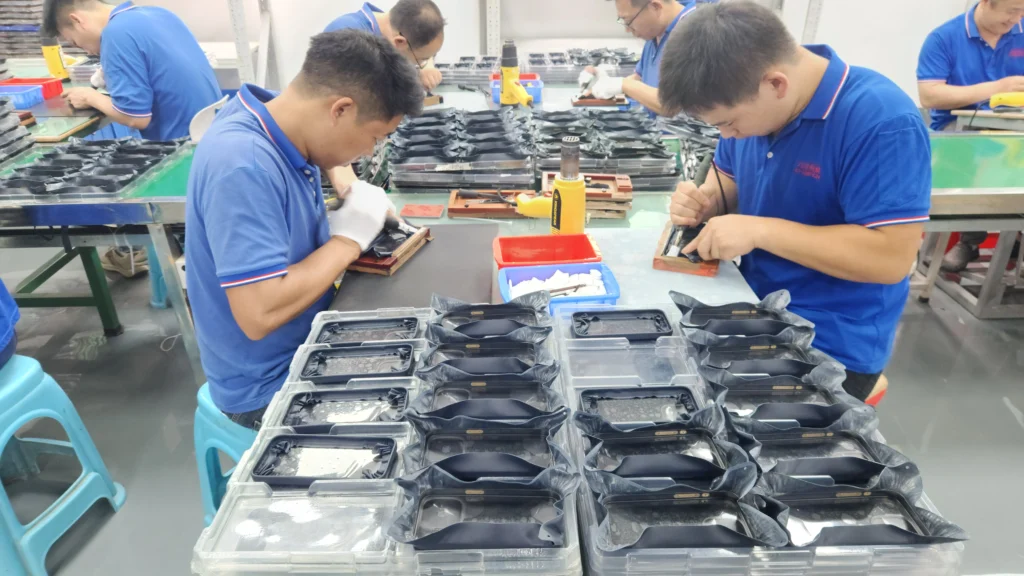
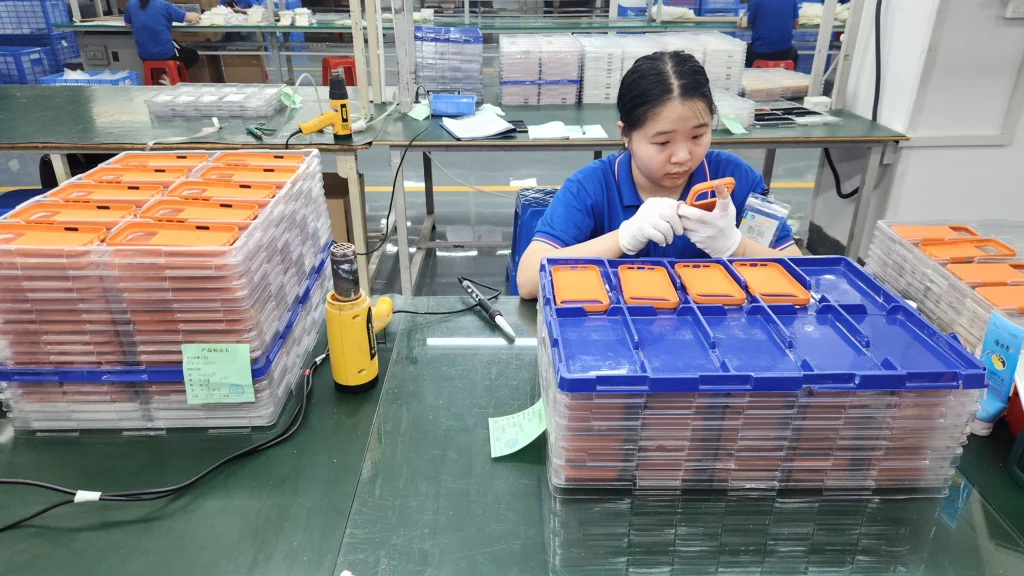
factory process
FAQ
What is the most durable leather for phone cases?
Chrome-tanned leather offers better resistance to water and daily wear, making it more durable for general usage.
Does vegetable-tanned leather last longer?
Structurally, it can last longer, but proper maintenance is required to prevent drying or cracking.
Why is vegetable-tanned leather more expensive?
Longer production time and reliance on natural materials significantly increase cost.
How do I handle customer complaints about “scratches” on a vegetable-tanned leather phone case?
Vegetable-tanned leather is prone to light marking. It’s essential to provide a complete leather care guide to help customers maintain their cases and understand the beauty of natural aging.
Which leather is better for private-label phone cases?
- Premium positioning → vegetable-tanned leather
- Mass-market positioning → chrome-tanned leather
Final Insight
From a business perspective, the debate around Vegetable Tanned vs Chrome Tanned Leather for Phone Cases is not about which material is universally better.
Instead, the real question is:
Which material aligns with your target market, pricing strategy, and brand identity?
Selecting the right leather is ultimately a strategic decision, not just a design choice.