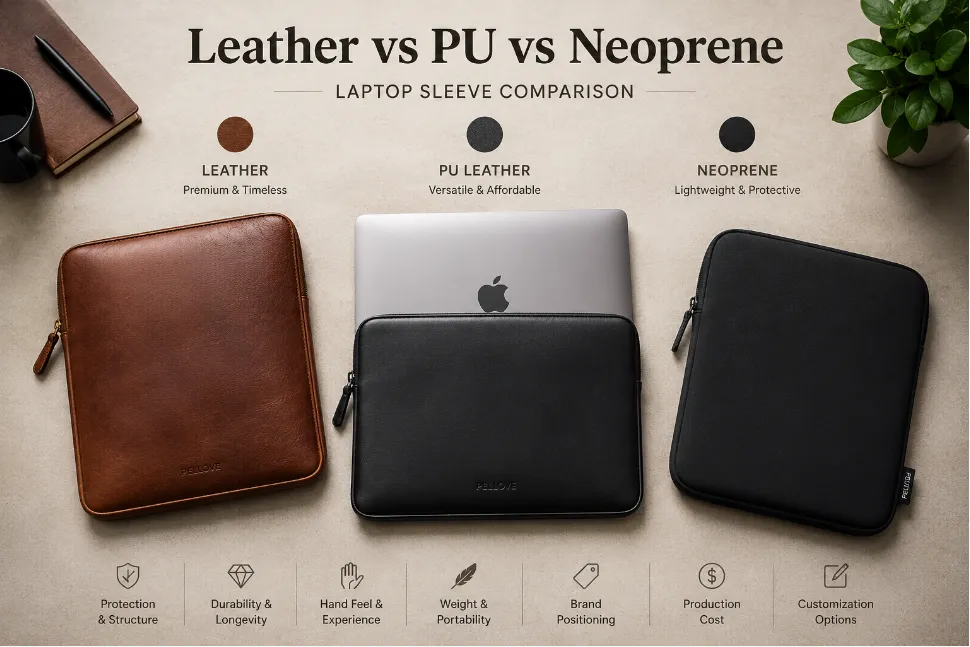

A leather iPad folio case manufacturer is not simply a leather goods supplier—it is a structural engineering partner for folding tablet systems.
In OEM and ODM development, folio cases function as multi-layer mechanical systems rather than static protective accessories. Every unit must be engineered to withstand repeated folding cycles, structural stress distribution, and long-term deformation behavior.
Unlike basic tablet back covers, folio cases operate as dynamic load-bearing structures that continuously interact with hinge mechanics, material tension, and device weight distribution.
For brands developing tablet accessory product lines, understanding the engineering foundation behind folio systems is essential for reducing product failure rates and long-term return risks.
For broader topics such as general leather iPad case sourcing, magnetic folio engineering, magnetic closure failure, Apple Pencil charging interference, and leather tablet case manufacturing, see our related guides:
- Leather iPad Case Manufacturer Guide
- Magnetic iPad Case Manufacturing Guide
- Why Magnetic iPad Cases Are Not Closing Properly
- Why Leather iPad Cases Affect Apple Pencil Charging Performance
- Leather Tablet Case Manufacturer Guide

Folio ipad case
What Defines a Professional Leather iPad Folio Case Manufacturer
A qualified folio case manufacturer should operate as a system-level product engineering partner, not just a production facility.
Core capabilities typically include:
- Folding structure system design
- Material stack engineering and validation
- Prototype development and iteration cycles
- Magnetic system configuration and testing
- Apple Pencil compatibility validation
- OEM/ODM customization execution
- Pilot production and mass production control
- Structural quality assurance and durability testing
In advanced tablet accessory manufacturing, folio cases are considered one of the most structurally sensitive product categories due to their layered mechanical dependencies.
Why Most Leather iPad Folio Cases Fail in the Market
Most folio case problems are not leather quality issues.
They are structural engineering failures.
In real production, we repeatedly see:
- hinge cracking after short-term use
- unstable stand angles during typing
- magnetic misalignment affecting sleep/wake function
- deformation after shipping compression
- Apple Pencil charging instability
These are not material defects.
They are system-level design failures.
Core Engineering Systems Inside a Folio Case
A high-performance folio case is built on multiple interdependent engineering systems.
Hinge Stress Control System
The hinge is the most critical structural component.
Key parameters include:
- fold radius geometry design
- stress dispersion path control
- reinforcement board placement
- material elasticity matching
Poor hinge design leads to localized stress concentration, significantly reducing product lifecycle performance.
Fold Memory Stability System
Fold memory determines whether a folio maintains consistent folding behavior over time.
It is influenced by:
- lamination tension balance
- board rigidity calibration
- adhesive curing stability
- material rebound characteristics
Weak fold memory typically results in:
- unstable stand angles
- rebound after folding
- long-term deformation
Stand Geometry Stability System
The stand function depends on structural geometry rather than surface thickness.
Key stability factors include:
- center-of-gravity alignment
- base contact geometry
- stiffness distribution across fold panels
When improperly engineered, the stand may collapse, slide, or lose angle stability during use.
Magnetic Integration System
Magnets are functional structural components, not decorative elements.
They control:
- closure force consistency
- auto sleep/wake activation
- stand locking behavior
Critical engineering variables include:
- polarity alignment precision
- embedding depth consistency
- magnetic field distribution balance
Apple Pencil Compatibility System
Apple Pencil integration introduces additional structural constraints.
Key considerations include:
- shell thickness tolerance control
- magnetic interference management
- internal reinforcement layout design
- charging alignment stability
Even small deviations in material stacking can affect charging reliability or magnetic attachment strength.
Material Selection Strategy in OEM Development
Material selection affects both product positioning and structural behavior.
Full-Grain Leather
Premium positioning with natural aging characteristics. Requires advanced skiving and fold-zone control.
Top-Grain Leather
Balanced solution for premium commercial programs with stable production performance.
Microfiber Leather
High-consistency OEM material with predictable folding behavior and scalable production stability.
PU Leather
Cost-efficient material for entry-level product lines, highly dependent on substrate quality.
Material selection should always align with:
- target market positioning
- expected folding durability
- structural complexity
- cost constraints
Structural Architecture Options
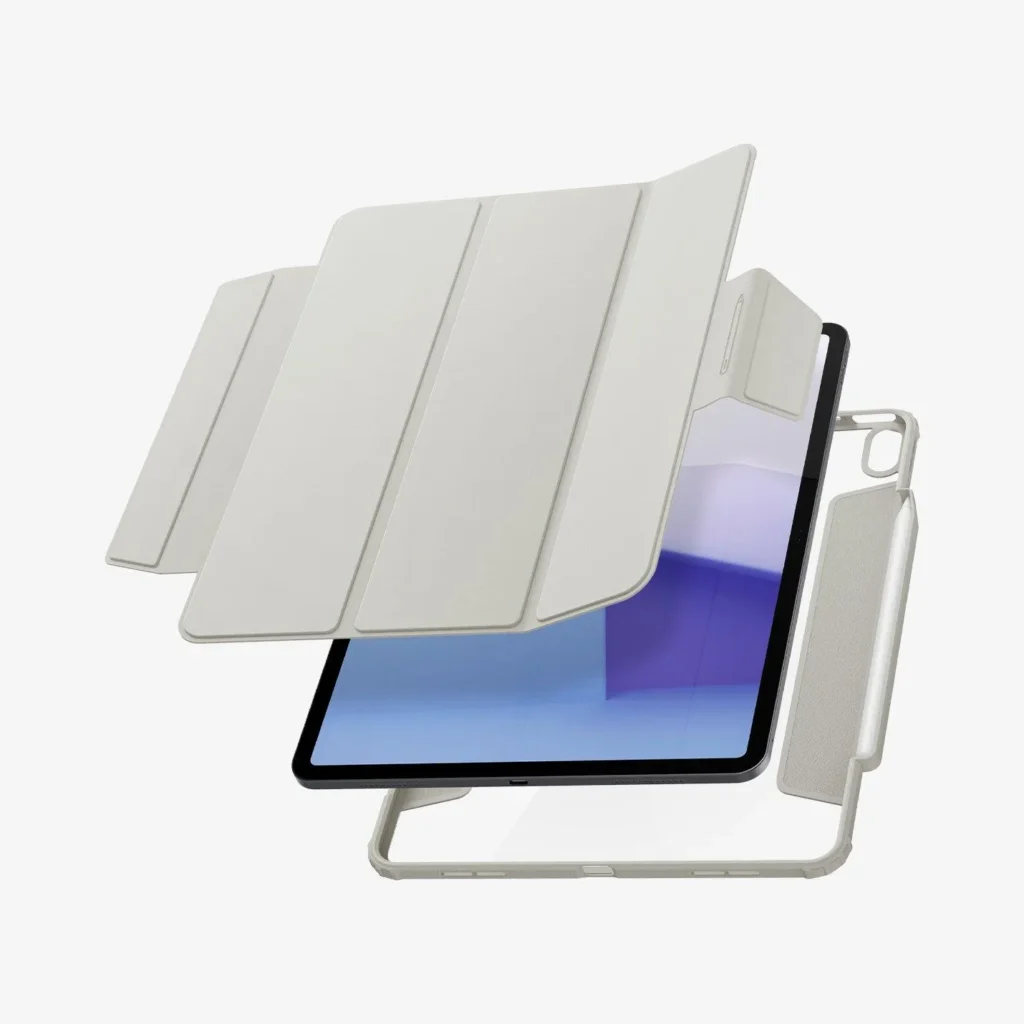
Tri-Fold Structure (Mainstream OEM Standard)
Most widely used architecture in global markets.
Advantages:
- stable viewing geometry
- mature production process
- cost-efficient scalability
- wide device compatibility

Slim Trifold iPad Case with Clear Hard Back Shell with Pencil Holder for iPad Air 11 Inch 2025

Y-Fold Structure (Premium ODM Architecture)
Used in differentiated product development programs.
Advantages:
- improved viewing flexibility
- enhanced typing ergonomics
- higher perceived product value
Requires tighter manufacturing tolerances and stronger structural control.
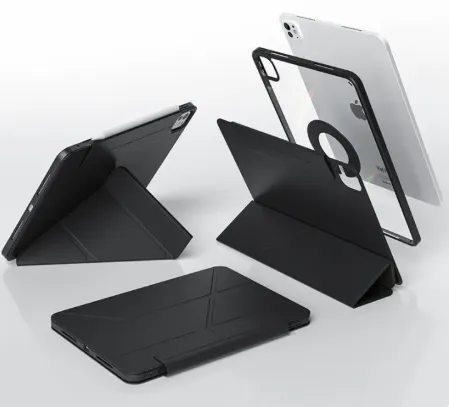
Y-fold iPad case
OEM vs ODM Development Pathways
OEM Development
Suitable for brands with defined product specifications.
Focus areas:
- logo customization
- material selection
- packaging adaptation
- production execution
ODM Development
Suitable for brands seeking product differentiation.
Focus areas:
- structural redesign
- hinge optimization
- magnetic system engineering
- Apple Pencil integration tuning
Manufacturing Workflow Overview
A professional folio development process includes:
- Requirement definition
- Device model confirmation
- Structural architecture selection
- Material system engineering
- Prototype development
- Functional validation testing
- Iteration optimization
- Pre-production approval
- Mass production execution
- Quality inspection and shipment
Each stage directly impacts final product durability and consistency.
Key Cost Drivers in Folio Case Production
Pricing is driven primarily by structural complexity rather than material type alone.
Main cost factors include:
- magnetic system design complexity
- Apple Pencil integration requirements
- reinforcement structure configuration
- lamination precision control
- tooling and mold development
- production volume scale
Simplified structures reduce cost but may compromise long-term durability and stability.
How to Evaluate a Leather iPad Folio Case Manufacturer
When selecting a manufacturing partner, buyers should evaluate engineering capability beyond surface production.
Key questions include:
- Can the manufacturer explain hinge stress behavior and fold memory control?
- Are full-system functional tests conducted (stand, magnetic, Pencil)?
- Is structural consistency maintained across mass production batches?
- Can multiple material systems be matched to different product tiers?
- Is durability testing integrated into production processes?
Manufacturers with strong engineering capability typically deliver lower defect rates and higher long-term product stability.
RFQ Requirements for Accurate Quotation
To ensure accurate engineering and pricing feedback, buyers should provide:
- iPad model and generation
- structure type (tri-fold / Y-fold)
- material preference
- functional requirements (Pencil, sleep/wake, magnetic closure)
- logo and branding method
- packaging requirements
- target MOQ
- budget expectations
- delivery timeline
Incomplete RFQs often lead to inaccurate quotations and delayed development cycles.
Why Engineering Capability Matters in Folio Manufacturing
Within tablet accessory manufacturing, folio cases represent a high-risk structural category due to their layered mechanical dependencies.
Manufacturers with strong engineering capability can:
- reduce hinge failure rates
- improve folding durability consistency
- stabilize mass production output
- ensure Apple Pencil functional reliability
- extend product lifecycle performance
Engineering capability is therefore a stronger selection criterion than unit price alone.
Conclusion
A leather iPad folio case manufacturer should be evaluated based on engineering depth, structural control capability, and system-level validation—not simply material sourcing or assembly capacity.
In OEM and ODM development, long-term product success depends on:
- hinge durability
- fold memory stability
- stand performance consistency
- magnetic system reliability
- Apple Pencil integration accuracy
Selecting the right manufacturing partner directly impacts product returns, brand positioning, and long-term market competitiveness.
FAQ
What does a leather iPad folio case manufacturer do?
A leather iPad folio case manufacturer develops and produces folding tablet cases that integrate leather materials with structural engineering systems, including hinge design, fold memory control, magnetic integration, and optional Apple Pencil functionality.
The role extends beyond production and includes OEM/ODM development, prototyping, and structural validation.
Why do iPad folio cases develop hinge cracking?
Hinge cracking is typically caused by excessive stress concentration in the fold zone.
Common root causes include:
- improper fold radius design
- insufficient reinforcement layering
- mismatch of material elasticity
- weak adhesive flexibility under repeated folding cycles
This is a structural engineering issue rather than a leather quality problem.
What is fold memory in a folio case?
Fold memory refers to the ability of a folio case to maintain consistent folding behavior over repeated use cycles.
It affects:
- stand angle stability
- opening and closing alignment
- rebound behavior after folding
- long-term deformation resistance
Weak fold memory leads to unstable stand performance and reduced product lifespan.
Why do iPad folio stands collapse during use?
Stand collapse is usually caused by structural imbalance rather than surface material issues.
Typical causes include:
- weak fold memory system
- improper support geometry design
- insufficient internal board rigidity
- poor load distribution for larger iPad models
A properly engineered stand relies on stable structural geometry and center-of-gravity control.
Can leather iPad folio cases support Apple Pencil charging?
Yes, but only when the structure is engineered correctly.
Apple Pencil compatibility depends on:
- material thickness tolerance control
- magnetic interference management
- internal reinforcement layout design
- charging alignment accuracy
Even minor variations in material stacking can affect charging performance or magnetic attachment stability.
What material is best for OEM iPad folio case production?
There is no single “best” material—the optimal choice depends on positioning and structural requirements.
- Full-grain leather: premium positioning, requires advanced structural control
- Top-grain leather: balanced performance for commercial OEM programs
- Microfiber leather: most stable option for mass production consistency
- PU leather: cost-efficient entry-level solution
Material selection should align with target market, durability expectations, and structural complexity.
What is the difference between OEM and ODM folio case development?
OEM focuses on production based on existing specifications, while ODM involves product and structural design development.
- OEM: logo, material, color, packaging customization
- ODM: hinge redesign, structural optimization, magnetic system engineering, functional integration
ODM programs typically require stronger engineering capability from the manufacturer.
Why do some folio cases deform or warp over time?
Cover warpage is usually caused by uneven structural forces inside the laminated system.
Key reasons include:
- uneven lamination tension
- reinforcement board imbalance
- moisture absorption
- asymmetric internal pressure distribution
- packaging compression during shipping
Flatness control must be managed at both design and production stages.
What should buyers include in an RFQ for folio case manufacturing?
To ensure accurate quotation and engineering feedback, buyers should provide:
- iPad model and generation
- structure type (tri-fold / Y-fold)
- material preference
- functional requirements (Pencil, sleep/wake, magnetic closure)
- branding method (logo type)
- packaging requirements
- target MOQ
- budget range
- delivery timeline
Incomplete RFQs often lead to delays or inaccurate cost estimation.
How should a professional leather iPad folio case manufacturer be evaluated?
Evaluation should focus on engineering capability rather than appearance.
Key indicators include:
- understanding of hinge stress and fold mechanics
- ability to perform system-level functional testing
- consistency across mass production batches
- material system matching capability
- integration of durability testing into the QC process
Manufacturers with strong engineering control typically achieve lower defect rates and higher product reliability.