
Quick Answer
Leather iPad case pricing is not determined by material alone. For OEM and ODM buyers, the final unit cost depends on material grade, case structure, MOQ, tooling, magnet layout, Apple Pencil compatibility, logo method, packaging, QC requirements, and production complexity.
A simple PU leather folio case, a microfiber magnetic folio, a genuine leather executive case, and a detachable modular iPad case may look similar in product photos, but their manufacturing costs can be very different. The difference usually comes from structure, assembly time, tolerance control, functional testing, packaging, and production yield.
This guide explains what affects the cost of a leather iPad case, how to understand factory quotations, and how buyers can prepare a clearer RFQ before requesting a custom leather iPad case quote.
Reference Price Ranges for OEM Leather iPad Cases
Important note: The price ranges and cost models below are for early sourcing discussion only. They are not fixed quotations. Final pricing should be confirmed according to material grade, MOQ, iPad model, structure, logo process, packaging, QC level, and current production conditions.
| Product Type | Typical Material / Structure | Reference Unit Price Range | Best For |
|---|---|---|---|
| Basic PU back cover | PU leather + PC/TPU shell | $2.5-$6 | Entry retail, promotional orders |
| Standard PU folio case | PU leather + board + lining | $4-$9 | E-commerce, wholesale, private label |
| Microfiber magnetic folio | Microfiber leather + magnets + lining | $6-$14 | Mid-range retail, magnetic iPad cases |
| Apple Pencil-compatible folio | Premium PU or microfiber + Pencil-side structure | $7-$16 | Apple ecosystem accessory brands |
| Pencil holder leather case | PU, microfiber, or leather + holder structure | $8 -$18 | Education, creative users, gifting |
| Detachable modular case | Microfiber / PU + shell-folio magnetic system | $10-$25 | Premium productivity accessories |
| Genuine leather premium folio | Top-grain or full-grain leather | $12-$35 | Executive gifting, luxury retail |
| Custom gift-box set | Case + logo + retail/gift packaging | $1.5-$6 | Corporate gifts, premium retail |
A useful way to read this table is not ‘which case is cheapest?’ but ‘which cost level matches my product positioning?’ A premium structure requires stronger materials, more controlled assembly, better packaging, and more testing. If a quote is far below the expected range, buyers should check whether material grade, functional testing, packaging, or QC has been reduced.
Example Cost Breakdown: Magnetic Leather iPad Case
The example below illustrates how a PU magnetic leather iPad case quotation may be built. It is an illustrative model, not a fixed quotation.
| Cost Item | Example Cost | What It Includes |
|---|---|---|
| Surface material and lining | $1.20-$1.5 | PU, microfiber, or leather surface; inner lining |
| Shell/board/reinforcement | $0.50-$0.80 | PC/TPU shell, support board, backing layers |
| Magnets and functional parts | $0.35-$0.5 | Closure magnets, sleep/wake magnets, magnet coating |
| Labor and assembly | $0.80-$1 | Cutting, lamination, wrapping, magnet assembly, finishing |
| Logo process | $0.10-$0.30 | Debossing, embossing, printing, metal logo, or patch |
| Packaging | $0.30-$0.8 | Polybag, paper box, insert, barcode, carton allocation |
| QC and testing | $0.20 | Appearance inspection, fit test, magnet test, packaging review |
| Estimated reference total | $3.45-$5.1 | Final quote depends on MOQ and confirmed specifications |
This example shows why two products with similar photos may receive different quotations. A supplier that includes stronger materials, functional magnets, retail packaging, and QC will usually quote higher than a supplier quoting only the visible case body.
It also shows why a buyer should not compare unit prices without comparing specifications. If one quote includes sleep/wake magnets, packaging, and functional tests while another quote excludes them, the two prices are not comparable.
Example Comparison: Standard PU Folio vs Magnetic Microfiber Folio
A second way to understand price is to compare two product levels.
| Cost Factor | Standard PU Folio | Magnetic Microfiber Folio |
|---|---|---|
| Surface material | Lower | Medium |
| Lining and board | Basic to standard | More stable material stack |
| Magnets | None or simple closure | Functional magnet layout |
| Assembly complexity | Lower | Higher |
| Functional testing | Basic fit and fold check | Magnetic closure and sleep/wake review |
| Packaging | Basic or retail | Retail or premium packaging |
| QC level | Standard | Higher functional QC |
| Unit cost direction | Lower | Medium to medium-high |
A standard PU folio may be the right choice for cost-controlled wholesale. A magnetic microfiber folio may be better for buyers who need more stable closure, better handfeel, and stronger repeatability in mid-range retail.
The better choice depends on the buyer’s sales channel, expected retail price, brand positioning, warranty risk, and MOQ.
What Actually Drives Leather iPad Case Pricing?
Many buyers begin a quotation request by asking one question: “How much is a leather iPad case?”
The problem is that “leather iPad case” can mean many different products:
- A simple back cover
- A standard folio case
- A magnetic sleep/wake case
- An Apple Pencil-compatible case
- A case with an integrated Pencil holder
- A detachable modular shell-folio system
- A premium genuine leather executive case
- A private-label gift set with custom packaging
Each structure has a different cost logic.
For example, PU leather may reduce material cost, but if the case requires magnets, Apple Pencil charging clearance, reinforced stand geometry, and premium packaging, the total price may still increase. Genuine leather may raise material cost, but the larger price impact may come from hide grading, skiving, manual handling, lower yield, and extra QC.
A reliable leather iPad case quote should consider the whole product, not only the outer material.
Main Cost Drivers in Leather iPad Case Manufacturing
| Cost Driver | Why It Affects Price |
|---|---|
| Material | PU, microfiber, top-grain, and full-grain leather have different costs, yields, and handling requirements |
| Case structure | Folio, magnetic, Pencil-compatible, and detachable structures require different tooling and assembly |
| MOQ | Larger quantities spread setup, tooling, and production preparation costs over more units |
| Tooling and fixtures | Custom shells, molds, magnet jigs, folding fixtures, and logo tools increase upfront cost |
| Functional components | Magnets, Pencil holders, modular parts, boards, and shells affect material and labor costs |
| Logo customization | Embossing, debossing, printing, metal logos, and patches require different tools and processes |
| Packaging | Polybag, retail box, gift box, insert, barcode, carton, and protective packaging change the total landed cost |
| QC and testing | AQL inspection, functional tests, Pencil charging checks, and packaging review add labor and process cost |
| Production yield | Materials with higher variation or complex assembly may increase waste, rework, and unit cost |
The cheapest quote is not always the lowest-risk option. A low price may exclude functional testing, use lower-grade materials, simplify packaging, or rely on fewer QC checkpoints.
Material Cost: PU, Microfiber, and Genuine Leather
Material is one of the most visible cost factors, but it is not always the largest one.
PU Leather
PU leather is usually the most cost-efficient option for high-volume OEM iPad case production. It supports wide color selection, stable batch supply, fast cutting, and common logo processes.
Best for:
- Entry retail lines
- Corporate gifts
- Promotional projects
- Large-volume wholesale
- Cost-controlled private-label programs
PU leather helps control unit price and supports faster scaling. The main risk is material grade. Low-grade PU may peel, crack, whiten near fold zones, or fail earlier under repeated use.
Microfiber Leather
Microfiber leather usually costs more than entry-level PU, but it often provides better thickness consistency, folding behavior, and lamination stability.
Best for:
- Magnetic iPad cases
- Apple Pencil-compatible cases
- Folio cases
- Detachable modular cases
- Mid-to-high-end private label lines
- Vegan premium positioning
Microfiber leather may raise unit price compared with basic PU, but it can reduce production variation in precision structures. For functional cases, the material cost may be offset by lower failure risk and better batch consistency.
Genuine Leather
Genuine leather, including top-grain and full-grain, is typically chosen for premium retail, executive gifting, and luxury brand positioning.
Best for:
- Premium collections
- Executive gifts
- Boutique brands
- High-value retail products
- Limited custom programs
Genuine leather increases tactile value, perceived quality, and brand differentiation. It also requires grading, skiving, yield management, humidity control, and more careful handling. The final cost may rise due to lower material yield and additional process controls, not only because of the leather price.
For a deeper comparison of PU, microfiber, and genuine leather, buyers can refer to our leather iPad case material guide.
Structure Cost: Folio vs Magnetic vs Pencil Holder vs Detachable
The structure of the case often affects price more than buyers expect.
| Product Type | Cost Level | Main Cost Reason |
|---|---|---|
| Simple back cover | Low to medium | Fewer layers, simpler assembly, fewer functional tests |
| Standard folio case | Medium | Folding cover, lining, board, lamination, and stand structure |
| Magnetic folio case | Medium to high | Magnet placement, polarity control, sleep/wake testing |
| Pencil-compatible case | Medium to high | Pencil-side clearance, material thickness control, functional validation |
| Pencil holder case | Medium to high | Holder forming, retention testing, and lining protection |
| Detachable modular case | High | Shell-folio pairing, magnets, alignment, pull force, shear resistance, pair QC |
| Premium genuine leather folio | High | Leather grading, skiving, lamination control, lower yield, premium packaging |
A buyer comparing quotes should make sure the structures are truly the same. A ‘magnetic folio case’ from one supplier may include sleep/wake testing, Pencil-side validation, and reinforced stand construction, while another supplier may quote only a basic magnetic closure structure.
For buyers comparing functional structures, these related guides may help clarify cost logic:
- Magnetic iPad case engineering
- Apple Pencil charging compatibility
- Detachable modular iPad case manufacturing
How MOQ Affects the Leather iPad Case Price
MOQ has a direct effect on unit price because many costs are shared across the production batch.
Common setup costs may include:
- Material sourcing
- Color matching
- Sample development
- Cutting dies
- Logo tooling
- Mold or shell preparation
- Magnet positioning fixture
- Packaging setup
- QC setup
- Production line preparation
When the order quantity is small, these costs are spread over fewer units, so the unit price becomes higher. When quantity increases, the same setup cost can be distributed across more pieces.
However, a higher MOQ is not always better for every buyer. New brands may prefer a smaller test order to reduce inventory risk. Established brands may choose larger batches to improve price efficiency.
A practical MOQ strategy is:
- Use existing structures for lower MOQ and faster launch
- Use private-label customization for moderate MOQ
- Use full ODM development only when the buyer can support higher tooling, sampling, and validation costs
Logo Customization Cost
The logo method can also affect pricing. Some logo options are simple, while others require tools, extra labor, or additional QC.
| Logo Method | Cost Impact | Notes |
|---|---|---|
| Debossing | Low to medium | Common for PU, microfiber, and leather cases |
| Embossing | Medium | Requires a tool and pressure control |
| Screen printing | Low to medium | Good for simple graphics, may need durability testing |
| Heat transfer | Medium | Useful for color logos, depending on the material |
| Metal logo plate | Medium to high | Adds hardware, positioning, and bonding checks |
| Woven or leather patch | Medium | Adds material and stitching or bonding process |
| Custom zipper pull, button, or hardware | Higher | Requires component sourcing and assembly control |
Logo pricing depends on size, position, quantity, process, color, and whether a new mold or plate is required.
Buyers should provide logo artwork, size, Pantone color if needed, placement, and expected finish during RFQ.
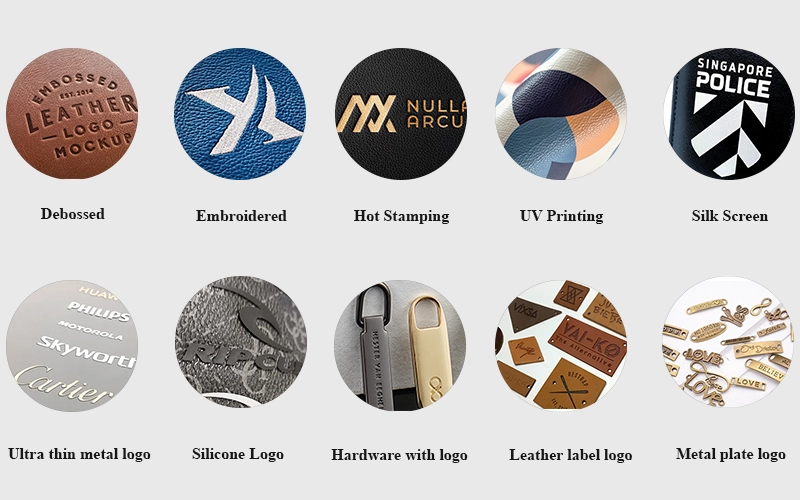
Custom Logo
Packaging Cost and Retail Presentation
Packaging can be a small or large part of the total cost, depending on the buyer’s market channel.
Basic packaging may include:
- Polybag
- Sticker label
- Export carton
Retail packaging may include:
- Printed paper box
- Gift box
- Inner tray
- Insert card
- Barcode label
- Hang tag
- Instruction card
- Protective sleeve
- Custom carton marks
Premium packaging increases cost, but it may be necessary for retail, gifting, Amazon FBA, DTC, or corporate presentation.
Packaging also affects quality. Poor packaging can create cover warpage, edge pressure, surface marks, or crushed corners during shipping. For folio cases and premium leather products, packaging should be reviewed as part of the product design, not only as logistics.
For buyers planning retail-ready products, packaging requirements should be included in the first RFQ.
QC and Testing Cost
Quality control also affects price. A supplier quoting a lower price may not include the same inspection level as another supplier.
QC may include:
- Incoming material inspection
- Color and texture inspection
- In-process cutting and lamination checks
- Logo position inspection
- Magnet polarity check
- Sleep/wake function test
- Apple Pencil compatibility test
- Folio stand stability test
- Pencil holder retention test
- Detachable modular pull-force or alignment test
- Final inspection
- AQL sampling
- Packaging inspection
- Pre-shipment inspection report
Not every project needs every test. A basic PU back cover does not require Apple Pencil charging validation. A premium Pencil-compatible magnetic folio does.
Buyers should define the required QC level before comparing prices. Otherwise, one quote may include only appearance inspection while another includes functional testing and packaging review.
For a complete inspection framework, buyers can refer to Pellove’s leather iPad case quality control guide.
Visual Cost Drivers Buyers Should Review
Pricing is easier to understand when buyers compare structure, material, packaging, and QC visually.
| Visual Asset | What It Shows | Why It Helps |
|---|---|---|
| Material comparison photo | PU, microfiber, and genuine leather surfaces | Explains material price differences |
| Structure comparison diagram | Back cover, folio, magnetic, detachable structures | Shows why structure changes cost |
| Cost breakdown chart | Material, labor, packaging, QC, tooling | Helps buyers understand quotation logic |
| Packaging option photo | Polybag, retail box, gift box | Shows why packaging changes the total cost |
| QC checklist visual | Functional tests and inspection stages | Explains why QC is part of the price |
OEM, ODM, and Private Label Pricing Differences
Different cooperation models have different pricing logic.
| Model | Best For | Cost Logic |
|---|---|---|
| Private label | Fast launch using existing structures | Lower development cost, lower tooling risk, faster sampling |
| OEM | The buyer has confirmed the design and specifications | Cost depends on material, tooling, QC, packaging, and order quantity |
| ODM | Buyer needs structured development from the factory | Higher development cost, more sampling, more engineering support |
| Fully custom project | Differentiated product or new structure | The highest tooling, testing, and validation cost |
Private label is usually the fastest and lowest-risk route. OEM is suitable for buyers with clear specifications. ODM is better when the buyer wants product differentiation but needs factory engineering support.
A fully customized detachable modular case will cost more than a standard private-label folio because it requires more development, testing, tooling, and QC.
Common Pricing Mistakes Buyers Should Avoid
Mistake 1: Comparing Quotes Without Matching Specifications
Two suppliers may quote different prices because they are quoting different materials, lining, magnets, shell thickness, packaging, or QC levels.
Before comparing prices, buyers should confirm:
- Material grade
- Structure
- iPad model
- Logo process
- Packaging
- QC level
- Functional requirements
- MOQ
Mistake 2: Choosing the Lowest Price Without Checking Risk
A very low quote may reduce material grade, skip functional testing, simplify packaging, or use less stable production methods.
The result may be higher defect risk, more customer complaints, delayed shipment, product returns, or brand reputation damage.
Mistake 3: Ignoring Packaging Cost
Retail packaging, gift boxes, barcode labels, inserts, and carton requirements can affect the final cost. If packaging is not included in the RFQ, the first quotation may be incomplete.
Mistake 4: Asking for Premium Features at Entry-Level MOQ
Premium materials, low MOQ, custom logo, gift packaging, Apple Pencil compatibility, and extensive QC all increase cost. Buyers should decide which features are essential and which can be simplified.
RFQ Checklist for Accurate Leather iPad Case Quotation
To receive an accurate quote, buyers should provide clear project information.
Recommended RFQ details include:
- Target iPad model and generation
- Case type: back cover, folio, magnetic, Pencil holder, detachable, keyboard-compatible
- Material preference: PU, microfiber, top-grain, full-grain, vegan leather, or open recommendation
- Color and texture requirements
- Logo method and logo artwork
- Packaging type
- Target MOQ
- Target price range, if available
- Functional requirements: magnetic closure, sleep/wake, Apple Pencil, stand, modular structure
- QC requirements
- Compliance requirements
- Delivery timeline
- Shipping destination or shipping terms, if relevant
A clear RFQ helps the manufacturer quote the real product instead of guessing.
Material, Pricing, and QC: The Buyer Decision Triangle
Leather iPad case sourcing works best when buyers evaluate material, price, and QC together.
| Buyer Question | Best Guide |
|---|---|
| Which material should I choose? | Leather iPad Case Material Guide |
| Why does this product cost more? | This pricing guide |
| How do I know bulk quality will match the sample? | Leather iPad Case Quality Control Guide |
Material affects price. Price affects what structure, packaging, and QC level can be supported. QC affects the real cost of product returns, complaints, and rework.
This is why buyers should not treat material selection, quotation, and inspection as separate decisions. They are part of the same sourcing strategy.
How a Manufacturer Should Help With Cost Optimization
A good supplier should not only give a price. It should help buyers find the right balance between cost, quality, function, and brand position.
Cost optimization may include:
- Recommending PU instead of microfiber for simple high-volume projects
- Recommending microfiber instead of genuine leather for magnetic or Pencil-compatible structures
- Using an existing mold or shell to reduce tooling cost
- Adjusting packaging to reduce shipping pressure and cost
- Choosing a logo method that fits the material and MOQ
- Simplifying structure without weakening user experience
- Defining the right QC level for the product risk
For custom leather iPad case projects, Pellove can help review material, structure, logo, packaging, MOQ, and QC requirements before sampling, so buyers can avoid unnecessary cost and reduce development risk.
Conclusion
Leather iPad case pricing is shaped by more than material. The final cost depends on product structure, material grade, MOQ, tooling, logo process, packaging, QC level, functional testing, and production complexity.
PU leather is usually the most cost-efficient option for volume production. Microfiber leather is often the most stable choice for functional cases that require magnetic alignment, Pencil-side control, folding consistency, or modular stability. Genuine leather supports premium positioning but requires more material grading and production control.
For OEM and ODM buyers, the goal should not be to find the cheapest quote. The goal should be to find a price that matches the required product quality, function, packaging, and brand position.
If you are preparing a custom leather iPad case project, contact Pellove to discuss your target material, structure, MOQ, logo method, packaging, QC requirements, and cost optimization options before sampling.
FAQ
What affects leather iPad case pricing the most?
The biggest pricing factors are material, case structure, MOQ, tooling, logo method, packaging, QC requirements, and functional features such as magnets, Apple Pencil compatibility, Pencil holder, or detachable modular design.
What is a typical price range for OEM leather iPad cases?
There is no universal price because material, MOQ, structure, packaging, and QC all affect cost. Buyers can use reference ranges for early planning, but final pricing should be confirmed with the manufacturer after specifications are defined.
Is PU leather always the cheapest material for iPad cases?
PU leather is usually more cost-efficient than microfiber or genuine leather, but the final product price also depends on structure, packaging, logo method, and QC requirements. A complex PU magnetic folio may cost more than a simple genuine leather sleeve.
Why does microfiber leather cost more than basic PU?
Microfiber leather usually provides better thickness consistency, folding behavior, lamination stability, and functional reliability. It may cost more, but it can reduce production variation in magnetic, Pencil-compatible, folio, and modular cases.
Why are genuine leather iPad cases more expensive?
Genuine leather costs more because of material price, grading, cutting yield, skiving, manual handling, lamination control, and premium finishing requirements. Natural variation also increases process control needs.
How does MOQ affect unit price?
Higher MOQ can reduce unit price because setup, sourcing, tooling, logo preparation, and production line costs are spread across more units. Low MOQ usually has a higher unit cost because fixed costs are shared by fewer pieces.
Does custom packaging increase the price?
Yes. Gift boxes, printed retail boxes, inserts, barcode labels, trays, hang tags, and stronger cartons can increase cost. Packaging should be included in the RFQ to avoid incomplete quotations.
Why do suppliers give very different prices for similar iPad cases?
Prices differ because suppliers may use different material grades, shells, magnets, linings, logo methods, packaging, inspection levels, and production standards. Buyers should compare specifications, not only unit price.