
A reliable leather tablet case manufacturer should be able to manage more than leather, logos, and packaging. The supplier must identify every target device, recommend a universal or model-specific construction, control the material stack, approve samples by model, and prevent similar shells, labels, or packaging from being mixed during production.
For brands and wholesale buyers, the central sourcing challenge is usually product complexity rather than one unit price. A program covering several tablet brands, models, colors, and packaging versions can quickly split into many low-volume SKUs. The right manufacturing plan balances device fit, product positioning, customization, minimum quantities, inventory risk, and repeat-order consistency.
This guide focuses on multi-model tablet programs. Buyers sourcing only Apple iPad cases should also use Pellove’s iPad case manufacturer guide for iPad-specific fit, magnetic, wake/sleep, and Apple Pencil requirements.
What Should a Tablet Case Manufacturer Provide?
A tablet case supplier should demonstrate control over the product, the model list, and the production process. Before requesting a final quotation, buyers should confirm the following capabilities.
| Capability | What the manufacturer should clarify | Buyer risk if unclear |
|---|---|---|
| Device coverage | Exact brands, model numbers, dimensions, and available shells or tooling | Cases may be quoted for the wrong generation or a visually similar device |
| Construction choice | Universal, adjustable, or model-specific structure | The selected format may not meet fit, protection, or usability expectations |
| Material control | Exterior, lining, shell, reinforcement, adhesive, and edge specifications | Appearance and durability may vary between samples and bulk production |
| Multi-SKU planning | Quantity by device, color, logo, packaging, and language version | The total order may appear large while each production SKU is too small |
| Sample approval | A model-by-model sample and revision process | One approved sample may be incorrectly applied to several devices |
| Customization | Logo, color, lining, packaging, label, and barcode options | Branding details may create hidden minimums or late schedule changes |
| Quality control | Incoming, first-article, in-process, functional, and final checks | Similar shells, labels, colors, or packaging may be mixed |
| Repeat production | Material records, approved samples, revision control, and traceability | Reorders may not match the original batch |
A strong manufacturer doesn’t claim one solution fits every tablet. It explains when a universal design works and when a model-specific structure is necessary.
Projects that fit leather manufacturing well
Leather and mixed-material manufacturing is generally well suited to:
– business and executive tablet folios;
– private label retail collections;
– corporate gifting programs;
– model-specific shell folios;
– adjustable or universal tablet covers;
– tablet sleeves and document-style organizers;
– hand-strap, shoulder-strap, or stand-focused folios;
– premium packaging and branded presentation sets.
It may be less suitable when the main requirement is extreme impact protection, a thick child-safe silicone structure, or a complex electronic keyboard platform. Those projects depend more heavily on shockproof molding or electronics supply chains than on leather craftsmanship.
Universal vs. Model-Specific Tablet Cases
The first major decision is whether the product should fit one exact device or a group of tablets with similar dimensions.
| Construction | Best for | Main advantage | Main tradeoff |
|---|---|---|---|
| Universal tablet case | Promotional programs, mixed-device fleets, and low volume per model | Reduces tooling and SKU complexity | Less precise fit and limited access to model-specific features |
| Adjustable folio | Several devices within a controlled size range | Supports multiple models with one outer structure | Camera, button, port, and speaker access may be less refined |
| Model-specific shell folio | Retail brands and long-term device programs | Better fit, protection, openings, and user experience | Each model requires its own shell, sample, labels, and inventory |
| Custom molded structure | Larger or differentiated programs | Greater control over fit and protection | Adds tooling, validation, quantity, and schedule requirements |
| Sleeve or pouch | Buyers prioritizing broad compatibility | Simple device coverage and lower model dependency | Does not provide in-use stand or open-screen protection |
When a universal case makes sense
A universal construction can be practical when buyers need one product for a mixed fleet, do not require access to every camera and speaker position, or cannot support separate inventory for many models.
However, “universal” should still have a defined compatibility range. The buyer and manufacturer should agree on:
– minimum and maximum device dimensions;
– corner or strap retention method;
– camera-use expectations;
– charging-port access;
– safe closure with different device thicknesses;
– stand stability across the supported size range.
When model-specific construction is necessary
A fitted shell is usually the better choice when the product requires precise camera openings, speaker alignment, button access, stylus storage, magnetic functions, or a retail-quality user experience.
Every listed model must be validated separately. A similar screen size does not guarantee the same chassis, corner radius, camera layout, speaker position, or port location.
A shared visual design does not mean several tablet models can share one engineering approval.
Plan the Device Matrix and SKU Structure Before Quotation
The most useful document in a multi-model tablet project is a device matrix. It prevents broad product names from becoming incorrect shells, samples, labels, or stock.
Recommended device matrix
| Brand or device family | Exact model number | Device dimensions | Case construction | Stylus requirement | Color versions | Quantity |
|---|---|---|---|---|---|---|
| Device A | Buyer to specify | Buyer to confirm | Universal or fitted | Storage, charging, or none | Buyer to specify | Buyer to specify |
| Device B | Buyer to specify | Buyer to confirm | Universal or fitted | Storage, charging, or none | Buyer to specify | Buyer to specify |
| Device C | Buyer to specify | Buyer to confirm | Universal or fitted | Storage, charging, or none | Buyer to specify | Buyer to specify |
Use exact model numbers whenever possible. Retail names such as ‘10-inch tablet’, ‘Galaxy Tab ‘, or ‘Surface’ are not detailed enough for model-specific production.
Editorial evidence slot: replace the generic matrix with one anonymized Pellove device-planning example when approved for publication.
Understand how SKU multiplication affects MOQ
Total order quantity can hide low production quantities at the SKU level. Consider an illustrative program with:
– 3 device models;
– 3 colors;
– 2 packaging-language versions.
That program creates:3 models x 3 colors x 2 packaging versions = 18 SKUs
If the total order were divided evenly, each SKU would represent only one-eighteenth of the volume. This matters because shell purchasing, material colors, logo setup, labels, barcodes, packaging, and line changes may each have their own practical minimums.
The calculation does not mean buyers must remove variety. It means the assortment should be planned before the supplier quotes an MOQ or production schedule.
Ways to reduce SKU fragmentation
– Use the same exterior material across several device models.
– Limit launch colors, then add colors after demand is proven.
– Share packaging dimensions where product protection allows.
– Use variable labels or barcode stickers instead of a different printed box for every model.
– Keep one logo method and location across the collection.
– Separate core models from lower-volume test models.
– Consider a universal structure for fragmented device fleets.
In a multi-model tablet program, MOQ should be evaluated per shell, material color, logo version, and packaging version, not only as one total order number.
Choose the Structure and Materials as One System
A leather tablet case is a layered product. The exterior material, lining, shell or retention system, reinforcement, adhesive, fold geometry, edges, and packaging must work together.
Common tablet case structures
| Structure | Suitable use | Main control point |
|---|---|---|
| Shell folio | Retail and business programs | Device fit, opening alignment, fold position, and stand stability |
| Adjustable folio | Mixed-device programs | Retention, supported dimension range, and camera access |
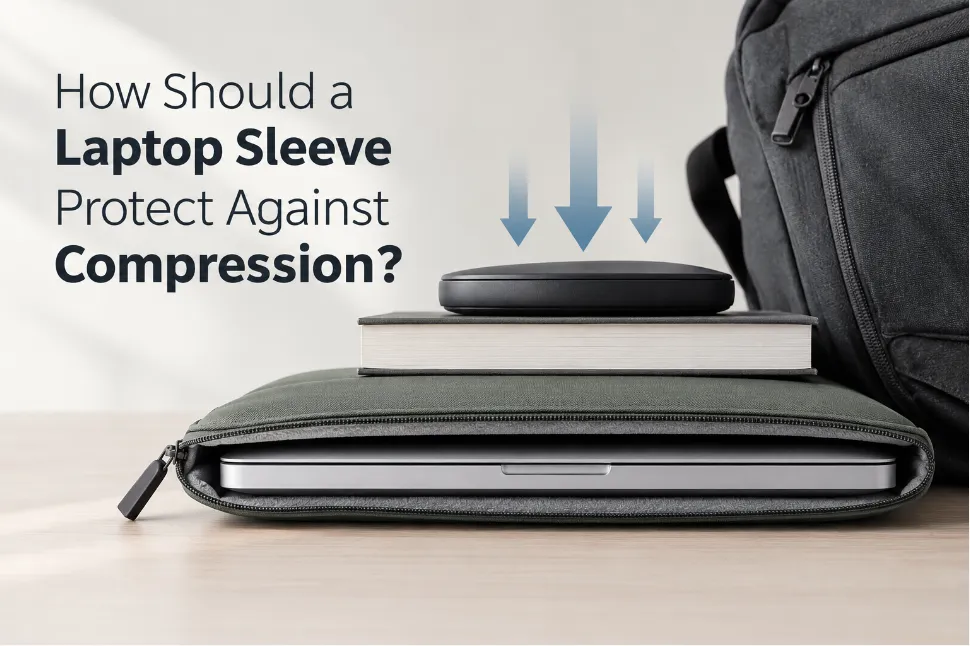
| Sleeve | Broad device compatibility and transport protection | Internal dimensions, closure, lining, and compression protection |
| Hand-strap folio | Field service, healthcare, retail operations, and presentations | Strap attachment, weight distribution, and repeated handling |
| Shoulder-strap case | Mobile work and device carrying | Anchor strength, balance, and access while carried |
| Detachable folio | Buyers who want handheld and folio modes | Attachment security, alignment, and repeated connection |
| Keyboard-compatible case | Productivity and enterprise programs | Electronics, hinge, weight, balance, and compliance requirements |
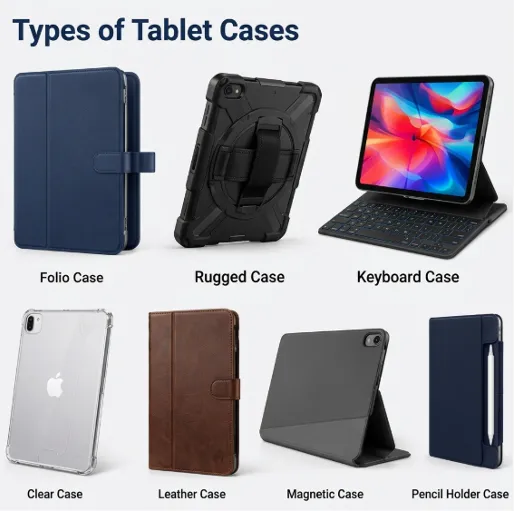
Types of tablet case
Material options and tradeoffs
| Material | Best for | Advantage | Buyer caution |
|---|---|---|---|
| Full-grain leather | Luxury and executive collections | Natural grain and distinctive aging | Greater variation and more demanding panel selection |
| Top-grain leather | Premium retail | Refined appearance with improved consistency | Color, grain, finish, and thickness still require approval |
| Other genuine leather constructions | Mid-range leather positioning | Leather identity at a more accessible cost | The term covers varied constructions; specifications must be explicit |
| PU leather | Scalable retail, promotional, and private label programs | Stable color, efficient cutting, and easier batch matching | Flex, abrasion, peel, and aging depend on material quality |
| Microfiber synthetic leather | Premium synthetic programs | Controlled hand feel and thickness | Backing, fold response, and edge compatibility need validation |
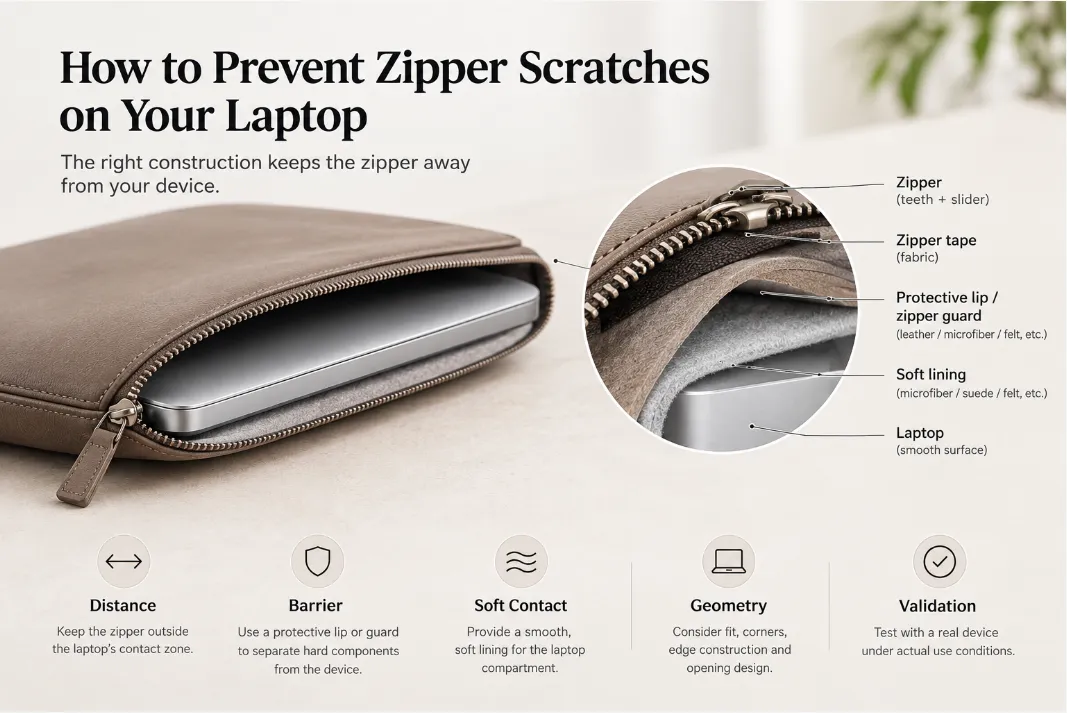
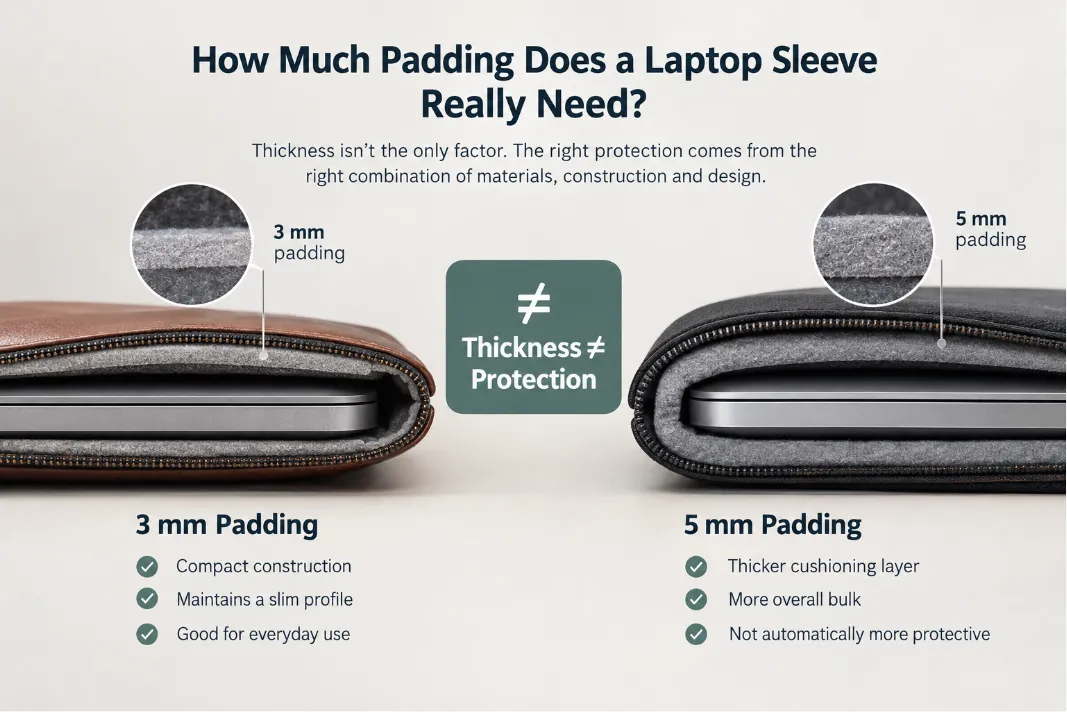
| Microfiber lining | Premium interior surface | Soft contact with the device | Color transfer, contamination, abrasion, and adhesion should be checked |

Material comparison
Buyers can review Pellove’s leather types guide when defining a material position. The final specification should identify the material code, color reference, thickness range, surface finish, backing, lining, and approved physical swatch.
Digital images are useful for shortlisting colors, but they should not be the only approval standard. Lighting, camera settings, image compression, and displays can all change appearance.
Reinforcement and folding structure
Internal boards control stiffness, flatness, stand stability, and fold behavior. A board that is too soft may collapse under the device’s weight. A board that is too rigid or poorly scored may concentrate stress at the hinge.
For universal and adjustable cases, the manufacturer must also consider the weight range of the supported devices. A stand that works with a smaller tablet may become unstable with a heavier one.
Logo and packaging choices
Common branding methods include debossing, embossing, foil stamping, printing, and metal badges. The correct method depends on the material, surface finish, desired appearance, artwork detail, and expected wear.
Packaging should protect the leather surface and prevent fold deformation while clearly identifying the correct device model, color, barcode, and language version. Packaging is therefore part of the SKU plan, not a decision to postpone until production is nearly complete.

Package options
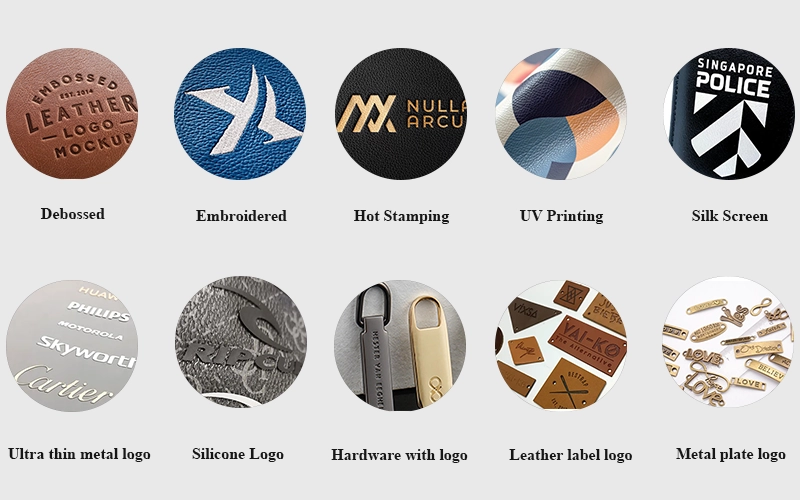
Custom Logo
Approve Samples and Control Quality by Model
One attractive sample does not approve an entire tablet collection. Each model-specific construction should be checked on the correct device or a verified reference before mass production.
Sample approval checklist
Record the following for every relevant model:
– brand, commercial name, and exact model number;
– device dimensions and approved shell or retention version;
– exterior, lining, reinforcement, and edge specifications;
– camera, speaker, microphone, port, and button access;
– screen-edge and corner clearance;
– stylus storage or charging requirement, if applicable;
– closure, stand positions, and handling method;
– logo method, size, color, and location;
– packaging, labels, barcode, and inserts;
– sample date or revision number.
The buyer and supplier should retain the same approval reference. Any change made after approval should be documented rather than accepted only through chat messages.
Quality controls for a multi-model order
| Inspection stage | What to control |
|---|---|
| Incoming materials | Material code, color, thickness, surface, lining, shells, boards, adhesives, and packaging |
| First article | Correct model, structure, openings, color, logo, function, and packaging before the run continues |
| In-process inspection | Cutting, wrapping, lamination, folding, shell alignment, edges, and logo application |
| Model verification | Shell, device fit, label, barcode, insert, and box all correspond to the same SKU |
| Functional inspection | Closure, stand stability, stylus requirement, keyboard requirement, and other agreed functions |
| Final inspection | Appearance, workmanship, quantity, assortment, packaging, and carton marks |
Pellove’s leather goods quality checklist provides a broader framework for material, workmanship, functional, and packaging review.
Common production problems
| Problem | Likely cause to investigate | Practical control |
|---|---|---|
| Wrong fit or blocked opening | Similar model names or mixed shells | Use exact model codes and first-article approval by SKU |
| Case or label mismatch | Weak assortment and packing control | Scan or verify model, label, barcode, and box together |
| Stand instability | Incorrect fold geometry or reinforcement | Test every intended device weight and stand position |
| Corner lifting or wrinkles | Wrapping tension, adhesive, or material-stack variation | Approve the complete construction and inspect during assembly |
| Edge cracking | Excess fold stress or unsuitable edge system | Validate the edge and hinge together |
| Color variation | Mixed lots or uncontrolled natural-leather variation | Approve material lots and define panel-matching rules |
| Logo inconsistency | Variable heat, pressure, position, or surface texture | Use an approved reference and first-article comparison |
| Reorder differs from original | Missing material codes or revision records | Retain the approved specification and change history |
Quality control for a tablet collection must prevent model mix-ups as well as workmanship defects.
Plan OEM, ODM, MOQ, Pricing, and Lead Time
OEM using an existing structure
An existing tablet folio, sleeve, or adjustable construction can be a practical route when customization centers on material, color, logo, lining, and packaging. It reduces development complexity and can help buyers test a market.
The tradeoff is less structural exclusivity. The buyer still needs to verify whether the available design fits the intended devices and user scenarios.
ODM or custom development
ODM development is appropriate when the project needs a new shell, retention system, hand strap, shoulder strap, fold geometry, stylus solution, detachable structure, or another functional difference.
Custom development can create stronger differentiation, but it also adds tooling, sample revisions, validation, component minimums, and schedule risk. The OEM versus ODM leather goods guide can help buyers choose the appropriate route.
What determines MOQ
MOQ may be influenced by:
– shell availability or new tooling;
– quantity per device model;
– material and color minimums;
– logo setup and artwork versions;
– packaging print minimums;
– number of barcode and language versions;
– electronic components, straps, or hardware;
– production changeover requirements.
There is no useful universal MOQ for all tablet cases. The better question is: which component creates the minimum for this specific model and configuration?
How to compare pricing
Ask shortlisted manufacturers to quote the same device matrix and specifications. Separate:
1. sample and development charges;
2. tooling or shell charges;
3. unit prices by model and quantity tier;
4. logo and packaging charges;
5. testing or third-party inspection;
6. shipping terms and destination;
7. taxes or duties if applicable;
8. estimated timing by development and production stage.
A lower unit price is not a fair comparison if it excludes costs included in another quotation.
What determines lead time
The schedule may depend on shell or tooling readiness, material availability, sample revisions, packaging artwork, component procurement, production capacity, inspection, and mixed-SKU packing.
Ask for a staged timeline rather than one delivery promise. The plan should distinguish material preparation, tooling, sampling, revision, approval, production, inspection, packing, and shipment.
RFQ and Manufacturer Evaluation Checklist
A useful RFQ should enable the supplier to identify technical assumptions before returning a price.
Information buyers should provide
– target market and sales channel;
– device matrix with exact model numbers;
– universal, adjustable, or model-specific construction;
– reference sample, drawing, or marked-up images;
– material and color direction;
– quantity by model, color, and packaging version;
– stylus, stand, strap, keyboard, or other functional requirements;
– logo artwork and preferred method;
– packaging, label, barcode, and language requirements;
– required sample date and shipment date;
– destination and shipping term;
– compliance and inspection requirements.
Questions to ask the manufacturer
– Which exact devices have an existing compatible structure?
– Which models require new shells or tooling?
– How is compatibility confirmed for universal cases?
– How are similar shells and labels separated during production?
– Which component creates the MOQ for each SKU?
– How are sample revisions recorded?
– What is checked during first-article inspection?
– How are lower-volume models packed and verified?
– Which processes are completed in-house or by external partners?
– What information is retained for repeat orders?
Common buyer mistakes
– Requesting a quote with only a screen size instead of an exact model.
– Comparing unit prices before aligning the structure and material specifications.
– Treating total quantity as if it were the quantity for every SKU.
– Approving one model and assuming all other models are equivalent.
– Adding colors, labels, or packaging versions after MOQ and timing are agreed.
– Using a universal design when precise openings or functions are essential.
– Selecting a custom structure without defining the user benefit.
– Failing to preserve an approved sample and revision record for reorders.
iPad-Specific Projects and Working with Pellove
iPad projects deserve a separate sourcing path when they require Apple Pencil compatibility, magnetic attachment, wake/sleep behavior, detachable magnetic structures, or generation-specific fit.
For those projects, use the leather iPad case manufacturer guide as the main supplier-selection resource. Buyers developing magnetic structures can also review the magnetic iPad case manufacturing guide.
Buyers comparing product formats can also review Pellove’s current leather iPad case range before preparing a model-specific request.
Pellove works with business buyers on leather and mixed-material accessory projects. A productive initial discussion should include the device matrix, quantity by SKU, construction, material, color, logo, packaging, functional requirements, destination, and target schedule.
Before requesting a quotation, buyers can review Pellove’s OEM and ODM solutions and samples, MOQ, and customization FAQ. To confirm whether a tablet program matches current capabilities, send Pellove the project details.
Frequently Asked Questions
What is a leather tablet case manufacturer?
A leather tablet case manufacturer develops or produces folios, sleeves, adjustable covers, fitted-shell cases, and related tablet accessories using natural leather, PU, microfiber synthetic leather, lining, reinforcement, shells, straps, hardware, and branded packaging. The required capability depends on whether the project is universal or model-specific.
Can one tablet case fit several brands or models?
A universal or adjustable case can support devices within a defined dimension range, but it may not provide precise camera, speaker, button, and port access. A fitted shell should be validated separately for every listed model.
What information is needed to quote custom tablet cases?
Provide the exact device models, dimensions, quantities by SKU, desired construction, materials, colors, logo, packaging, functions, target schedule, destination, and required compliance or inspection documents. A reference sample or marked-up image also helps identify assumptions.
How should MOQ be calculated for several tablet models?
Evaluate MOQ by shell, device model, material color, logo version, and packaging version. A large total order can still contain small individual SKUs, so ask which component creates the minimum for each configuration.
Should every tablet model receive a separate sample?
Every model-specific construction should be validated separately. Universal products should be tested against the smallest, largest, lightest, and heaviest devices within the approved compatibility range.
Is genuine leather always better than PU for tablet cases?
No. Natural leather can support premium positioning and distinctive aging, but it introduces more variation. PU can provide stronger color and surface consistency for larger programs. The correct choice depends on brand position, required consistency, durability specification, scale, and price.
What should be checked before mass production?
Confirm the model matrix, approved samples, material codes, color standards, shell or retention version, openings, stand positions, logo, packaging, labels, barcodes, inspection plan, and revision history. Do not approve bulk production from appearance alone.
How can buyers reduce inventory risk in a multi-model collection?
Limit launch colors, share materials and packaging formats, use variable labels where practical, prioritize core device models, and separate low-volume test models from the main assortment. A universal structure may also reduce fragmentation when precise model-specific access is not required.