
A leather iPad case with a Pencil holder must be designed around the exact iPad model, Apple Pencil version, leather construction, holder structure, and intended charging requirement. A case can store the Pencil securely without supporting magnetic attachment or charging, so these functions must be specified and tested separately.
For OEM and private-label buyers, the main manufacturing risks are incorrect device compatibility, poor Pencil retention, difficult removal, rough contact surfaces, uneven leather thickness, interference with folding, and inconsistent results between the approved sample and bulk production. A qualified leather case manufacturer should convert these requirements into a model-specific material specification, sample, functional checklist, and production control plan.
This guide explains how brands, wholesalers, distributors, and project buyers can source custom leather iPad cases with Pencil holders without treating the pen slot as a minor add-on. It focuses on the leather, lining, shell, reinforcement, holder, and production decisions that affect product usability, quotation accuracy, sample approval, and repeatable production.
What Must a Manufacturer Control?
The holder is only one part of the product. It must work with the inner shell, exterior leather, lining, adhesive, reinforcement, hinge, cover, stand structure, edge finish, and packaging. It must also match the device and Pencil combination specified by the buyer.
| Control area | What must be defined | Risk if it is unclear |
|---|---|---|
| iPad compatibility | Exact model name, generation, model numbers, dimensions, camera, speakers, buttons, and ports | A visually similar iPad may not fit or function correctly |
| Apple Pencil compatibility | Exact Pencil version and whether the requirement is storage, attachment, charging, or all three | The Pencil may fit the holder but fail another required function |
| Leather and lining | Leather type, color, thickness range, backing, lining, edge finish, and approved reference | Natural variation or an uncontrolled material change may alter fit, appearance, and holder performance |
| Holder structure | Molded slot, leather side channel, elastic loop, internal sleeve, detachable holder, or another approved format | The structure may not match the use case, price position, or expected durability |
| Retention and removal | How securely the Pencil should remain in place and how the user removes it | The Pencil may fall out or become difficult to access |
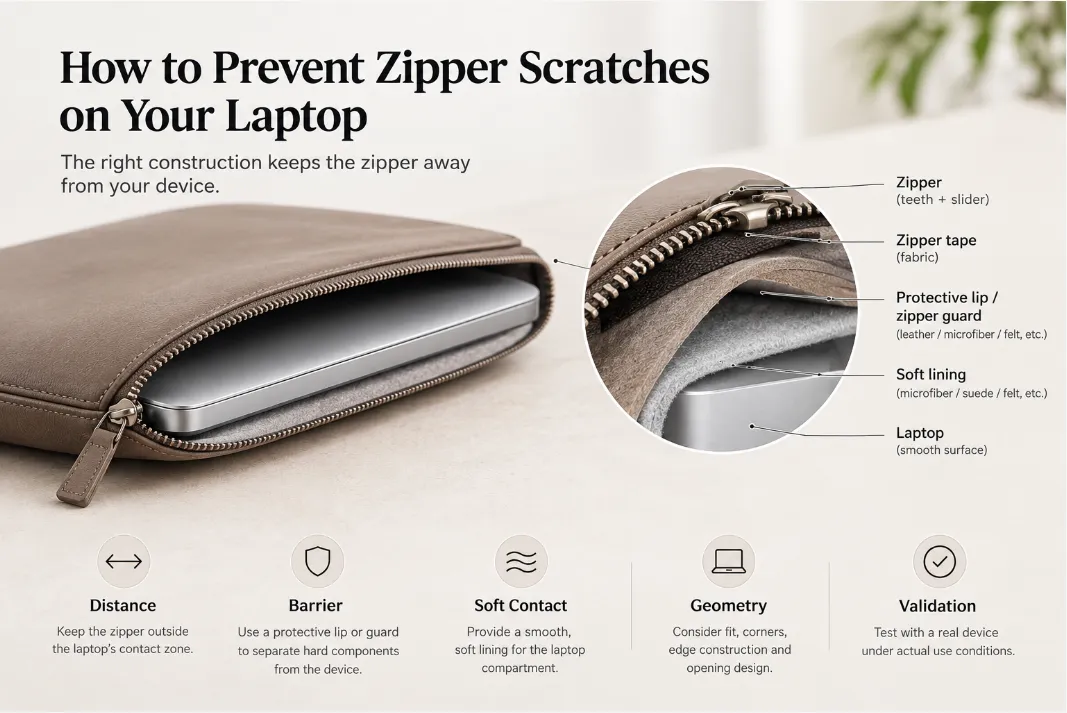
| Contact surfaces | Lining, edge transitions, adhesive control, and any exposed hard areas | Repeated insertion can mark or scratch the Pencil |
| Case functions | Cover closure, stand modes, wake/sleep, camera, speakers, ports, and buttons | Adding a holder can interfere with the rest of the case |
| Production consistency | Approved materials, first article, in-process checks, functional inspection, and model separation | Bulk goods may behave differently from the approved sample |
| Packaging | How the holder is supported and how the finished case is packed | Compression or incorrect packing can deform the holder |
A supplier should ask for the exact device list before recommending a structure or giving a final quotation. “Fits iPad” is not a sufficient specification because similar screen sizes can use different bodies, camera layouts, port positions, and Pencil combinations.
Buyers planning a broader case program can use Pellove’s iPad case manufacturer guide to review supplier selection, model planning, sampling, and sourcing strategy. You can review all of our structures in the custom iPad case collection.
Pencil Holder Structures for Leather iPad Cases
The right holder depends on how the product will be used. A school deployment may prioritize secure retention and simple cleaning, while an executive folio may prioritize a slim profile and protected storage. A retail case intended for frequent drawing may require faster access than a corporate gift set.
| Holder structure | Best suited to | Main advantage | Main validation focus |
|---|---|---|---|
| Molded pen slot inside a leather folio | Model-specific retail and education cases | Integrated structure and consistent location | Exact Pencil fit, leather-to-shell assembly, removal access, shell strength, and dimensional consistency |
| Side channel | Office, education, and everyday-use cases | Convenient access and visible Pencil position | Product width, edge protection, charging requirement, and cover interaction |
| Elastic loop | Promotional, gifting, and flexible-compatibility projects | Simple construction and adaptable fit | Elastic recovery, stitching, Pencil security, and long-term appearance |
| Internal sleeve | Business folios and premium presentation products | More complete Pencil protection and a clean exterior | Overall thickness, interior space, access, and cover closure |
| Detachable holder | Modular case systems and accessory programs | Replaceable or configurable storage | Connection security, alignment, loose-part management, and packaging |
Pencil Holder vs Pencil Charging Compatibility
Molded pen slot
A molded slot is normally part of the shell or a formed structural component assembled into the leather folio. It can produce a clean, integrated user experience when the device and Pencil are fixed in advance. However, it is less forgiving when the buyer later changes the Pencil version, shell, leather wrapping method, or adds a sleeve around the Pencil.
The sample should confirm that the user can remove the Pencil without forcing the shell, pressing against the iPad, or damaging a thin bridge around the slot. The manufacturer must also verify that the slot does not weaken corner protection or obstruct buttons, speakers, and charging ports.
Side channel
A side channel places the Pencil along one edge of the case. It may be formed in the shell, wrapped with leather, built into the folio, or created with layered leather, lining, and reinforcement. This structure can support fast access and may preserve the Pencil’s original attachment position when designed for a compatible device.
The buyer should confirm the finished width, Pencil exposure, finger access, cover position, and whether the case closes normally with the Pencil installed. If charging is required, the exact finished case must be tested on the specified iPad and Pencil combination.
Elastic loop
An elastic loop can support a straightforward private-label or gifting project without requiring a fully molded holder. Its performance depends on the loop dimensions, elastic material, stitching, attachment position, surrounding leather construction, and the Pencil version being used.
The loop should not be approved from appearance alone. Buyers should insert and remove the intended Pencil repeatedly using an agreed evaluation method, then review whether the loop remains secure and whether its attachment distorts the cover.
Internal sleeve
An internal leather or lined sleeve stores the Pencil within the folio rather than leaving it on the outside edge. It can protect the Pencil from contact in a bag and keep the exterior visually clean. The tradeoff is additional thickness and slower access.
The case must be evaluated while the Pencil is inside. A sleeve that works when empty may create pressure, prevent closure, mark the screen area, or affect the stand structure when loaded.
Detachable holder
A detachable holder can add flexibility to a modular product, but it also creates another component that must be attached, packed, labeled, and inspected. The connection should be evaluated in the actual carrying and use positions, not only while the product lies flat.
Buyers developing a modular case can compare the additional connection and configuration requirements in Pellove’s detachable modular iPad case guide.
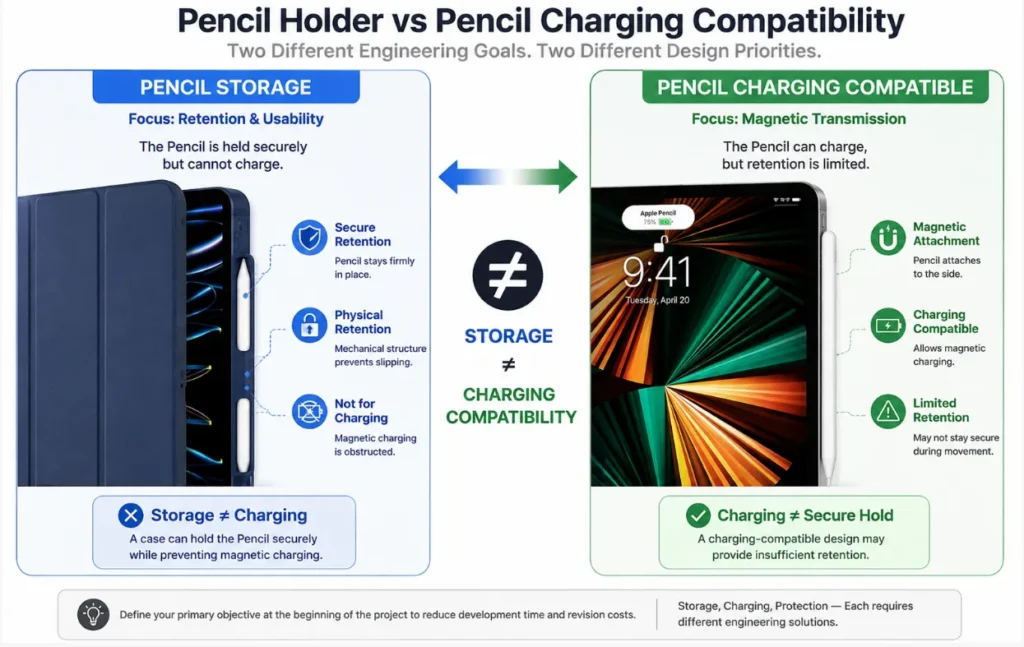
Storage, Magnetic Attachment, and Charging Are Different Requirements
Pencil storage, magnetic attachment, and charging are often grouped in an RFQ even though they describe different functions.
– Storage means the case provides a dedicated place for the Pencil.
– Transport retention means the Pencil remains in the intended position during agreed handling conditions.
– Magnetic attachment means the specified Pencil can attach to the corresponding area of the specified iPad through the case structure.
– Charging compatibility means the specified iPad and Pencil can charge as intended while the finished case is installed.
– Surface protection means the holder’s contact areas do not introduce avoidable scratching, adhesive marks, or damaging pressure.
A molded slot can provide excellent storage without preserving the device’s magnetic attachment area. A side channel may leave the Pencil in the correct location but add enough material or misalignment to change charging behavior. An elastic loop may store several similar styluses but is not a charging solution.
The buyer should therefore state the required function in plain language. “Apple Pencil compatible” is too broad for product development, packaging claims, and final inspection.
How to specify the charging requirement
An effective specification identifies:
– the exact iPad model and model number;
– the exact Apple Pencil version;
– whether the Pencil must attach magnetically;
– whether charging must work with the case installed;
– whether the Pencil must remain in a holder or channel while charging;
– whether any Pencil sleeve or additional accessory will be used;
– how the result will be verified during sample approval and production inspection.
Charging should be evaluated on the finished production-intent sample. Loose material swatches, an unfinished shell, or a case without all lining and reinforcement layers cannot represent the final material stack and alignment.
For a focused explanation of this issue, see why an iPad case can affect Apple Pencil charging. Projects that combine closure magnets, magnetic device retention, and Pencil functions should also use the magnetic iPad case manufacturing guide.
Compatibility, Leather Construction, and Product Design
Compatibility starts with a device matrix, not a screen-size label. Each sellable SKU should identify the iPad, inner shell or retention method, intended Pencil, holder structure, color, logo, and packaging version.
| Required record | Example of what it should clarify |
|---|---|
| iPad identity | Commercial model name, generation, model numbers, and region-specific differences where relevant |
| Pencil identity | Exact product version supplied or approved for validation |
| Holder objective | Storage only, storage plus retention, attachment access, or charging support |
| Case structure | Shell folio, fully magnetic folio, detachable system, sleeve, or another format |
| Access requirements | Finger opening, push-through opening, pull tab, exposed Pencil area, or another removal method |
| Approved functions | Closure, stands, wake/sleep, ports, buttons, speakers, cameras, attachment, and charging as applicable |
Material stack around the holder
In a leather iPad case, the exterior leather, backing, lining, adhesive, padding, reinforcement, folded edges, and shell all influence the final geometry. Their effect should be evaluated as a complete assembly. Leather thickness and flexibility may vary within the agreed material specification, so the approved construction must account for that variation instead of relying on one carefully adjusted sample.
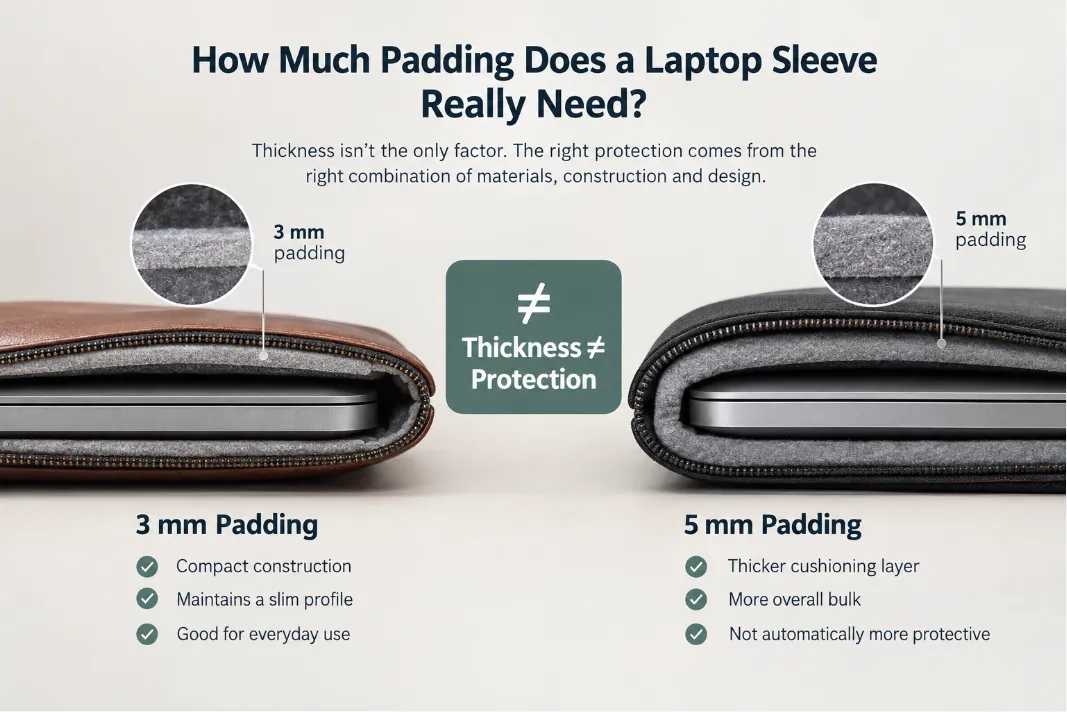
Leather selection involves trade-offs. Surface character and hand feel must be balanced with thickness control, skiving, folding, bonding, and the stability required around the Pencil holder. A soft lining can improve contact feel but still needs stable construction. Added padding may improve perceived protection but can increase bulk or alter closure. A stiff reinforcement may stabilize the cover but should not create a hard edge against the Pencil.
Do not assume one leather grade automatically creates the best holder. Hide selection, natural variation, splitting or skiving, backing, lining, edge construction, and reinforcement can be as important as the exterior leather name. The production specification should identify the approved leather reference, color, feel, relevant thickness range, lining, and construction rather than rely on a broad description such as “premium leather.”
Holder position and user access
The Pencil should be accessible without forcing the user to remove the iPad, bend the shell, or press against the screen. Finger openings and push-through areas need enough access for the intended user while retaining adequate surrounding structure.
Position also affects the rest of the case. The holder should not obstruct the camera, speakers, buttons, charging port, hinge, cover closure, or advertised stand modes. In a detachable case, the buyer should test the holder with the inner case attached and removed.
Contact-surface protection
Areas that touch the Pencil should be inspected for rough lining, exposed adhesive, sharp transitions, hard protrusions, and debris traps. A visually small defect can become noticeable after repeated insertion and removal.
The final sample should be checked with a clean Pencil under normal lighting. Buyers should agree on an inspection method rather than make an unsupported promise that no surface mark can ever occur under every use condition.
Sample Validation Before Bulk Production
A sample should prove the required user experience, not only the color and logo. Use production-intent materials and the exact device combination whenever a function depends on fit, alignment, or charging.
Step 1: Approve the device matrix
List every iPad and Pencil combination before sampling. If several iPad models share an exterior appearance, confirm whether they truly share the same shell, openings, dimensions, and functional layout. One sample should not automatically approve a different generation.
Step 2: Confirm product construction
Approve the exterior, lining, shell, reinforcement, holder structure, hinge, fold pattern, logo, accessories, and packaging. Clearly identify any temporary sample materials, as later changes may affect holder fit or charging performance.
Step 3: Test the complete user sequence
Install the iPad, insert the Pencil, close the cover, use each stand position, remove and replace the Pencil, and test every specified device function. Observe how the product behaves rather than judging only a static photo.
| Sample check | Buyer approval question |
|---|---|
| Pencil fit | Does the intended Pencil remain secure without unreasonable insertion or removal effort? |
| Removal access | Can the user remove the Pencil without bending or damaging the case? |
| Contact areas | Are lining, edges, seams, and adhesive areas appropriately finished? |
| iPad fit | Does the correct iPad install securely with usable ports, speakers, buttons, and camera? |
| Closure | Does the case close as designed with and without the Pencil? |
| Stand modes | Does every advertised position work with the device and Pencil installed as intended? |
| Attachment and charging | Do the exact approved iPad and Pencil perform the specifically required functions? |
| Repeated use | Does the holder remain acceptable after the buyer’s agreed evaluation method? |
| Packaging | Does packing support the holder without creating deformation or model confusion? |
Step 4: Record revisions
Each sample revision should identify what changed and why. A modification to the shell, holder position, lining, adhesive, reinforcement, edge fold, or exterior material can affect the approved function even if the product looks similar in photographs.
Step 5: Freeze the production standard
Before bulk production, retain a controlled approval sample together with the bill of materials, device matrix, construction revision, color standard, artwork, packaging files, and functional checklist. The physical sample preserves qualities that cannot be communicated fully through images, including fit, removal feel, closure, and material hand feel.
Avoid using a universal retention force, cycle count, or dimensional tolerance copied from an unrelated product. The acceptance criteria should match the holder structure, specified device, materials, use case, and buyer requirement. The test method must be repeatable enough for the manufacturer and buyer to evaluate the same condition.
Bulk Production and Quality Control
The approved sample must be converted into production controls. Otherwise, a carefully adjusted prototype can pass while bulk units vary because of material, cutting, placement, adhesive, forming, assembly, or packaging differences.
| Production stage | Recommended control | Main risk addressed |
|---|---|---|
| Incoming materials | Verify approved exterior, lining, shell, reinforcement, holder component, and color. | Material substitution and dimensional change |
| Kitting | Separate exact iPad models, colors, holder parts, labels, and packaging. | Mixed models and incorrect components |
| Cutting and preparation | Follow the approved pattern and construction revision. | Incorrect holder size or access position |
| Adhesive and lamination | Control coverage, alignment, clean contact areas, and panel flatness. | Bumps, exposed adhesive, movement, and deformation |
| Holder assembly | Check location, shape, seams, edges, and removal access. | Loose, tight, rough, or misaligned holders |
| First production article | Complete the model-specific fit and function checklist. | Repeating a setup error through the batch |
| In-process inspection | Check important dimensions and functions at defined production stages. | Drift after first-article approval |
| Final inspection | Confirm appearance, fit, Pencil function, closure, stands, labels, and packaging as applicable. | Shipping visually acceptable goods that fail intended use |
First-article approval
The first article should come from the planned production materials and process. It connects sample-room approval with the actual production line. The check should include the exact iPad and Pencil functions promised for that SKU.
If the first article differs from the approved sample, the difference should be investigated before the run continues. Adjusting the acceptance standard to match the new result without buyer approval weakens the purpose of sampling.
In-process checks
Some defects are easier to identify before final assembly. Lining quality, adhesive overflow, holder location, shell identity, reinforcement placement, and access openings should be checked while correction is still practical.
The manufacturer should also prevent similar iPad shells and packaging versions from being mixed. Clear work-in-progress identification and model-specific inspection records support traceability when several SKUs are produced in one program.
Finished-product checks
Final inspection should use a named checklist rather than a vague statement such as “Pencil holder OK.” The checklist should record the functions relevant to that model: Pencil fit, removal, contact finish, iPad fit, cover closure, stand positions, attachment or charging where required, appearance, labeling, and packaging.
Pellove’s broader leather goods quality checklist can help buyers organize material, workmanship, function, and packing requirements for a custom project.
OEM Customization, RFQ, and Manufacturer Evaluation
A leather iPad case with a Pencil holder can be customized through its case structure, leather type, leather color, lining, holder format, edge finish, logo, hardware, accessories, labels, and packaging. Each added option can create another production SKU, so the buyer should prepare quantities by exact model and version rather than provide only one total order quantity.
MOQ depends on the complete combination of device model, shell or tooling, material, color, logo process, holder component, packaging, and quantity per SKU. A manufacturer cannot evaluate the practical minimum from the total program quantity alone.
Quotation also depends on the product construction and approval requirements. Buyers should compare suppliers using the same device list, materials, functions, branding, packaging, and inspection expectations. A low quotation based on storage-only functionality is not comparable with a quotation that includes a model-specific charging requirement and additional validation.
RFQ information to provide
Include the following in the first serious request for quotation:
– exact iPad models and model numbers;
– exact Apple Pencil versions;
– quantity by iPad model and color;
– reference images, drawings, or an existing sample;
– preferred holder structure;
– storage, retention, attachment, and charging requirements;
– exterior, lining, shell, and reinforcement preferences;
– logo artwork, size, position, and preferred process;
– packaging, barcode, label, manual, and language requirements;
– sample quantity and approval schedule;
– target launch date and delivery destination;
– applicable market, compliance, or third-party testing requirements;
– acceptance criteria that are essential to the project.
Ask the supplier to list assumptions and exclusions in the quotation. An unanswered question about the Pencil version, charging requirement, or model split can become a sample revision, cost change, or production delay later.
Questions to ask the manufacturer
1. Which exact iPad and Apple Pencil combinations have been checked for the proposed structure?
2. Is the holder an existing platform, a modification, or a new development?
3. How will storage, transport retention, magnetic attachment, and charging requirements be separated in the specification?
4. Which actual devices will be used during sample approval and final inspection?
5. How are contact surfaces, adhesive, seams, and access areas controlled?
6. What is checked on the first production article and during production?
7. How are similar iPad shells, holder components, and packaging versions separated?
8. Which changes require a revised sample and renewed functional approval?
9. What records and approved standards will be retained for repeat orders?
10. How will the supplier investigate a fit, retention, charging, or model-mix complaint?
A credible supplier should explain the proposed structure, its tradeoffs, and the validation plan. Be cautious when a supplier promises universal compatibility without exact devices, treats storage and charging as the same requirement, or approves the holder from photographs alone.
Pellove supports custom leather iPad case development for brands, wholesalers, distributors, and private-label projects. Buyers can review a representative leather iPad case with Pencil holder and then send project details for an OEM or ODM discussion. Include the exact iPad and Pencil list, target quantities, preferred leather, required functions, branding, packaging, and schedule so the project can be evaluated on a clear specification.
Frequently Asked Questions
Can an iPad case hold and charge an Apple Pencil at the same time?
A manufacturer can achieve this when the engineering team designs and tests the exact iPad, Apple Pencil, holder position, material stack, and case geometry together. Storage alone does not prove charging compatibility. Specify the charging requirement in the RFQ and verify it on a finished production-intent sample using the specified device combination.
Can one Pencil holder fit several Apple Pencil versions?
A holder may store several Pencil versions, but similar appearances do not guarantee identical dimensions, attachment, or charging behavior. Test the holder with every Pencil model it claims to support. Clearly identify the approved combinations on the packaging and in product claims.
Why does a Pencil holder become loose?
Possible causes include an incorrect starting dimension, material stretch or compression, weak attachment, structural deformation, or production variation. The manufacturer should compare affected units with the approved sample and review the holder material, construction, assembly, and use conditions before changing the design.
Can leather or lining affect Apple Pencil charging?
The complete material stack and alignment can affect how the Pencil meets the specified iPad. Exterior material is only one part of that stack. Evaluating lining, adhesive, reinforcement, edge construction, shell geometry, and holder position in the finished case.
What should buyers approve before mass production?
Approve the device matrix, Pencil versions, required functions, materials, colors, shell, holder structure, access method, logo, packaging, fit, closure, stand positions, attachment or charging behavior where applicable, and inspection method. Retain a controlled physical sample and revision records.
What information is needed for an OEM quotation?
Provide exact iPad and Pencil models, quantities by SKU, the preferred holder structure, required functions, materials, colors, logo, packaging, destination, launch schedule, and essential acceptance criteria. Clear inputs allow suppliers to identify tooling, sampling, MOQ, pricing, and schedule assumptions more accurately.