
What Is Python Leather?
Python leather is leather made from python skin. Unlike cowhide, which usually has a grain surface, python leather has visible scales. This gives it a more dramatic look and a stronger material identity.
Each python skin has natural variation. That means color, scale size, and pattern placement can vary from piece to piece. For luxury products, this uniqueness is part of the appeal. For mass production, it can become a challenge because every panel may not look exactly the same.
This is why python leather works especially well on smaller accessories. A wallet, card holder, passport holder, or watch strap can show the texture clearly without requiring a large perfectly matched skin area.
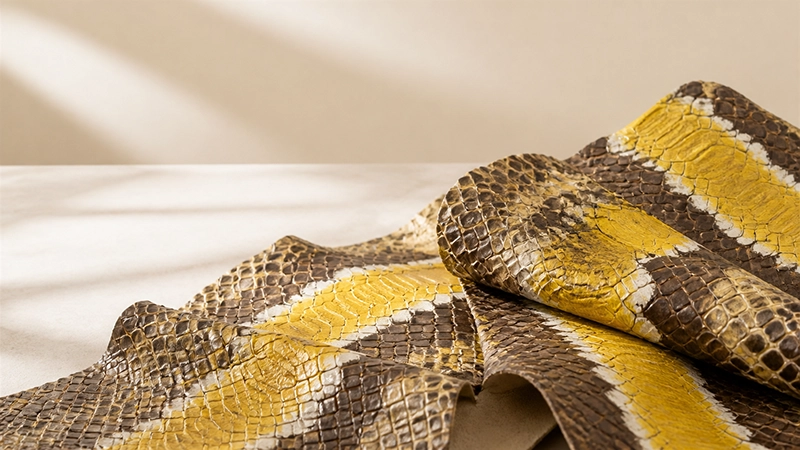
Python Leather
Python Leather vs Python-Embossed Leather
This is the most important distinction in the article.
Genuine python leather is made from real python skin. Python-embossed leather is usually cowhide, split leather, PU leather, or microfiber pressed or printed with a snake-like texture.
Both can be useful, but they should not be marketed as the same material.
| Material | Best For | Advantage | Limitation |
|---|---|---|---|
| Genuine python leather | Luxury and limited-edition products | Natural exotic texture | Higher cost and compliance requirements |
| Python-embossed cowhide | Premium look with easier sourcing | More stable supply and stronger base leather | Not genuine python |
| Python-embossed PU | Fashion products and lower price points | Lower cost and consistent pattern | Lower perceived value |
| Printed python texture | Trend-driven collections | Flexible colors and designs | Less tactile depth |
For most commercial brands, python-embossed leather is easier to scale. For luxury or limited-edition collections, genuine python leather creates a stronger story.
A practical product strategy is to use both:
- Genuine python leather for premium capsule collections
- Python-embossed leather for larger commercial runs
Is Python Leather Durable?
Python leather can be durable enough for premium accessories, but it should not be treated like heavy cowhide.
The surface scales need careful tanning, finishing, backing, and edge treatment. Poorly finished python leather may show scale lifting, dryness, cracking, or uneven wear. A good finished product should feel flexible, not brittle.
For buyers, durability depends on:
- Tanning quality
- Scale condition
- Surface finish
- Backing material
- Edge paint adhesion
- Stitching tension
- Product structure
- User care habits
A python leather passport holder may perform well because it is carried carefully and used occasionally. A python leather phone case, however, needs stronger structural support because phones face more daily friction, heat, and hand contact.
Best Products for Python Leather
Python leather is most effective when the product is small enough to control material waste but visible enough to show texture.
| Product | Suitability | Buyer Note |
|---|---|---|
| Passport holder | Excellent | Strong luxury travel and gifting value |
| Wallet | Excellent | Good for premium small leather goods |
| Card holder | Excellent | Small surface shows pattern clearly |
| Watch strap | Good | Needs soft lining and careful edge finishing |
| Phone case | Good | Best with PC/TPU backing structure |
| AirPods case | Good | Suitable for gift sets |
| Laptop sleeve | Limited | Large panels increase cost and matching difficulty |
| Kids or rugged goods | Not ideal | Surface is too delicate for rough use |
Python leather works especially well for travel accessories. The passport holder market itself is also growing: Growth Market Reports estimated the passport holder market at USD 1.42 billion in 2024, projected to reach USD 2.34 billion by 2033 at a 5.7% CAGR.
Source:  Growth Market Reports Passport Holder Market
That makes python leather interesting for premium travel sets: passport holder, luggage tag, card holder, and wallet.
Compliance: The Part Brands Cannot Ignore
Python leather is an exotic leather, so buyers should treat compliance as part of the product development process, not as an afterthought.
CITES explains that Appendix II includes species that are not necessarily threatened with extinction now, but whose trade must be controlled to avoid harmful overuse. CITES also states that international trade in Appendix-II specimens may be authorized through an export permit or re-export certificate.
Source: CITES Appendices
UNCTAD has also highlighted traceability concerns in the Southeast Asian python skin trade, including the need to mark python skins and inventory stockpiles.
Source: UNCTAD Python Skins Traceability Study
For brands, this means genuine python leather should not be sourced casually. Before using it, ask:
- What python species is used?
- What is the country of origin?
- Is the skin legally sourced?
- Are export or re-export documents available?
- Does the destination market allow import?
- Can the supplier provide batch-level documentation?
- Is the final product correctly labeled?
This section is not legal advice. Buyers should confirm requirements with customs brokers, local authorities, or qualified compliance partners before importing or selling genuine python leather products.
What OEM Buyers Should Check Before Sampling
Before developing a python leather product, buyers should confirm the material direction first: genuine python leather or python-embossed leather.
Then check the sample carefully. The biggest problems usually appear in the details.
Key sample checks:
- Are the scales clean and stable?
- Does the leather feel flexible or dry?
- Is the color consistent enough for production?
- Does the edge paint bond well?
- Does stitching create tension marks?
- Does the surface scratch too easily?
- Is the backing strong enough?
- Is the logo method suitable for the scale texture?
- Is the packaging protecting the surface during shipping?
For logo customization, direct debossing may not work well on python leather because the scale texture is uneven. A metal logo, smooth leather patch, branded lining, or custom packaging may produce a cleaner result.
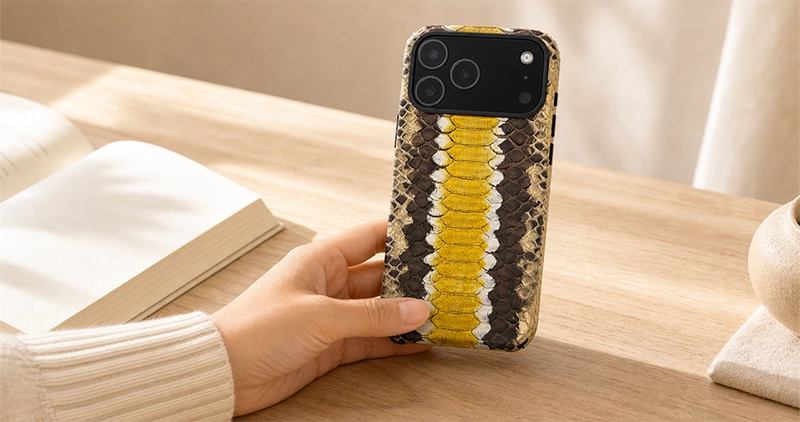
Python leather phone case
Python Leather Care Tips
Python leather needs gentle care. It should not be cleaned like ordinary synthetic leather.
Basic care tips:
- Keep it away from excessive water
- Avoid long direct sunlight exposure
- Do not rub the scale surface aggressively
- Use a soft dry cloth for light cleaning
- Avoid alcohol-based cleaners
- Store it in a dust bag when not in use
- Do not bend the scales backward
- Test any conditioner on a hidden area first
For brands, care instructions should be included in the packaging. A small care card can reduce customer misuse and after-sales complaints.
Should Your Brand Use Python Leather?
Use python leather if your brand wants a premium material with strong texture, gifting value, and limited-edition appeal.
Choose python-embossed leather if your brand wants the python look with easier sourcing, lower cost, more stable supply, and fewer compliance concerns.
For many brands, the smartest path is not choosing one forever. It is building a material ladder:
- PU python texture for entry-level fashion accessories
- Python-embossed cowhide for premium commercial lines
- Genuine python leather for limited-edition or luxury products
This gives your brand more price flexibility while keeping the visual story consistent.
OEM/ODM Support from Pellove
Pellove supports custom leather accessories for brands, retailers, wholesalers, and private label buyers. For python leather or python-embossed leather projects, Pellove can help discuss material options, sample development, logo methods, packaging, MOQ, and product structure.
Python leather is especially suitable for custom passport holders, wallets, card holders, phone cases, watch straps, and travel gift sets.
To start a project, buyers can prepare:
- Product type
- Target market
- Genuine python or python-embossed preference
- Color direction
- Logo method
- Packaging requirement
- Estimated order quantity
- Compliance requirements
- Sample deadline
For related material education, link to:
The Complete Guide to Leather Types
Types of Leather for Wallets
For brands considering exotic textures in a leather goods line, compare the material choice with OEM and ODM manufacturing decisions and MOQ planning for custom leather goods before confirming sourcing, compliance, and production feasibility.
Related Buyer Paths for Python Leather Projects
For brands evaluating python-pattern or python-style materials for accessories, it helps to compare this texture story with our guide to the best leather for phone cases, review production checkpoints in the leather goods quality checklist, and map the final product brief through the custom leather phone case manufacturer guide.
FAQ
What is python leather?
Python leather is exotic leather made from python skin. It is known for its natural scale pattern, lightweight feel, and luxury appearance.
Is python leather real leather?
Yes. Genuine python leather is real leather made from python skin. However, python-embossed leather is different; it is usually cowhide, PU, or synthetic material with a snake-like pattern.
Is python leather expensive?
Yes, python leather is usually more expensive than common cowhide, PU leather, or embossed leather because of material availability, processing difficulty, cutting waste, and compliance requirements.
Is python leather durable?
Python leather can be durable for premium accessories if it is properly tanned, finished, backed, and cared for. It is not the best choice for rough-use or heavy-abrasion products.
Is python leather legal?
Python leather can be legal when properly sourced and traded with required documents. Because python is a regulated exotic material in international trade, buyers should confirm species, origin, CITES documents, and destination-market import rules.
What is python-embossed leather?
Python-embossed leather is a material designed to look like python skin. It may be made from cowhide, split leather, PU leather, or microfiber. It is not genuine python leather unless clearly stated and documented.
What products are best for python leather?
Python leather is best for wallets, passport holders, card holders, watch straps, phone cases, AirPods cases, and limited-edition leather accessories.
Can Pellove make python leather accessories?
Pellove can support custom leather accessory development and material discussions, including python leather or python-embossed leather options. Final material availability, MOQ, compliance documents, and sample details should be confirmed before production.